Choi Hyunjung, Lee Hae Seong, Roberts Neil P
Department of Psychology, Chungbuk National University, Cheongju, South Korea.
Psychology and Psychological Therapies Directorate, Cardiff & Vale University Health Board, Cardiff, UK.
Eur J Psychotraumatol. 2025 Dec;16(1):2447182. doi: 10.1080/20008066.2024.2447182. Epub 2025 Jan 6.
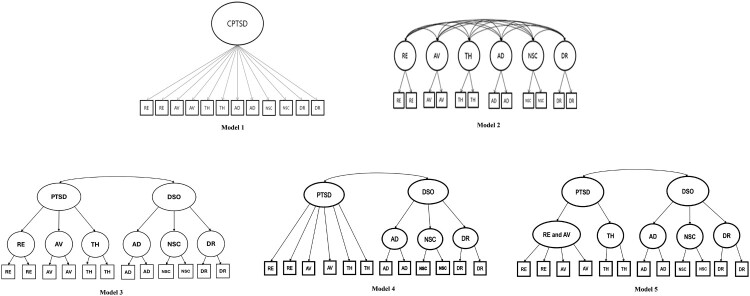
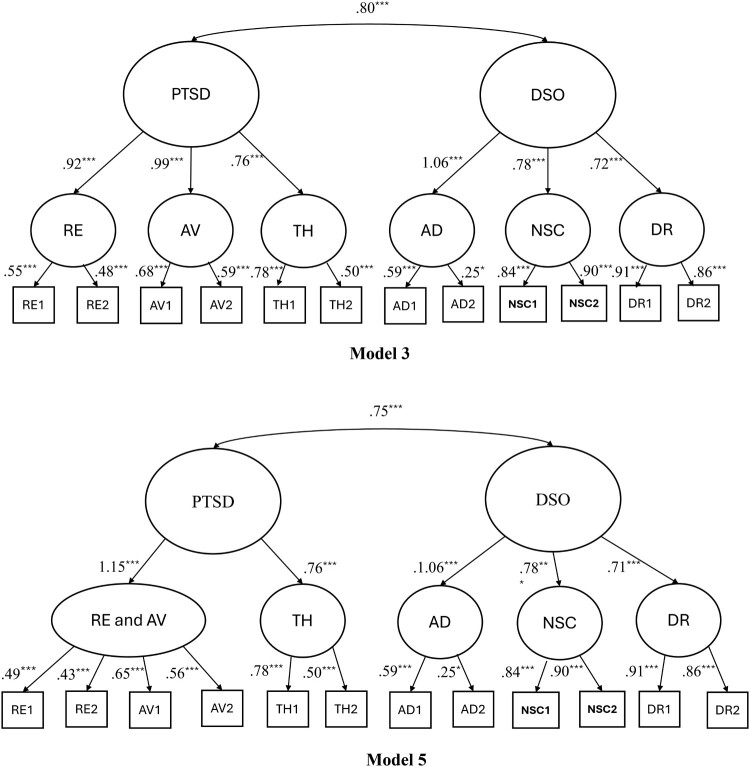
The International Trauma Interview (ITI) is a clinician-administered assessment that has been newly developed for the International Classification of Diseases (ICD-11) diagnoses of posttraumatic stress disorder (PTSD) and complex PTSD (CPTSD). The current study evaluated the psychometric properties of the ITI for treatment-seeking people with adverse childhood experiences (ACE) in South Korea, with the aims of verifying the validity and reliability of ITI as well as examining the differentiation of ICD-11 CPTSD and borderline personality disorder (BPD). In total, data of 103 people were analysed. Clinical psychologists conducted the ITI and the structured interview for BPD. Along with the International Trauma Questionnaire (ITQ), self-report measurements on ACE, adulthood trauma, emotion dysregulation, dissociation, depression, adult attachment, BPD symptoms, self-harm, self-compassion, and quality of life were collected. A confirmatory factor analysis (CFA) was conducted to examine the factorial validity and a structural equation model (SEM) was used to evaluate the convergent and discriminant validity. The CFA supported the second-order two-factor model of ICD-11 CPTSD. However, we determined that the alternatively suggested second-order two-factor model of reexperience avoidance combined PTSD and DSO described the data the best. As was hypothesized, ITI PTSD and DSO showed convergent and discriminant validity, and ITI DSO also showed distinctive features with BPD. Interrater reliability and composite reliability were both found to be acceptable. Agreement and consistency between ITQ and ITI were also fair although tentative. The ITI is determined to be a valid and reliable method for the assessment and diagnosis of ICD-11 PTSD and CPTSD, and it is considered to be promising for the differential diagnosis of BPD in South Korean treatment-seeking people with ACE. Future research should aim to assess the agreement between ITI and ITQ while also seeking alternative criteria for ITI PTSD across variant trauma memory features.
国际创伤访谈(ITI)是一种由临床医生实施的评估工具,是专门为国际疾病分类(ICD - 11)中创伤后应激障碍(PTSD)和复杂创伤后应激障碍(CPTSD)的诊断而新开发的。本研究评估了ITI在韩国有童年不良经历(ACE)且寻求治疗的人群中的心理测量特性,目的是验证ITI的有效性和可靠性,并检验ICD - 11 CPTSD与边缘性人格障碍(BPD)的差异。总共分析了103人的数据。临床心理学家进行了ITI和BPD结构化访谈。除了国际创伤问卷(ITQ)外,还收集了关于ACE、成年期创伤、情绪失调、解离、抑郁、成人依恋、BPD症状、自我伤害、自我同情和生活质量的自我报告测量数据。进行了验证性因素分析(CFA)以检验因素效度,并使用结构方程模型(SEM)来评估收敛效度和区分效度。CFA支持ICD - 11 CPTSD的二阶双因素模型。然而,我们确定,将再体验回避与PTSD和DSO相结合的另一种二阶双因素模型对数据的描述最佳。正如所假设的,ITI PTSD和DSO显示出收敛效度和区分效度,并且ITI DSO也显示出与BPD的独特特征。评分者间信度和综合信度均被认为是可接受的。ITQ和ITI之间的一致性和一致性虽然初步,但也还算不错。ITI被确定为评估和诊断ICD - 11 PTSD和CPTSD 的有效且可靠的方法,并且被认为在韩国有ACE且寻求治疗的人群中对BPD的鉴别诊断很有前景。未来的研究应旨在评估ITI和ITQ之间的一致性,同时也应寻找针对具有不同创伤记忆特征的ITI PTSD的替代标准。