König Laura M, Western Max J, Denton Andrea H, Krukowski Rebecca A
Faculty of Psychology, University of Vienna, Vienna, Austria.
Department for Health, University of Bath, Bath, UK.
NPJ Digit Med. 2025 Jan 6;8(1):11. doi: 10.1038/s41746-024-01405-0.
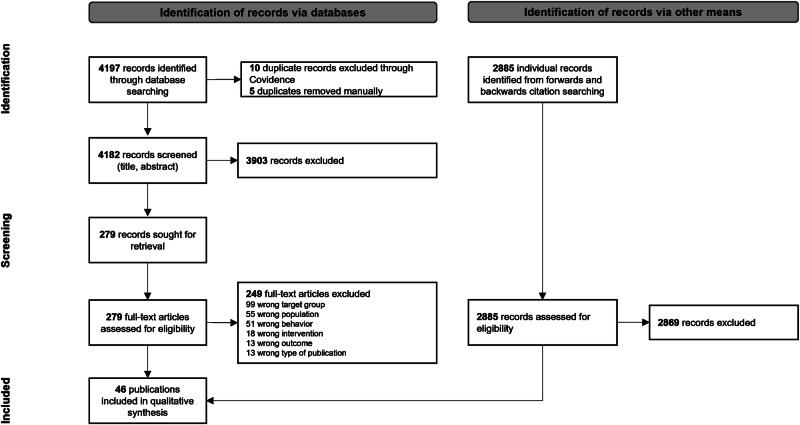
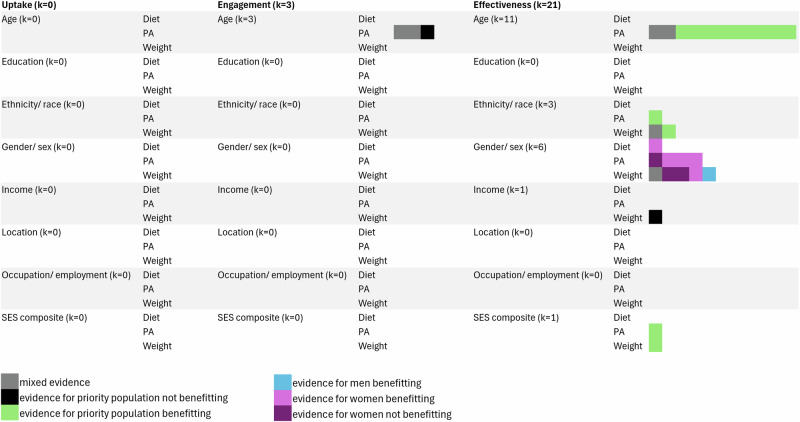
Digital interventions are increasingly utilized as a lever to promote population health, yet not everyone may equally benefit from them. This umbrella review pooled the insights from available systematic and scoping reviews regarding potential social inequalities in digital intervention uptake, engagement and effectiveness, focusing on the promotion of weight-related behaviors (diet, physical activity, sedentary behavior) and weight loss (maintenance) in adults. Six databases were searched from 1970 to October 2023. Forty-six reviews were included, of which most focused on physical activity and intervention effectiveness. Age and gender/ sex differences were most frequently studied. Most reviews found digital interventions to be effective irrespective of age, while men benefitted more from digital interventions than women. Other inequality indicators (e.g., income, education) were rarely studied, despite them being potential causes of a digital divide. A more systematic and thorough exploration of inequalities in digital health is required to promote health for all.
数字干预越来越多地被用作促进人群健康的手段,但并非每个人都能同样从中受益。本综合性综述汇总了现有系统评价和范围综述的见解,这些综述涉及数字干预的采用、参与度和有效性方面潜在的社会不平等问题,重点关注成人中与体重相关行为(饮食、体育活动、久坐行为)和体重减轻(维持)的促进。检索了1970年至2023年10月期间的六个数据库。纳入了46篇综述,其中大多数关注体育活动和干预效果。年龄和性别差异是研究最频繁的。大多数综述发现,无论年龄如何,数字干预都是有效的,而男性从数字干预中受益比女性更多。尽管收入、教育等其他不平等指标可能是数字鸿沟的潜在原因,但很少被研究。需要对数字健康中的不平等进行更系统、更深入的探索,以促进全民健康。