Lee Fong Chin, Yeap Wan-Chin, Kee Shao Yong, Kulaveerasingam Harikrishna, Ross Appleton David
Biotech and Breeding, SD Guthrie Technology Centre Sdn. Bhd., Serdang, Selangor Darul Ehsan, Malaysia.
SD Guthrie Research Sdn. Bhd., Banting, Selangor Darul Ehsan, Malaysia.
Front Plant Sci. 2024 Dec 23;15:1497017. doi: 10.3389/fpls.2024.1497017. eCollection 2024.
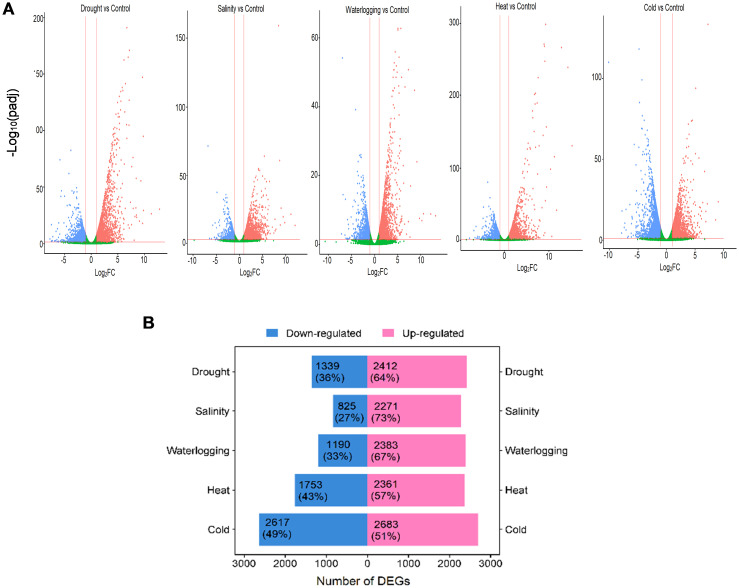
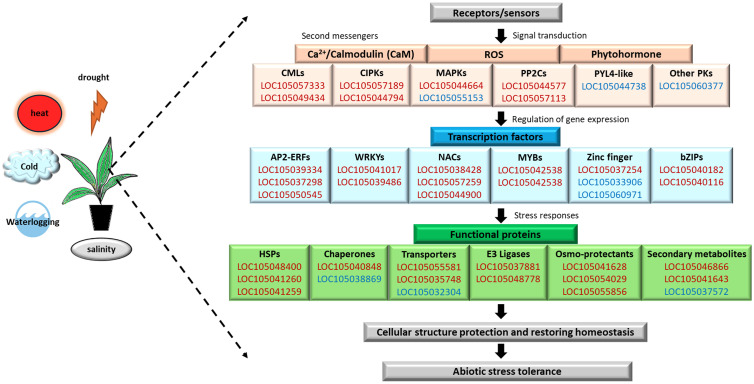
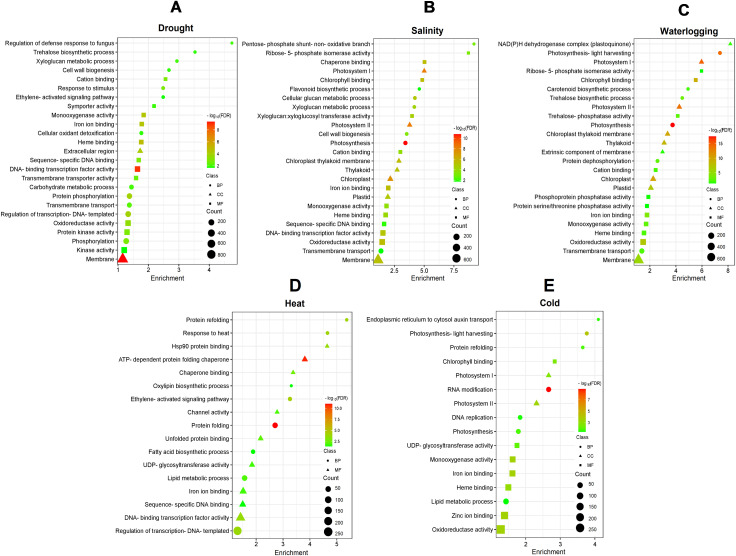
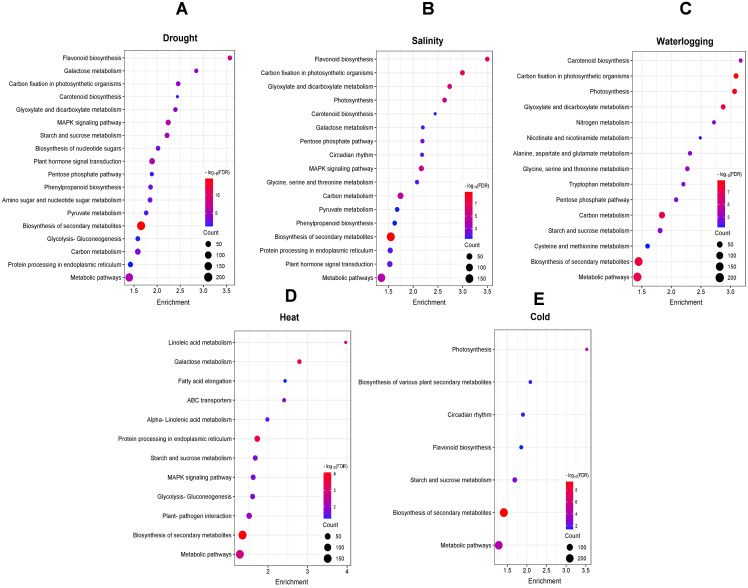
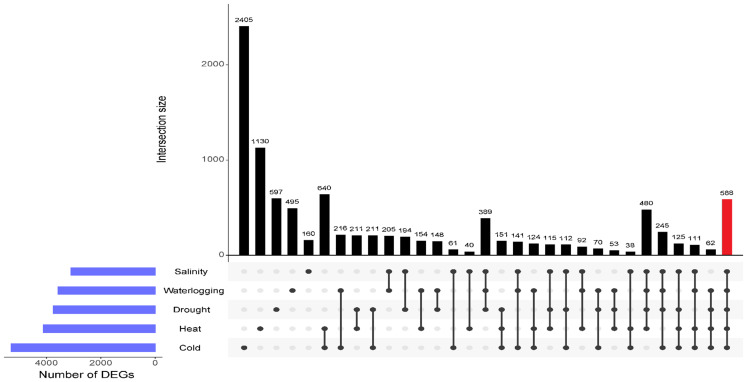
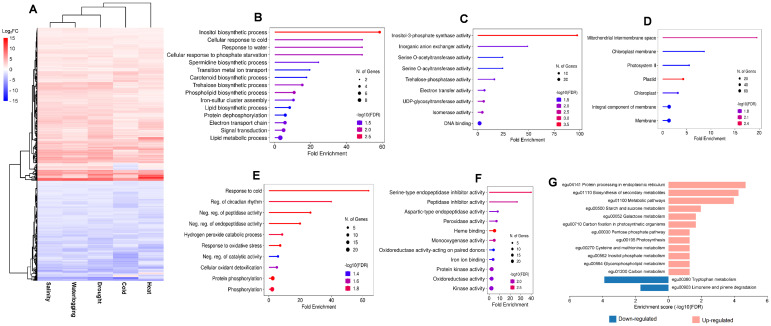
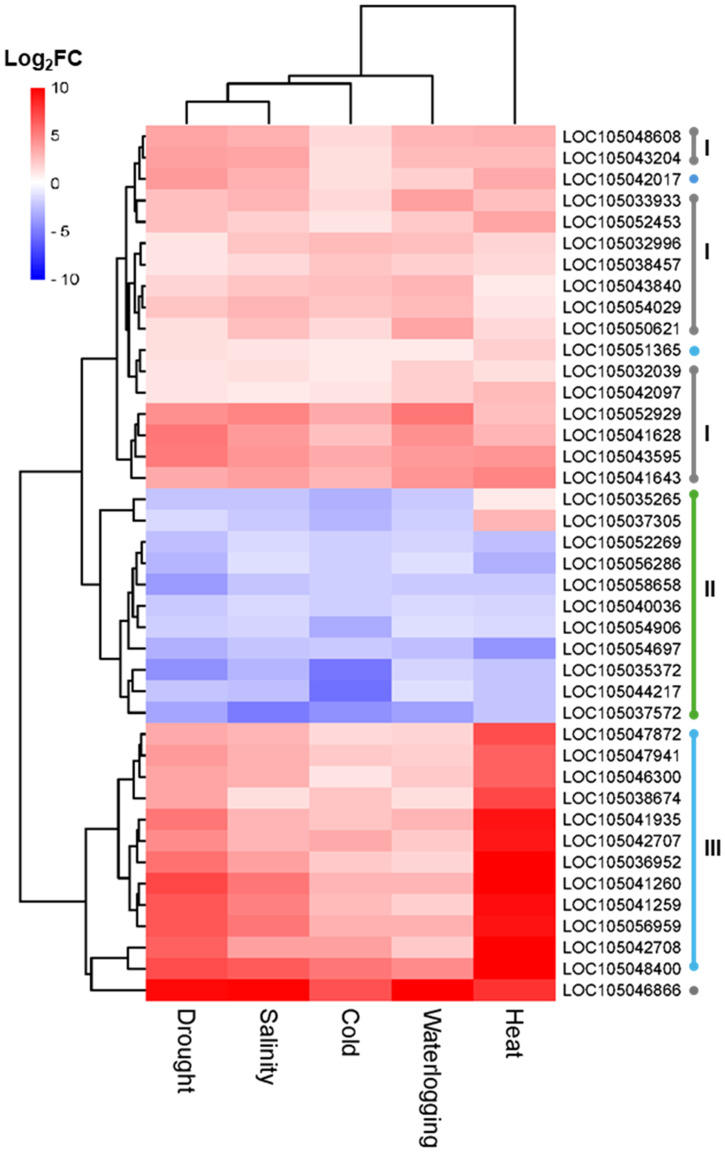
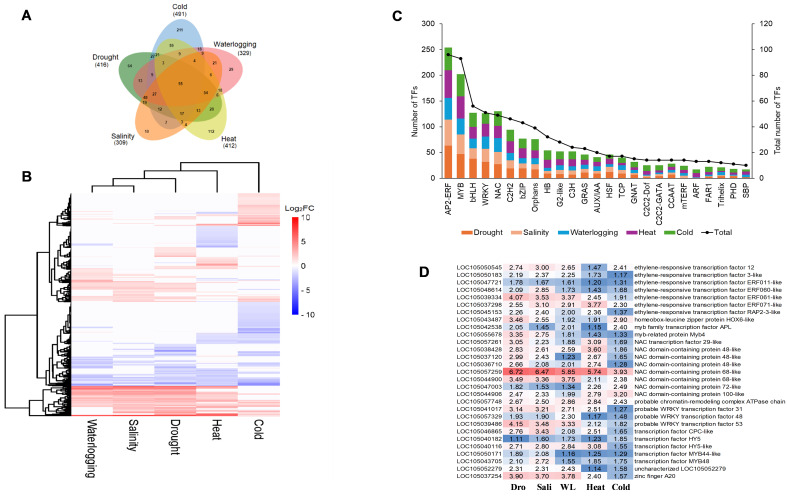
Oil palm () yield is impacted by abiotic stresses, leading to significant economic losses. To understand the core abiotic stress transcriptome (CAST) of oil palm, we performed RNA-Seq analyses of oil palm leaves subjected to drought, salinity, waterlogging, heat, and cold stresses. A total of 19,834 differentially expressed genes (DEGs) were identified. Cold treatment induced the highest number of DEGs (5,300), followed by heat (4,114), drought (3,751), waterlogging (3,573), and, lastly, salinity (3096) stress. Subsequent analysis revealed the CAST of oil palm, comprising 588 DEGs commonly expressed under drought, salinity, waterlogging, heat, and cold stress conditions. Function annotation of these DEGs suggests their roles in signal transduction, transcription regulation, and abiotic stress responses including synthesis of osmolytes, secondary metabolites, and molecular chaperones. Moreover, we identified core DEGs encoding kinases, ERF, NAC TFs, heat shock proteins, E3 ubiquitin-protein ligase, terpineol synthase, and cytochrome P450. These core DEGs may be potential key modulators that interplay in triggering rapid abiotic stress responses to achieve delicate equilibrium between productivity and adaptation to abiotic stresses. This comprehensive study provides insights into the key modulators in the CAST of oil palm, and their potential applications as markers for selecting climate-resilient oil palms or opportunities to develop future climate resilient oil palm using genome editing.
油棕()产量受到非生物胁迫的影响,导致重大经济损失。为了解油棕的核心非生物胁迫转录组(CAST),我们对遭受干旱、盐度、涝渍、高温和低温胁迫的油棕叶片进行了RNA测序分析。共鉴定出19834个差异表达基因(DEG)。冷处理诱导的DEG数量最多(5300个),其次是热胁迫(4114个)、干旱胁迫(3751个)、涝渍胁迫(3573个),最后是盐度胁迫(3096个)。后续分析揭示了油棕的CAST,包括在干旱、盐度、涝渍、高温和低温胁迫条件下共同表达的588个DEG。这些DEG的功能注释表明它们在信号转导、转录调控以及非生物胁迫反应中发挥作用,包括渗透调节物质、次生代谢产物和分子伴侣的合成。此外,我们鉴定出了编码激酶、ERF、NAC转录因子、热休克蛋白、E3泛素蛋白连接酶、萜品醇合酶和细胞色素P450的核心DEG。这些核心DEG可能是潜在的关键调节因子,它们相互作用以触发快速的非生物胁迫反应,从而在生产力和对非生物胁迫的适应性之间实现微妙的平衡。这项全面的研究深入了解了油棕CAST中的关键调节因子,以及它们作为选择抗气候油棕的标记或利用基因组编辑培育未来抗气候油棕的机会的潜在应用。