Li Yujie, Xu Ke, Zhou Ao, Xu Zhong, Wu Junjing, Peng Xianwen, Mei Shuqi, Chen Hongbo
Laboratory of Genetic Breeding, Reproduction and Precision Livestock Farming, School of Animal Science and Nutritional Engineering, Wuhan Polytechnic University, Wuhan 430023, China.
Hubei Provincial Center of Technology Innovation for Domestic Animal Breeding, Wuhan Polytechnic University, Wuhan 430023, China.
Genes (Basel). 2024 Nov 30;15(12):1562. doi: 10.3390/genes15121562.
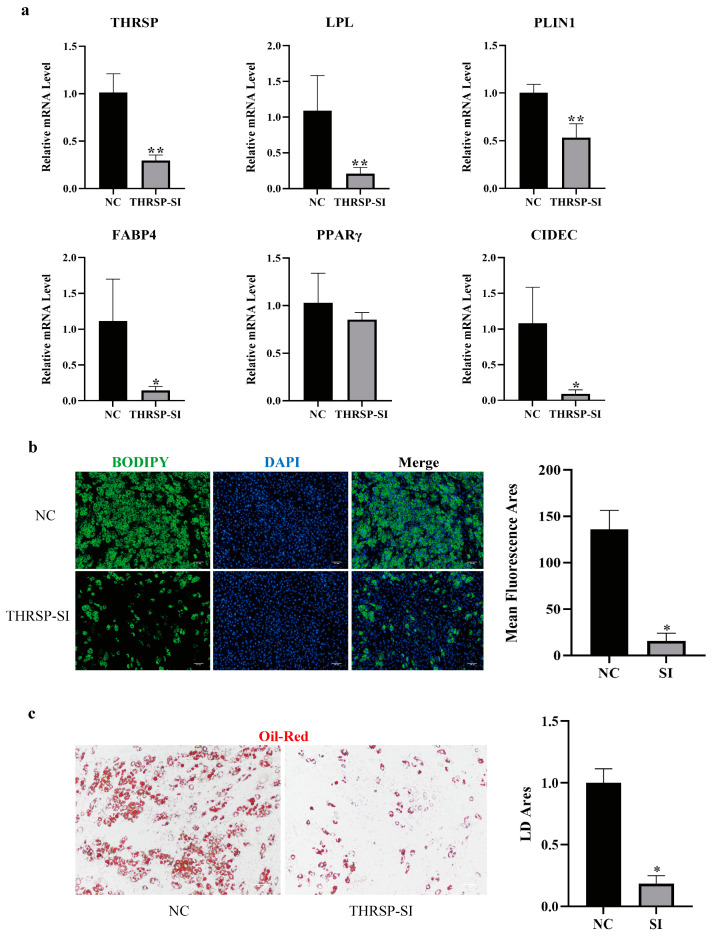
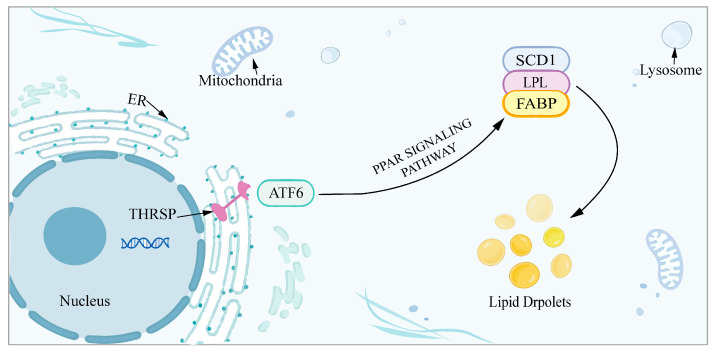
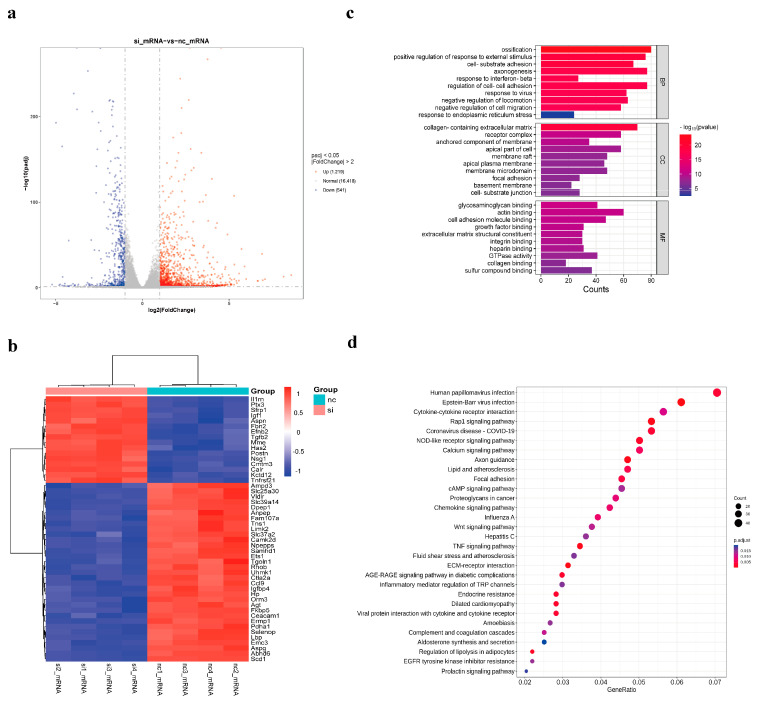
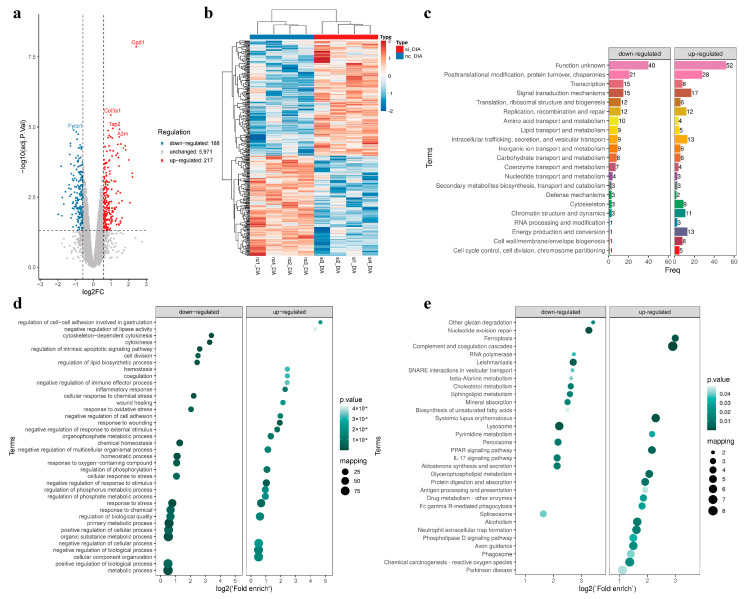
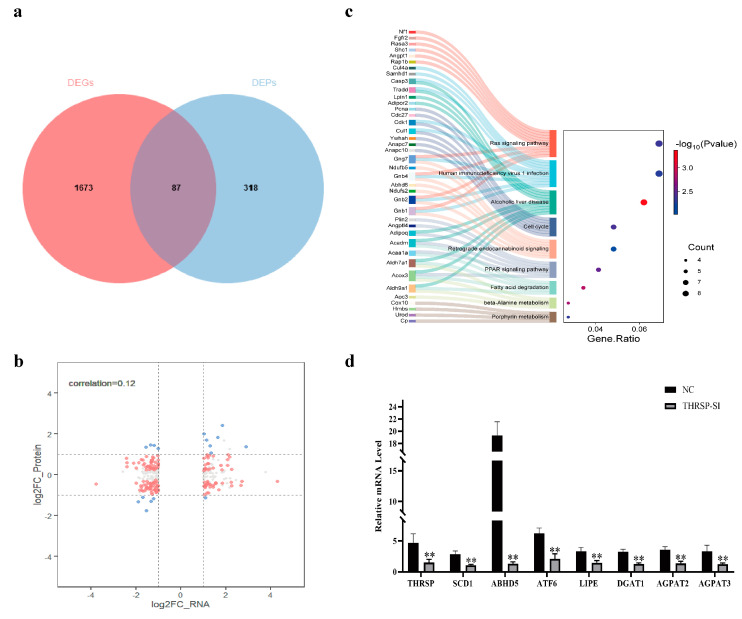
Abnormalities in lipid metabolism and endoplasmic reticulum (ER) stress are strongly associated with the development of a multitude of pathological conditions, including nonalcoholic fatty liver disease (NAFLD), diabetes mellitus, and obesity. Previous studies have indicated a potential connection between thyroid hormone responsive ( and lipid metabolism and that ER stress may participate in the synthesis of key regulators of adipogenesis. However, the specific mechanisms remain to be investigated. In this study, we explored the roles of in lipid metabolism by interfering with gene expression in mouse mesenchymal stem cells, comparing the effects on adipogenesis between control and interfered groups, and by combining transcriptomic and proteomic analysis. Our results showed that the number of lipid droplets was significantly reduced after interfering with , and the expression levels of key regulators of adipogenesis, such as , , , and , were significantly downregulated. Both transcriptomic and proteomic results showed that the differential genes (proteins) were enriched in the processes of lipolytic regulation, ER stress, cholesterol metabolism, sphingolipid metabolism, PPAR signaling pathway, and glycerophospholipid metabolism. The ER stress marker gene, , was the most significantly downregulated transcription factor. In addition, RT-qPCR validation indicated that the expression levels of PPAR signaling pathway gene ; key genes of lipid droplet generation including , , and ; and ER stress marker gene were significantly downregulated. These suggest that is involved in regulating ER stress and the PPAR signaling pathway, which is closely related to lipid synthesis and metabolism. Interfering with the expression of may be helpful in ameliorating the occurrence of diseases related to abnormalities in lipid metabolism.
脂质代谢异常和内质网(ER)应激与多种病理状况的发展密切相关,包括非酒精性脂肪性肝病(NAFLD)、糖尿病和肥胖症。先前的研究表明甲状腺激素反应性(与脂质代谢之间存在潜在联系,并且内质网应激可能参与脂肪生成关键调节因子的合成。然而,具体机制仍有待研究。在本研究中,我们通过干扰小鼠间充质干细胞中的基因表达,比较对照组和干扰组对脂肪生成的影响,并结合转录组学和蛋白质组学分析,探讨了在脂质代谢中的作用。我们的结果表明,干扰后脂滴数量显著减少,脂肪生成关键调节因子如、、和的表达水平显著下调。转录组学和蛋白质组学结果均显示,差异基因(蛋白质)在脂解调节、内质网应激、胆固醇代谢、鞘脂代谢、PPAR信号通路和甘油磷脂代谢过程中富集。内质网应激标记基因是下调最显著的转录因子。此外,RT-qPCR验证表明,PPAR信号通路基因;脂滴生成关键基因包括、和;以及内质网应激标记基因的表达水平均显著下调。这些结果表明参与调节内质网应激和PPAR信号通路,这与脂质合成和代谢密切相关。干扰的表达可能有助于改善与脂质代谢异常相关疾病的发生。