Bojarczuk Aleksandra, Garbacz Aleksandra, Żekanowski Cezary, Borzemska Beata, Cięszczyk Paweł, Maculewicz Ewelina
Faculty of Physical Culture, Gdansk University of Physical Education and Sport, 80-336 Gdansk, Poland.
Faculty of Animal Genetics and Conservation, Warsaw University of Life Sciences, 02-787 Warsaw, Poland.
Int J Mol Sci. 2024 Dec 17;25(24):13501. doi: 10.3390/ijms252413501.
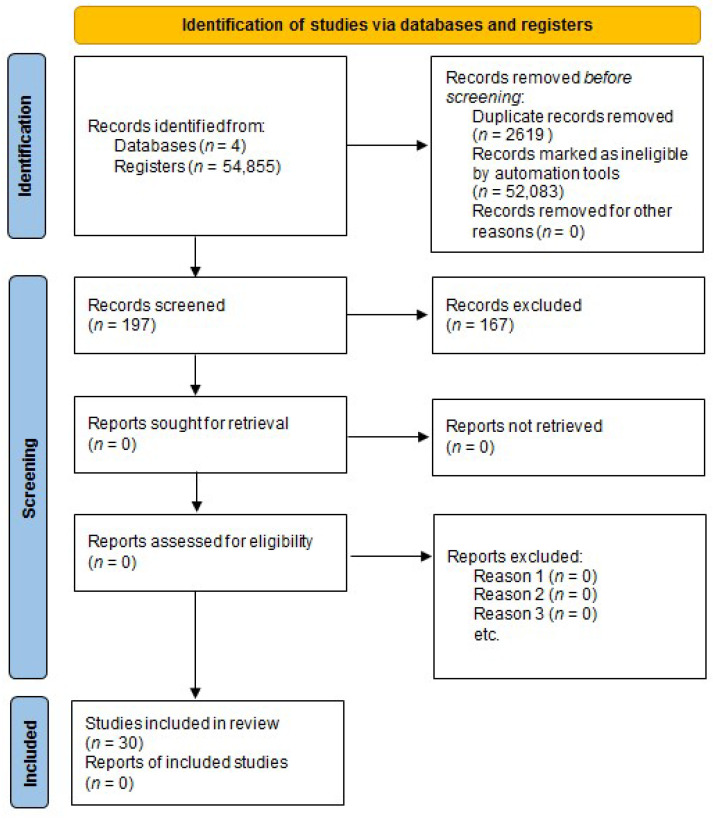
Obesity is a complex health risk influenced by genetic, environmental, and lifestyle factors. This review systematically assessed the association between interleukin gene polymorphisms (rs16944, rs17561, rs1143623, rs1143633, rs1143634, rs1800587, rs2234677, and rs4848306), (rs180275, rs1805010, rs13306435, rs1800795, rs1800796, rs1800797, rs2228145, rs2228145, rs2229238, and rs4845623), (rs1518110, rs1518111, rs1800871, rs1800872, rs1800896, rs1878672, rs2834167, rs3024491, rs3024496, rs3024498, and rs3024505), (rs3136617, rs3136618, and rs2296135), and (rs187238, rs1946518, rs2272127, rs2293225, and rs7559479) and the risk of overweight and obesity in adults, focusing on rs1800795 through a meta-analysis. The focus on in this review arises from its pleiotropic nature and unclear effect on obesity risk. The review included studies published from 1998 to 2023, sourced from Science Direct, EBSCOhost, Web of Science, and Google Scholar. Bias was assessed with the Cochrane Collaboration tool, and funnel plots were used for publication bias. Results were synthesized into pooled odds ratios (ORs) and confidence intervals (CIs). Thirty studies comprising approximately 29,998 participants were included. The selection criteria required that the articles include participants who were overweight or obese, and this condition needed to be linked to polymorphisms. In a meta-analysis, in the dominant model, the pooled OR was 1.26 (95% CI 1.08 to 1.47), indicating those with the GC/CC genotype for rs1800795 are 1.26 times more likely to be overweight/obese than GG genotype carriers. For the recessive model, the OR was 1.25 (95% CI 1.04 to 1.51). The overdominant model showed no significant association (OR 1.08, 95% CI 0.94 to 1.25). Interleukin gene variation, particularly the rs1800795 variant, is modestly associated with obesity risk. This suggests that other factors, such as the environment, also play a role in obesity. Thus, individuals with this particular variant may have a slightly higher likelihood of being overweight or obese compared to those without it, but this is just one of many factors influencing obesity risk.
肥胖是一种受遗传、环境和生活方式因素影响的复杂健康风险。本综述系统评估了白细胞介素基因多态性(rs16944、rs17561、rs1143623、rs1143633、rs1143634、rs1800587、rs2234677和rs4848306)、(rs180275、rs1805010、rs13306435、rs1800795、rs1800796、rs1800797、rs2228145、rs2228145、rs2229238和rs4845623)、(rs1518110、rs1518111、rs1800871、rs1800872、rs1800896、rs1878672、rs2834167、rs3024491、rs3024496、rs3024498和rs3024505)、(rs3136617、rs3136618和rs2296135)以及(rs187238、rs1946518、rs2272127、rs2293225和rs7559479)与成年人超重和肥胖风险之间的关联,并通过荟萃分析重点关注rs1800795。本综述对其的关注源于其多效性本质以及对肥胖风险影响不明确。该综述纳入了1998年至2023年发表的研究,来源为科学Direct、EBSCOhost、科学网和谷歌学术。使用Cochrane协作工具评估偏倚,并使用漏斗图评估发表偏倚。结果综合为合并比值比(OR)和置信区间(CI)。纳入了30项研究,共约29998名参与者。选择标准要求文章纳入超重或肥胖参与者,且该状况需与多态性相关。在荟萃分析中,在显性模型中,合并OR为1.26(95%CI为1.08至1.47),表明rs1800795的GC/CC基因型个体超重/肥胖的可能性是GG基因型携带者的1.26倍。在隐性模型中,OR为1.25(95%CI为1.04至1.51)。超显性模型未显示出显著关联(OR为1.08,95%CI为0.94至1.25)。白细胞介素基因变异,尤其是rs1800795变异,与肥胖风险存在适度关联。这表明环境等其他因素在肥胖中也起作用。因此,与没有该特定变异的个体相比,具有该特定变异的个体超重或肥胖的可能性可能略高,但这只是影响肥胖风险的众多因素之一。