Ly Quoc Kiet, Nguyen Mai Thi, Ngo Thanh Huu Phan, Lee Wan
Department of Biochemistry, Dongguk University College of Medicine, 123 Dongdae-ro, Gyeongju 38066, Republic of Korea.
Section of Molecular and Cellular Medicine, Medical Institute of Dongguk University, Dongguk University College of Medicine, 123 Dongdae-ro, Gyeongju 38066, Republic of Korea.
Int J Mol Sci. 2024 Dec 18;25(24):13564. doi: 10.3390/ijms252413564.
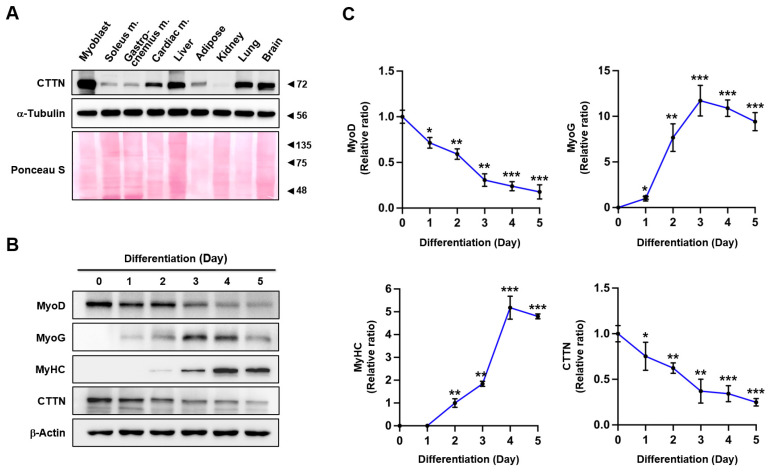
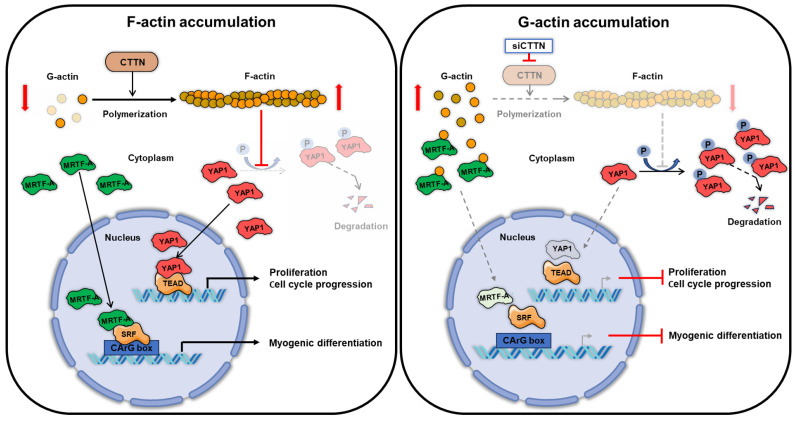
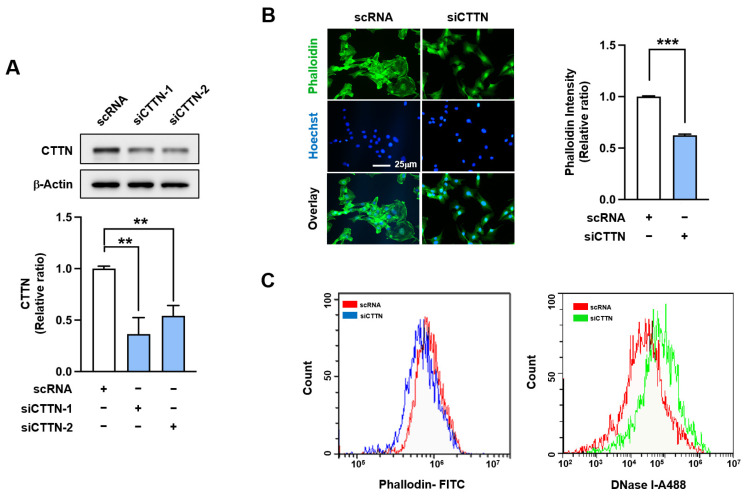
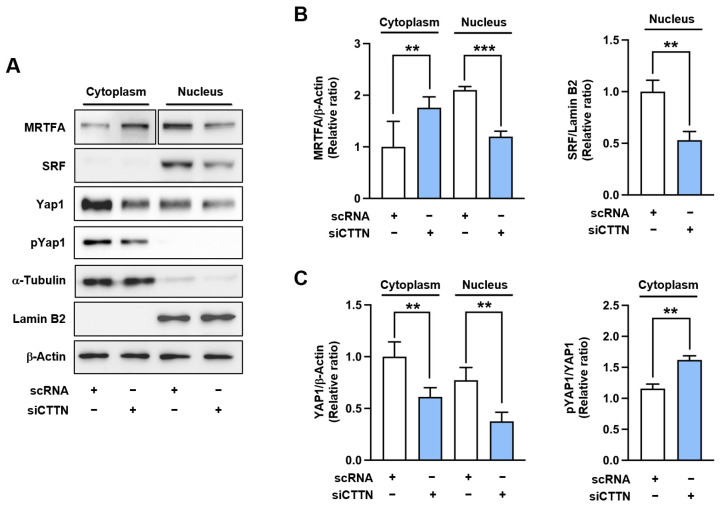
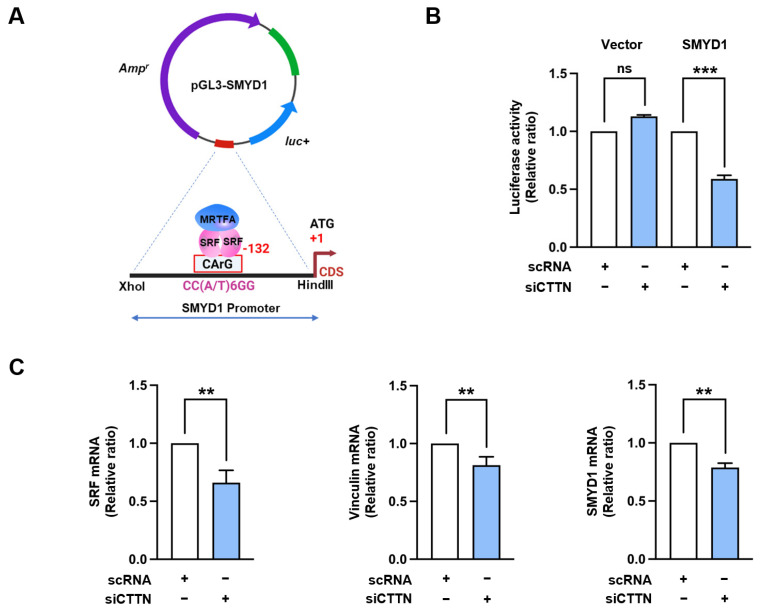
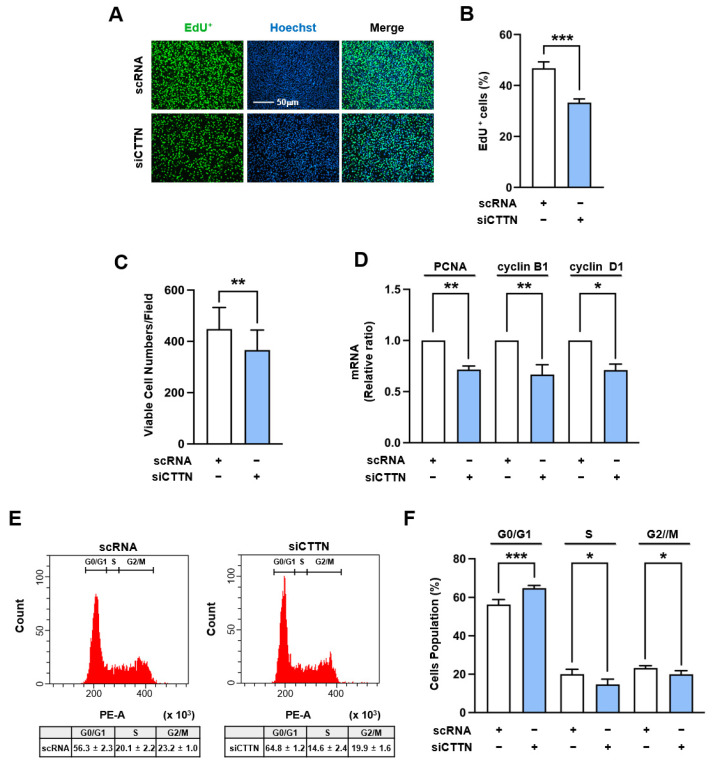
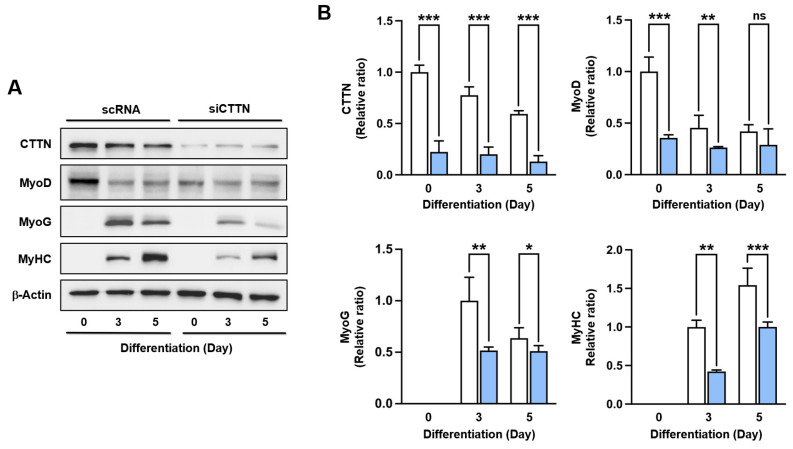
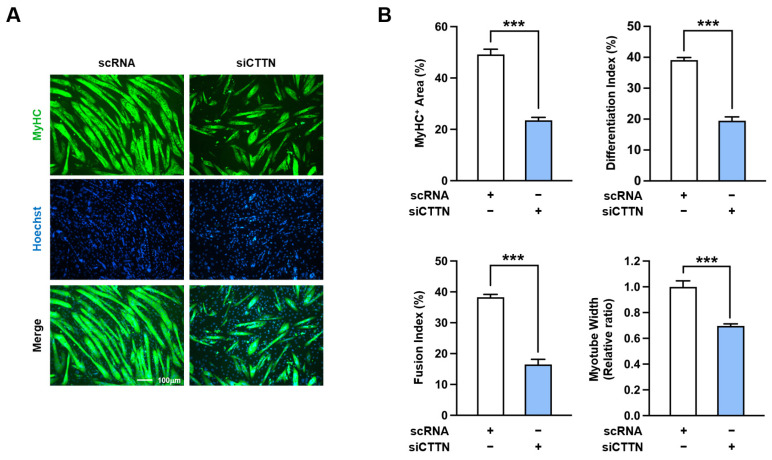
Cortactin (CTTN) is an actin-binding protein regulating actin polymerization and stabilization, which are vital processes for maintaining skeletal muscle homeostasis. Despite the established function of CTTN in actin cytoskeletal dynamics, its role in the myogenic differentiation of progenitor cells remains largely unexplored. In this study, we investigated the role of CTTN in the myogenic differentiation of C2C12 myoblasts by analyzing its effects on actin cytoskeletal remodeling, myocardin-related transcription factor A (MRTFA) nuclear translocation, serum response factor (SRF) activation, expression of myogenic transcription factors, and myotube formation. CTTN expression declined during myogenic differentiation, paralleling the reduction in MyoD, suggesting a potential role in the early stages of myogenesis. We also found that CTTN knockdown in C2C12 myoblasts reduced filamentous actin, enhanced globular actin levels, and inhibited the nuclear translocation of MRTFA, resulting in suppressed SRF activity. This led to the subsequent downregulation of myogenic regulatory factors, such as MyoD and MyoG. Furthermore, CTTN knockdown reduced the nuclear localization of YAP1, a mechanosensitive transcription factor, further supporting its regulatory roles in cell cycle and proliferation. Consequently, CTTN depletion impeded proliferation, differentiation, and myotube formation in C2C12 myoblasts, highlighting its dual role in the coordination of cell cycle regulation and myogenic differentiation of progenitor cells during myogenesis. This study identifies CTTN as an essential regulator of myogenic differentiation via affecting the actin remodeling-MRTFA-SRF signaling axis and cell proliferation.
皮层肌动蛋白(CTTN)是一种肌动蛋白结合蛋白,可调节肌动蛋白的聚合和稳定,而这两个过程对于维持骨骼肌稳态至关重要。尽管CTTN在肌动蛋白细胞骨架动力学中的既定功能已明确,但其在祖细胞成肌分化中的作用仍 largely未被探索。在本研究中,我们通过分析CTTN对肌动蛋白细胞骨架重塑、心肌素相关转录因子A(MRTFA)核转位、血清反应因子(SRF)激活、成肌转录因子表达以及肌管形成的影响,研究了CTTN在C2C12成肌细胞成肌分化中的作用。在成肌分化过程中,CTTN表达下降,与MyoD的减少平行,提示其在成肌早期可能发挥作用。我们还发现,敲低C2C12成肌细胞中的CTTN可减少丝状肌动蛋白,提高球状肌动蛋白水平,并抑制MRTFA的核转位,导致SRF活性受到抑制。这进而导致成肌调节因子如MyoD和MyoG的下调。此外,敲低CTTN可降低机械敏感转录因子YAP1的核定位,进一步支持其在细胞周期和增殖中的调节作用。因此,CTTN的缺失阻碍了C2C12成肌细胞的增殖、分化和肌管形成,突出了其在成肌过程中协调祖细胞的细胞周期调节和成肌分化的双重作用。本研究通过影响肌动蛋白重塑-MRTFA-SRF信号轴和细胞增殖,确定CTTN是成肌分化的关键调节因子。