Costa Lara T M, Rocha Bruna L, Teixeira Cleidiane C, Martins Hemilly C, Silveira Mauren Cristine A, Albuquerque Benedito, Cangussu Alex Sander R, He Peng, Aguiar Raimundo Wagner S, Maia Ana Maria S, Smagghe Guy, Oliveira Eugênio E
Departamento de Entomologia, Universidade Federal de Viçosa (UFV), Viçosa 36570-900, MG, Brazil.
Programa de Pós-Graduação em Biotecnologia, Universidade Federal do Tocantins (UFT), Gurupi 77402-970, TO, Brazil.
Insects. 2024 Dec 16;15(12):998. doi: 10.3390/insects15120998.
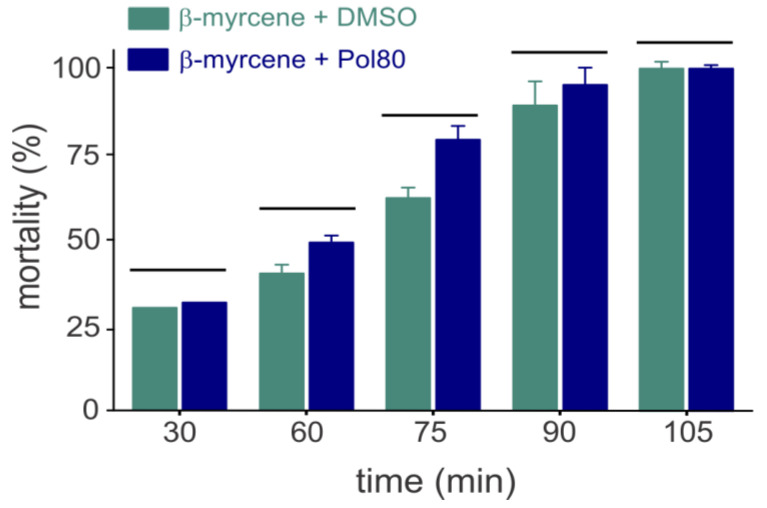
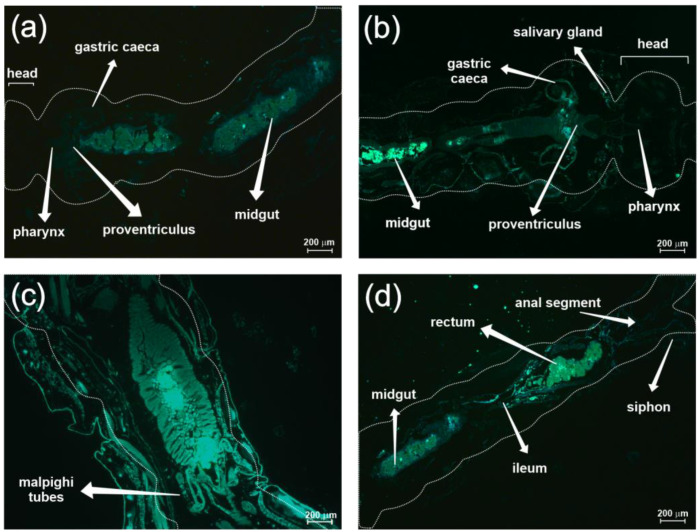
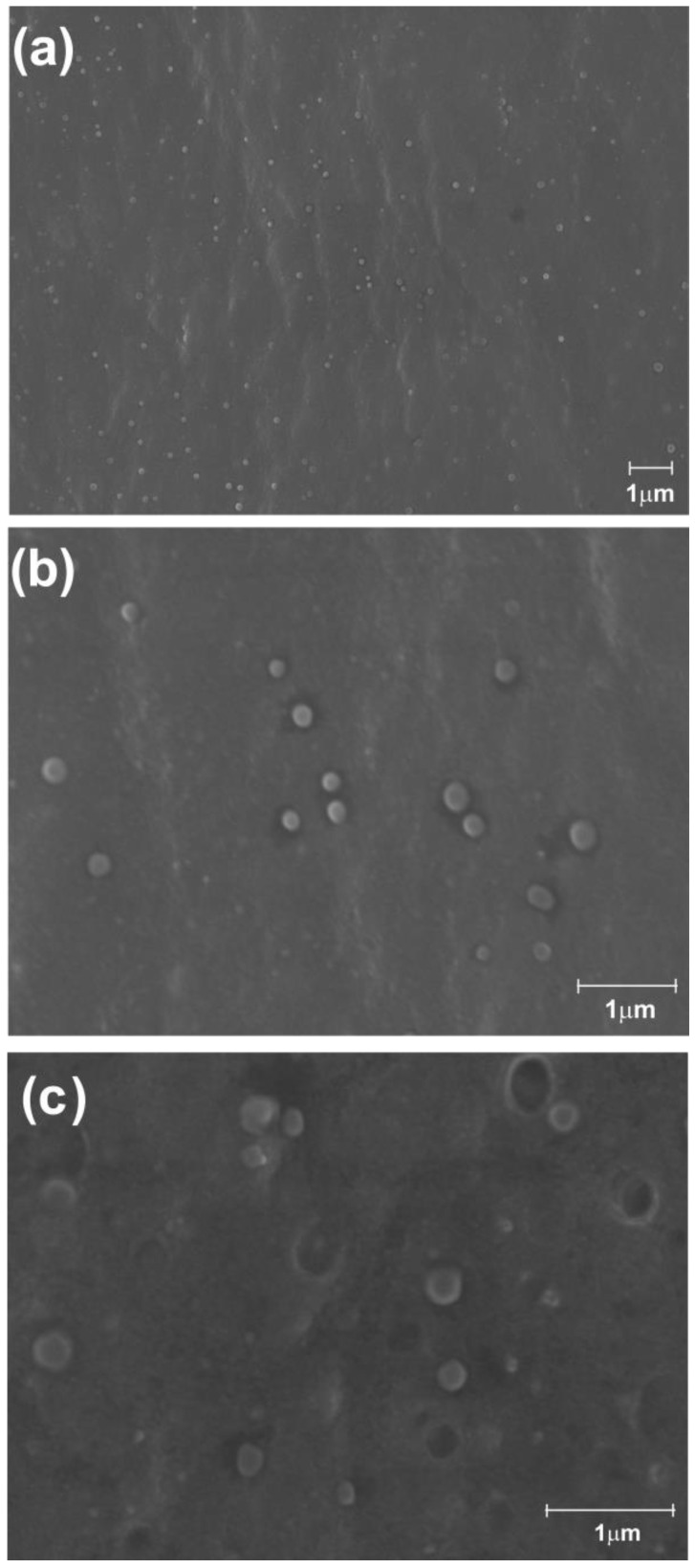
Mosquito control still relies heavily on synthetic molecules, which can lead to the selection of resistant populations and undesirable environmental problems. This study described the preparation of a nanoparticle of the plant-derived molecule, -myrcene, with chitosan, and the assessment of its toxicity against larvae of the yellow fever mosquito, . By producing fluorescent chitosan nanoparticles, we were able to observe their distribution in the digestive tract of larvae of . Chitosan-based nanoparticles containing -myrcene (238 mg/L) could kill 100% of the larvae tested, whereas the blank control (i.e., the nanoparticle without -myrcene) showed no larvicidal activity. The chitosan nanoparticles with -myrcene had a zeta potential of +15 mV and a hydrodynamic diameter ranging from 30 to 2800 nm. The blank control, without -myrcene, had a zeta potential of +26 mV and a diameter of 30 to 830 nm. Fluorescence analysis showed that the nanoparticles were efficiently absorbed and distributed in the digestive tract organs of the larvae. In short, our results reinforce the benefits of using chitosan to carry molecules of plant-derived-molecules, such as -myrcene, in mosquito control, suggesting a broad internal distribution that contributes to their toxicity.
蚊虫控制仍然严重依赖合成分子,这可能导致抗性种群的产生以及不良的环境问题。本研究描述了植物源分子月桂烯与壳聚糖制备纳米颗粒的过程,以及评估其对黄热病蚊子幼虫的毒性。通过制备荧光壳聚糖纳米颗粒,我们能够观察它们在黄热病蚊子幼虫消化道中的分布。含有月桂烯(238毫克/升)的壳聚糖基纳米颗粒可杀死100%的受试幼虫,而空白对照(即不含月桂烯的纳米颗粒)则没有杀幼虫活性。含月桂烯的壳聚糖纳米颗粒的zeta电位为+15毫伏,流体动力学直径为30至2800纳米。不含月桂烯的空白对照的zeta电位为+26毫伏,直径为30至830纳米。荧光分析表明,纳米颗粒在黄热病蚊子幼虫的消化道器官中被有效吸收和分布。简而言之,我们的结果强化了在蚊虫控制中使用壳聚糖携带植物源分子(如月桂烯)的益处,表明其广泛的内部分布有助于其毒性作用。