HKU-Pasteur Research Pole, School of Public Health, Li Ka Shing Faculty of Medicine, University of Hong Kong, Hong Kong SAR, China.
Sir William Dunn School of Pathology, University of Oxford, South Parks Road, Oxford, OX1 3RE, UK.
Nat Commun. 2023 May 10;14(1):2698. doi: 10.1038/s41467-023-38377-w.
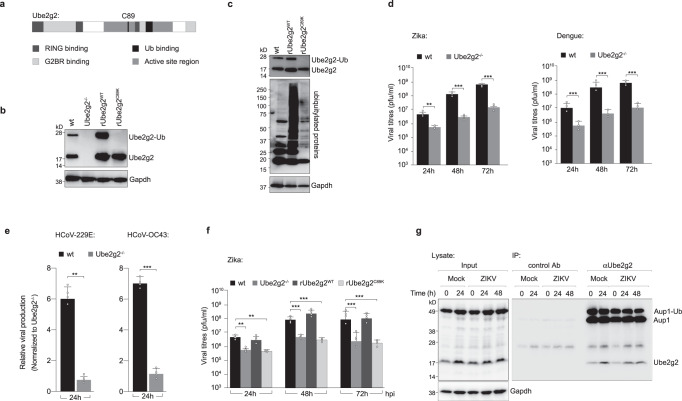
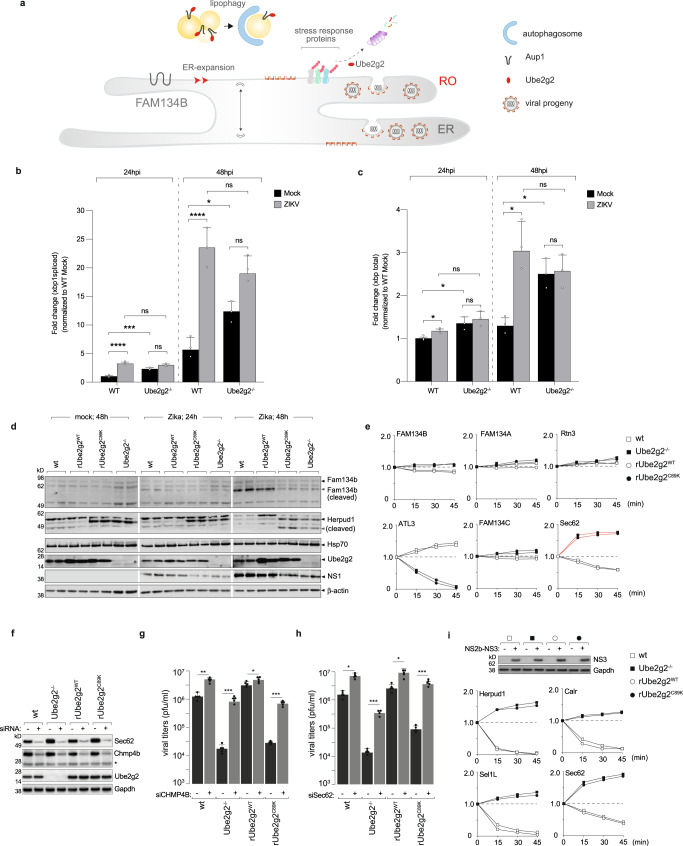
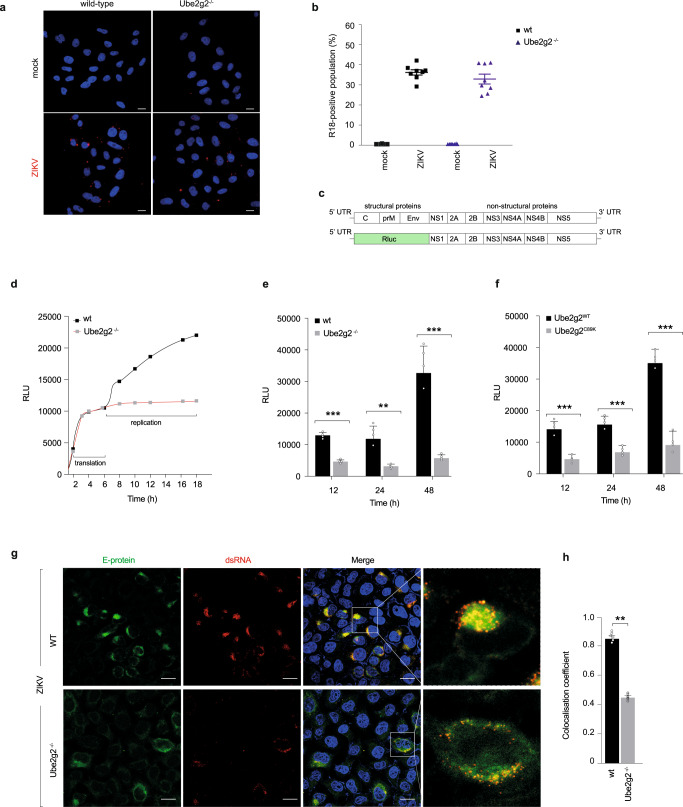
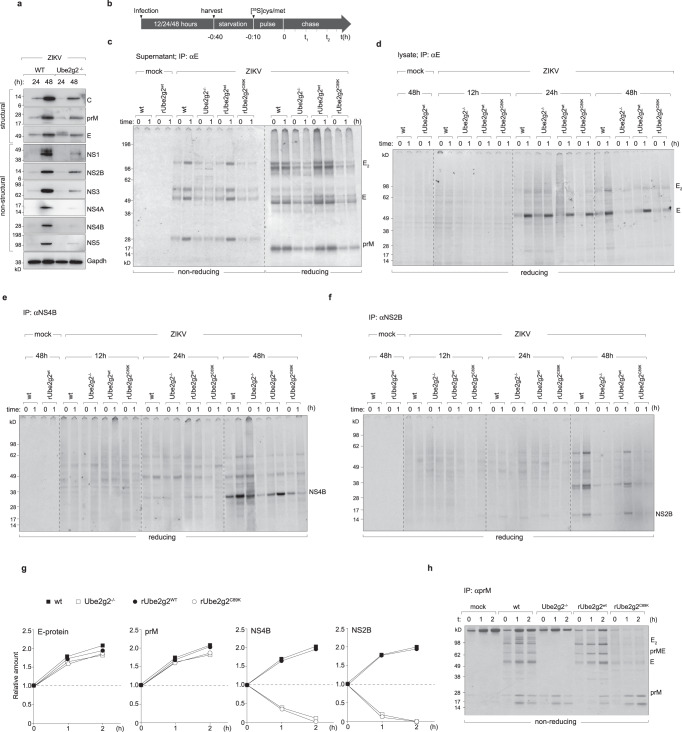
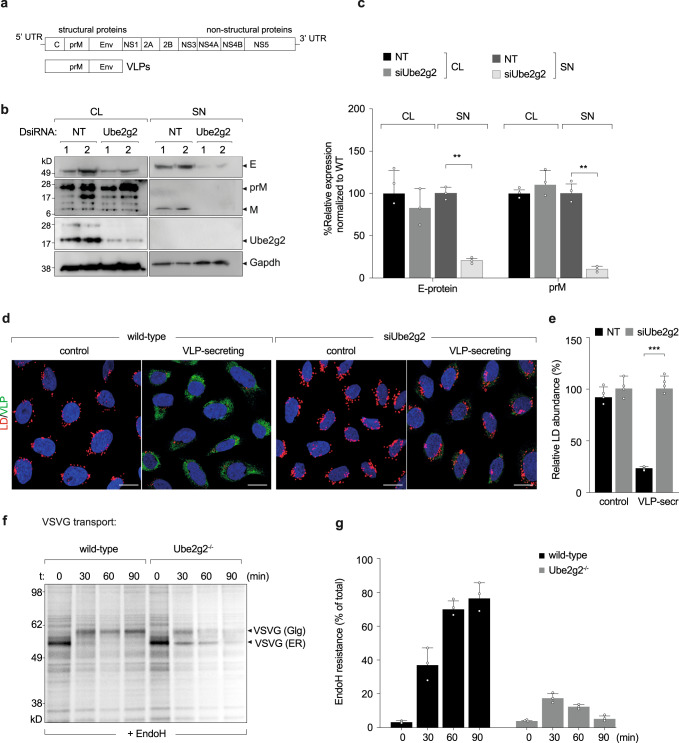
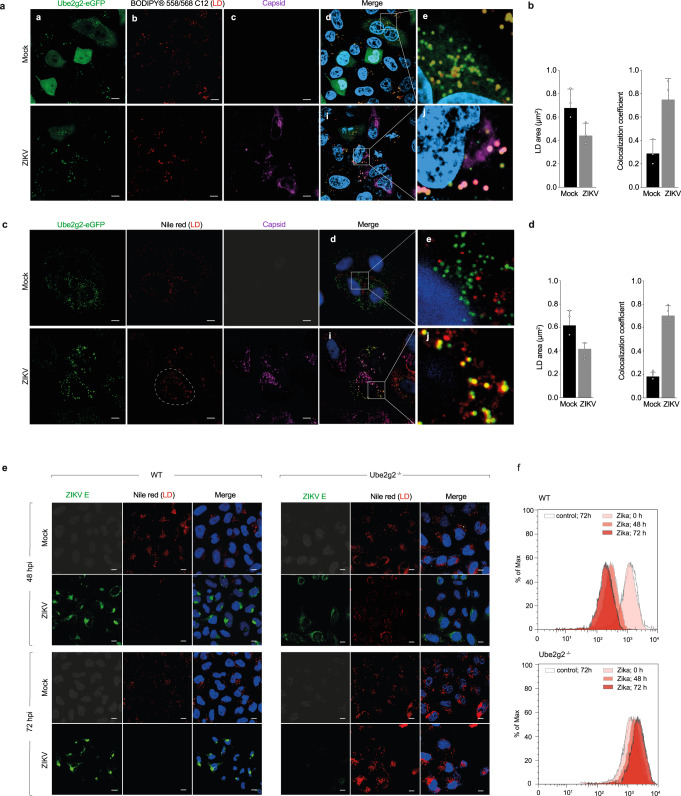
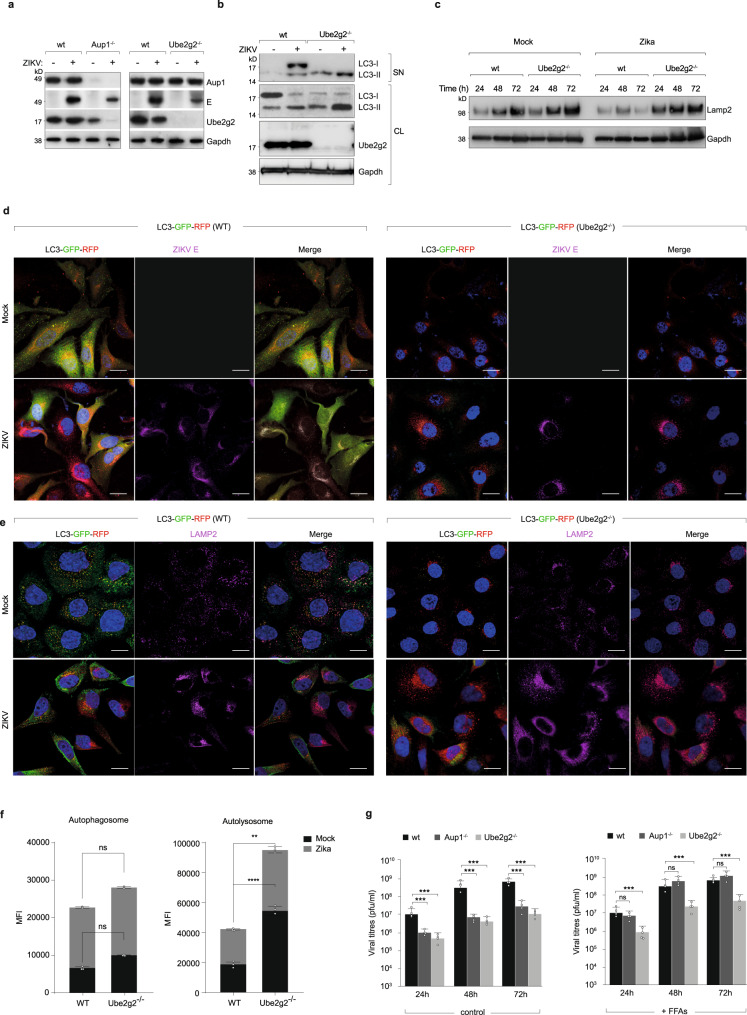
Infection by many (+)RNA viruses is accompanied by ER-expansion and membrane remodelling to form viral replication organelles, followed by assembly and secretion of viral progenies. We previously identified that virus-triggered lipophagy was critical for flaviviral assembly, and is driven by the lipid droplet associated protein Ancient ubiquitin protein 1 (Aup1). A ubiquitin conjugating protein Ube2g2 that functions as a co-factor for Aup1 was identified as a host dependency factor in our study. Here we characterized its function: Ube2g2-deficient cells displayed a dramatic reduction in virus production, which could be rescued by reconstituting the wild-type but not the catalytically deficient (C89K) mutant of Ube2g2, suggesting that its enzymatic activity is necessary. Ube2g2 deficiency did not affect entry of virus particles but resulted in a profound loss in formation of replication organelles, and production of infectious progenies. This phenomenon resulted from its dual activity in (i) triggering lipophagy in conjunction with Aup1, and (ii) degradation of ER chaperones such as Herpud1, SEL1L, Hrd1, along with Sec62 to restrict ER-phagy upon Xbp1-IRE1 triggered ER expansion. Our results therefore underscore an exquisite fine-tuning of selective autophagy by flaviviruses that drive host membrane reorganization during infection to enable biogenesis of viral replication organelles.
许多(+)RNA 病毒的感染伴随着内质网扩张和膜重塑,以形成病毒复制细胞器,随后进行病毒后代的组装和分泌。我们之前发现,病毒触发的脂噬对于黄病毒的组装至关重要,并且是由与脂滴相关的蛋白 Ancient ubiquitin protein 1 (Aup1) 驱动的。在我们的研究中,一种作为 Aup1 共因子发挥作用的泛素连接酶蛋白 Ube2g2 被鉴定为宿主依赖性因子。在这里,我们对其功能进行了表征:Ube2g2 缺陷细胞的病毒产量显著减少,而野生型但不是催化缺陷型 (C89K) 突变体的 Ube2g2 可恢复病毒产量,这表明其酶活性是必需的。Ube2g2 缺陷不影响病毒颗粒的进入,但导致复制细胞器的形成和感染性后代的产生严重减少。这种现象是由于其双重作用造成的:(i) 与 Aup1 一起触发脂噬,以及 (ii) 降解内质网伴侣蛋白,如 Herpud1、SEL1L、Hrd1 和 Sec62,以限制 Xbp1-IRE1 触发内质网扩张时的内质网自噬。因此,我们的结果强调了黄病毒对选择性自噬的精细调控,这种调控在感染过程中驱动宿主膜重排,以实现病毒复制细胞器的生物发生。