Davidova Slavena, Milushev Viktor, Satchanska Galina
UPIZ Educational and Research Laboratory of Biology-MF-NBU, New Bulgarian University, 1618 Sofia, Bulgaria.
Department of Natural Sciences, New Bulgarian University, Montevideo Blvd., 1618 Sofia, Bulgaria.
Toxics. 2024 Nov 30;12(12):875. doi: 10.3390/toxics12120875.
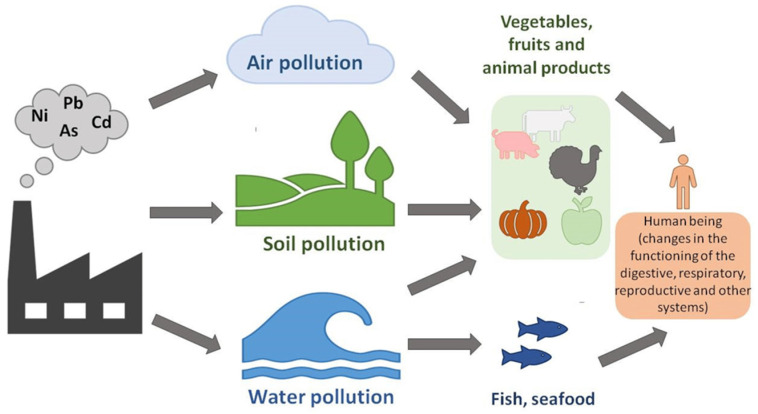
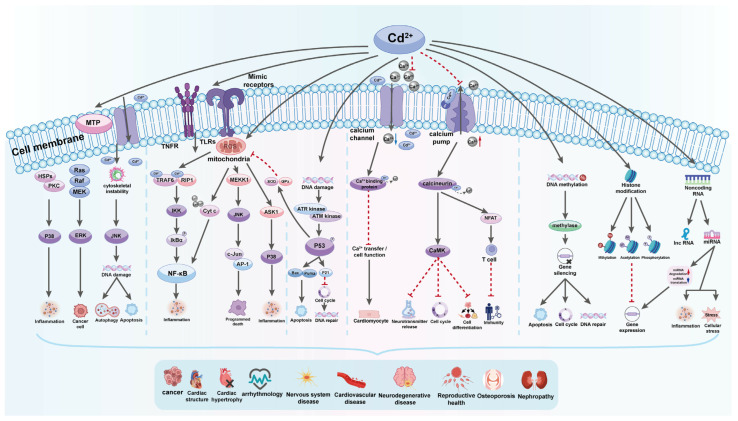
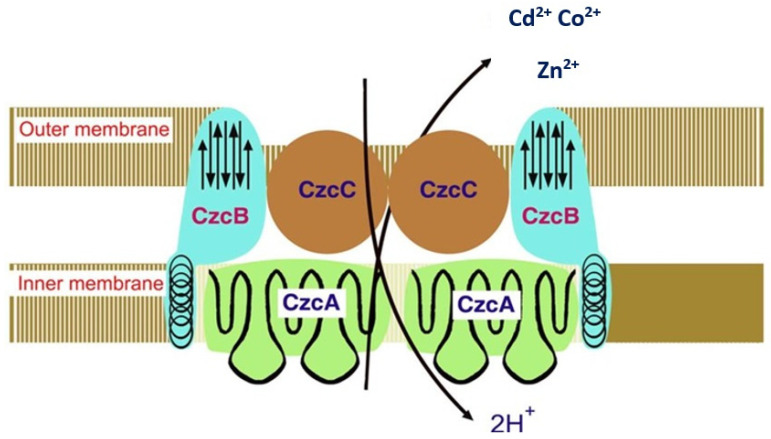
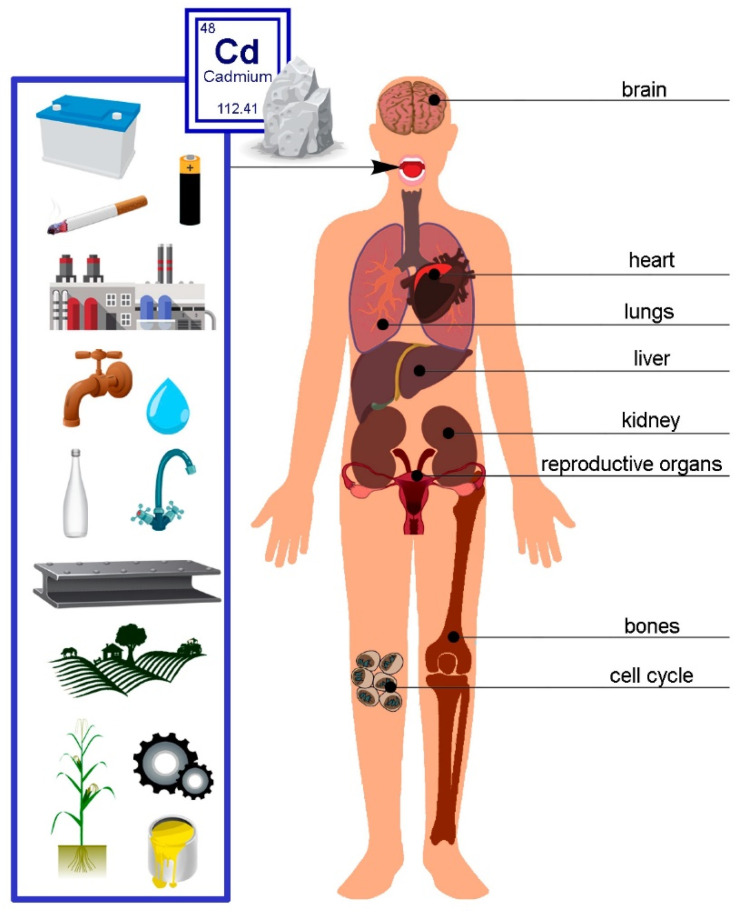
Cadmium (Cd) is a toxic metal primarily found as a by-product of zinc production. Cd was a proven carcinogen, and exposure to this metal has been linked to various adverse health effects, which were first reported in the mid-19th century and thoroughly investigated by the 20th century. The toxicokinetics and dynamics of Cd reveal its propensity for long biological retention and predominant storage in soft tissues. Until the 1950s, Cd pollution was caused by industrial activities, whereas nowadays, the main source is phosphate fertilizers, which strongly contaminate soil and water and affect human health and ecosystems. Cd enters the human body mainly through ingestion and inhalation, with food and tobacco smoke being the primary sources. It accumulates in various organs, particularly the kidney and liver, and is known to cause severe health problems, including renal dysfunction, bone diseases, cardiovascular problems, and many others. On a cellular level, Cd disrupts numerous biological processes, inducing oxidative stress generation and DNA damage. This comprehensive review explores Cd pollution, accumulation, distribution, and biological impacts on bacteria, fungi, edible mushrooms, plants, animals, and humans on a molecular level. Molecular aspects of carcinogenesis, apoptosis, autophagy, specific gene expression, stress protein synthesis, and ROS formation caused by Cd were discussed as well. This paper also summarizes how Cd is removed from contaminated environments and the human body.
镉(Cd)是一种有毒金属,主要作为锌生产的副产品被发现。镉是一种已被证实的致癌物,接触这种金属与各种不良健康影响有关,这些影响最早在19世纪中叶被报道,并在20世纪得到了深入研究。镉的毒代动力学和动态揭示了其在生物体内长期留存以及主要储存在软组织中的倾向。直到20世纪50年代,镉污染是由工业活动造成的,而如今,主要来源是磷肥,磷肥会严重污染土壤和水,并影响人类健康和生态系统。镉主要通过摄入和吸入进入人体,食物和烟草烟雾是主要来源。它在各个器官中积累,尤其是肾脏和肝脏,并已知会导致严重的健康问题,包括肾功能障碍、骨骼疾病、心血管问题等等。在细胞水平上,镉会破坏许多生物过程,引发氧化应激的产生和DNA损伤。这篇综述在分子水平上探讨了镉污染、积累、分布以及对细菌、真菌、可食用蘑菇、植物、动物和人类的生物学影响。还讨论了镉引发的致癌作用、细胞凋亡、自噬、特定基因表达、应激蛋白合成和活性氧形成的分子层面问题。本文还总结了如何从受污染的环境和人体中去除镉。