Adhikari Bipin, Kang Sophie Suh Young, Dahal Aaryan, Mshamu Salum, Deen Jacqueline, Pell Christopher, von Seidlein Lorenz, Knudsen Jakob, Bøjstrup Thomas Chevalier
Mahidol Oxford Tropical Medicine Research Unit, Faculty of Tropical Medicine, Mahidol University, Bangkok, Thailand.
Centre for Tropical Medicine and Global Health, Nuffield Department of Medicine, University of Oxford, Oxford, United Kingdom.
PLOS Glob Public Health. 2025 Jan 7;5(1):e0004042. doi: 10.1371/journal.pgph.0004042. eCollection 2025.
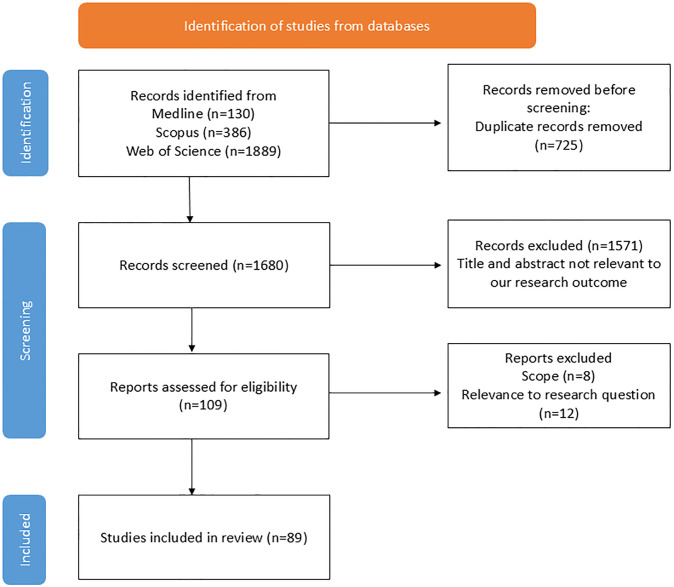
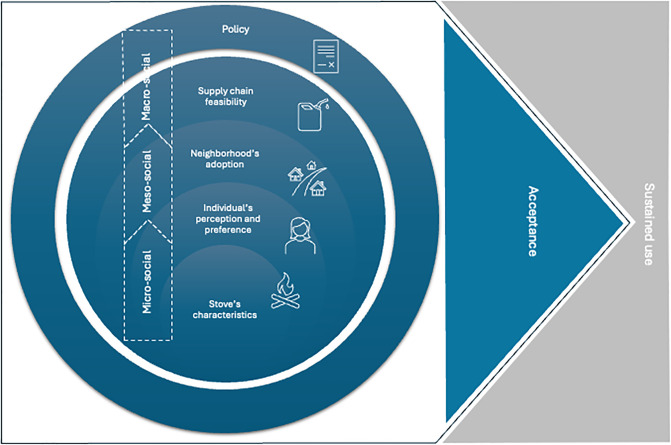
Improved cooking stoves (ICS) are intended to reduce indoor air pollution and the inefficient use of fuel yet there is often reticence to shift permanently to ICS. Drawing on a scoping review, this article aims to provide a comprehensive overview of factors affecting the acceptability of ICS. A scoping review was carried out using a systematic search strategy of literature. All articles identified in three major databases that included Pubmed/Medline, Scopus and Web of Science underwent screening followed by content analysis to generate major and minor themes using a structured social level analysis. The analysis identified factors at micro, meso, and macro-social levels that potentially contribute to an adoption of an improved cooking stove (ICS). The findings from the review were discussed and refined among a group of experts identified based on their prior academic or commercial contributions related to ICS. Adoption of ICS was dependent on functional outputs (e.g. cleanliness, and cooking efficiency) while meeting local social and cultural demands (e.g. cooking large meals, traditional meals, and taste). Health and cost benefits played an important role in the adoption and sustained use of ICS. The adoption of ICS was enabled by use among neighbors and other community members. Sustained use of ICS depended on fuel supply, fuel security and policies promoting its use. Policies offering subsidies in support of supply-chain garnered institutional trust among community members and resulted in the sustained use of ICS. In addition to design attributes of ICS that could meet both scientific and social demands, policies supporting promotion of clean energy, subsidies and supplies can substantially enhance the adoption of ICS.
改良炉灶旨在减少室内空气污染并提高燃料使用效率,但人们往往不愿长期改用改良炉灶。本文通过范围综述,旨在全面概述影响改良炉灶可接受性的因素。使用文献系统检索策略进行了范围综述。对在三个主要数据库(包括Pubmed/Medline、Scopus和Web of Science)中识别出的所有文章进行筛选,然后进行内容分析,使用结构化社会层面分析生成主要和次要主题。分析确定了微观、中观和宏观社会层面上可能有助于采用改良炉灶的因素。在一组根据其先前与改良炉灶相关的学术或商业贡献确定的专家中,对综述结果进行了讨论和完善。改良炉灶的采用取决于功能输出(如清洁度和烹饪效率),同时要满足当地社会和文化需求(如烹制大餐、传统餐食和口味)。健康和成本效益在改良炉灶的采用和持续使用中发挥了重要作用。邻居和其他社区成员的使用推动了改良炉灶的采用。改良炉灶的持续使用取决于燃料供应、燃料安全以及促进其使用的政策。提供补贴以支持供应链的政策在社区成员中赢得了机构信任,并导致了改良炉灶的持续使用。除了改良炉灶的设计属性能够满足科学和社会需求外,支持推广清洁能源、补贴和供应的政策可以大幅提高改良炉灶的采用率。