Ghimire Animesh, Manandhar Mohan Das, Karki Sarita, Bajracharya Karuna
Sustainable Prosperity Initiative Nepal, Kathmandu, Nepal.
Clean Cooking Alliance, United Nations Foundation, Washington, DC, United States.
Front Public Health. 2025 Jul 24;13:1657267. doi: 10.3389/fpubh.2025.1657267. eCollection 2025.
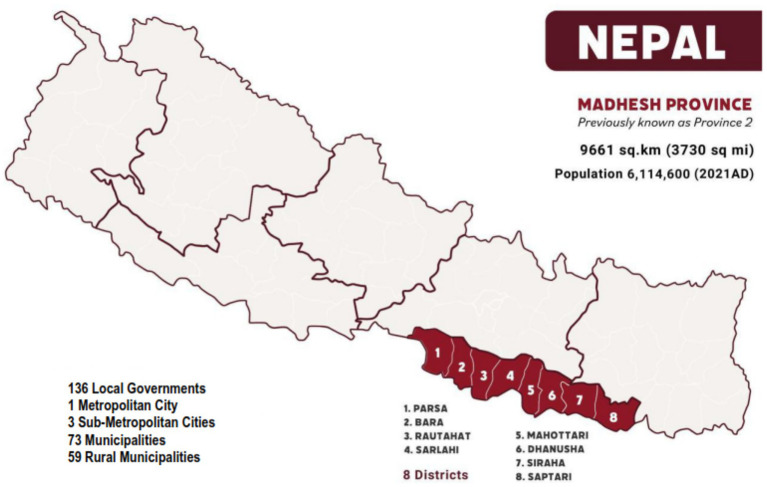
Household cooking with solid fuels exposes women to prolonged indoor heat levels that routinely exceed internationally accepted occupational safety thresholds; yet, this exposure remains largely absent from climate-health analyses. This perspective article introduces the concept of thermal labor-the physiological strain, time cost, and health risks associated with performing domestic work under chronically elevated kitchen temperatures-and argues that such exposure constitutes an overlooked driver of gendered health inequities in Nepal's Madhesh Province.
Evidence was synthesized from national temperature records, caste-disaggregated census data, spot measurements conducted by the Nepal Health Research Council, and illustrative intervention studies from South Asia and Africa. The policy context was examined through Nepal's Nationally Determined Contribution, the Clean Cooking Alliance Nepal Country Action Plan, and the National Disaster Risk Legislation.
The synthesis suggests that accelerated warming in Nepal's lowlands and caste-linked reliance on biomass fuels result in daily indoor heat exposures. Prior studies associate such exposures with appetite suppression, reduced dietary diversity, and increased time burdens for women who manage household cooking. These established pathways, when considered alongside the socioeconomic profile of Dalit households in Madhesh, indicate a heightened but under-documented risk for this group. Nepal's existing target of achieving electric cooking adoption in 31.5 percent of households by 2035 offers a practical policy lever for reducing thermal exposure and its associated health and equity impacts.
Positioning thermal labor as a measurable health determinant broadens the clean-cooking agenda beyond smoke reduction to encompass heat mitigation, nutrition, and gender equity. A balanced approach is proposed: sentinel kitchen-heat surveillance within existing household surveys would establish exposure baselines; thermal-performance criteria in stove-procurement standards could translate policy commitments into verifiable outcomes; and integrating heat indicators into clean-cooking and disaster-risk frameworks would facilitate coordinated action. These steps would convert domestic heat from an invisible stressor into a tractable public health target, illustrating how a single intervention pathway can advance climate, energy, and equity goals.
使用固体燃料进行家庭烹饪使女性长期暴露在室内高温环境中,这种温度通常超过国际公认的职业安全阈值;然而,气候与健康分析中很大程度上忽略了这种暴露情况。这篇观点文章引入了热劳动的概念——即在长期升高的厨房温度下进行家务劳动所带来的生理压力、时间成本和健康风险——并认为这种暴露是尼泊尔马德西省性别健康不平等的一个被忽视的驱动因素。
综合了国家温度记录、按种姓分类的人口普查数据、尼泊尔卫生研究委员会进行的现场测量,以及来自南亚和非洲的实例干预研究。通过尼泊尔的国家自主贡献、尼泊尔清洁烹饪联盟国家行动计划和国家灾害风险立法来审视政策背景。
综合分析表明,尼泊尔低地的加速变暖以及与种姓相关的对生物质燃料的依赖导致了日常室内高温暴露。先前的研究将这种暴露与食欲抑制、饮食多样性减少以及负责家庭烹饪的女性时间负担增加联系起来。当将这些既定途径与马德西省达利特家庭的社会经济状况一并考虑时,表明该群体面临的风险更高但记录不足。尼泊尔现有的到2035年使31.5%的家庭采用电烹饪的目标,为减少热暴露及其相关的健康和公平影响提供了一个切实可行的政策杠杆。
将热劳动定位为一个可衡量的健康决定因素,将清洁烹饪议程从减少烟雾扩展到包括减轻热量、营养和性别平等。提出了一种平衡的方法:在现有的家庭调查中进行厨房热监测哨点工作将建立暴露基线;炉灶采购标准中的热性能标准可以将政策承诺转化为可核实的结果;将热指标纳入清洁烹饪和灾害风险框架将促进协调行动。这些步骤将把家庭热量从一个无形的压力源转化为一个易于处理的公共卫生目标,说明单一的干预途径如何能够推进气候、能源和公平目标。