Liu Shuyu, Zhou Jingjing, Zhu Xuequan, Zhang Ya, Zhou Xinzhu, Zhang Shaoting, Yang Zhi, Wang Ziji, Wang Ruoxi, Yuan Yizhe, Fang Xin, Chen Xiongying, Wang Yanfeng, Zhang Ling, Wang Gang, Jin Cheng
Medical Robot Research Institute, School of Biomedical Engineering, Shanghai Jiao Tong University, Shanghai 200240, China.
Beijing Key Laboratory of Mental Disorders, National Clinical Research Center for Mental Disorders & National Center for Mental Disorders, Beijing Anding Hospital & Advanced Innovation Center for Human Brain Protection, Capital Medical University, Beijing 100088, China.
Patterns (N Y). 2024 Nov 4;5(12):101081. doi: 10.1016/j.patter.2024.101081. eCollection 2024 Dec 13.
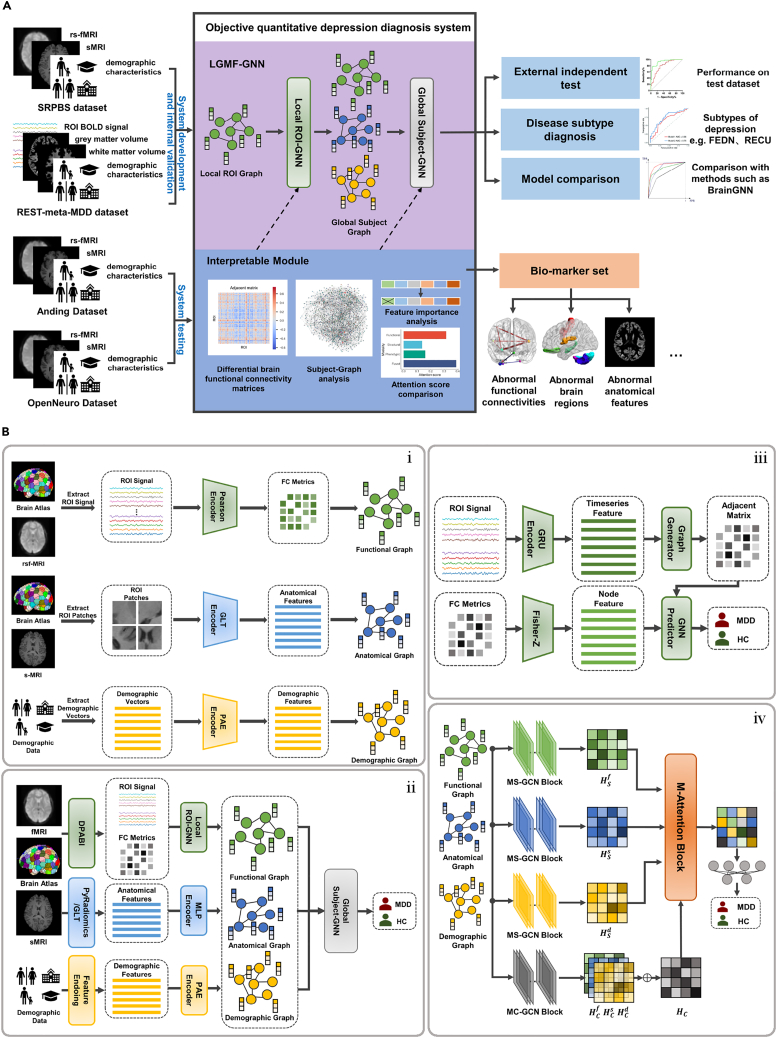
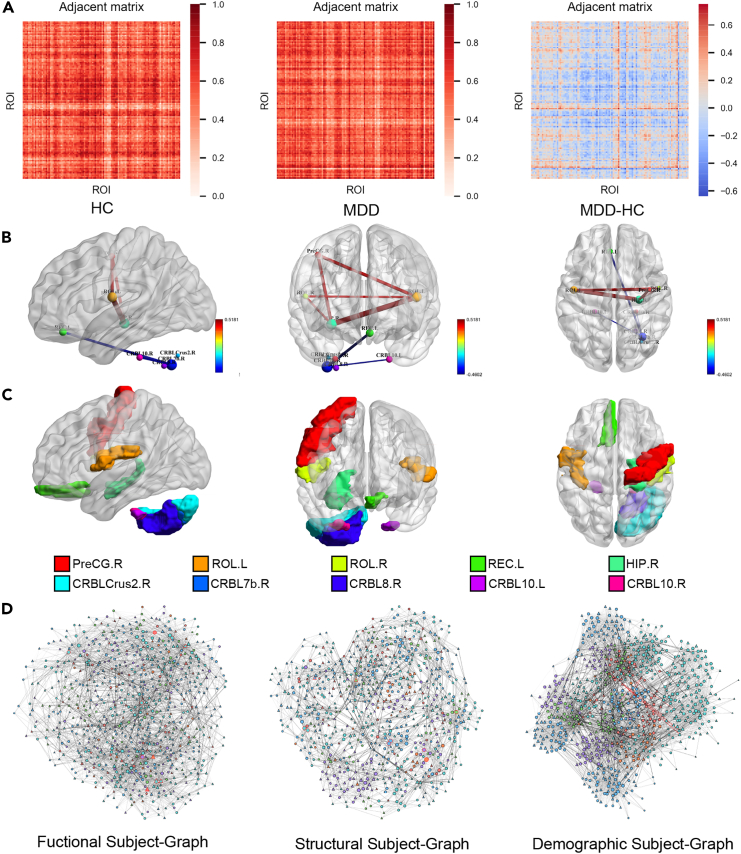
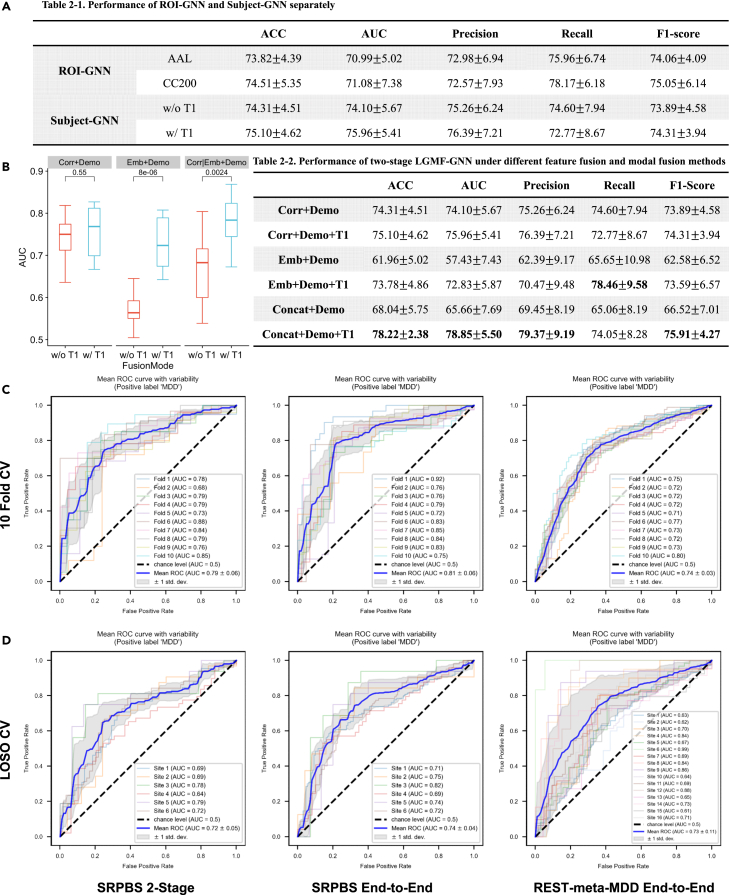
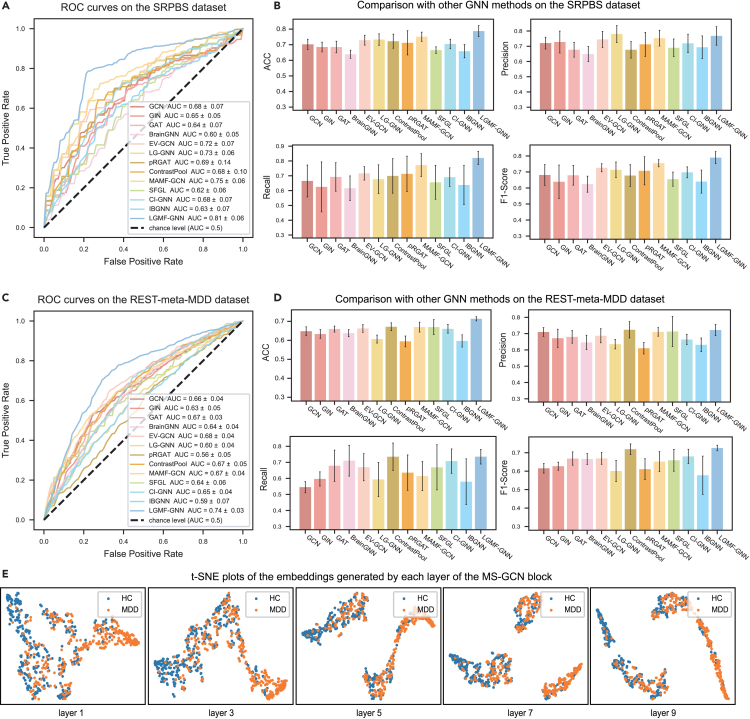
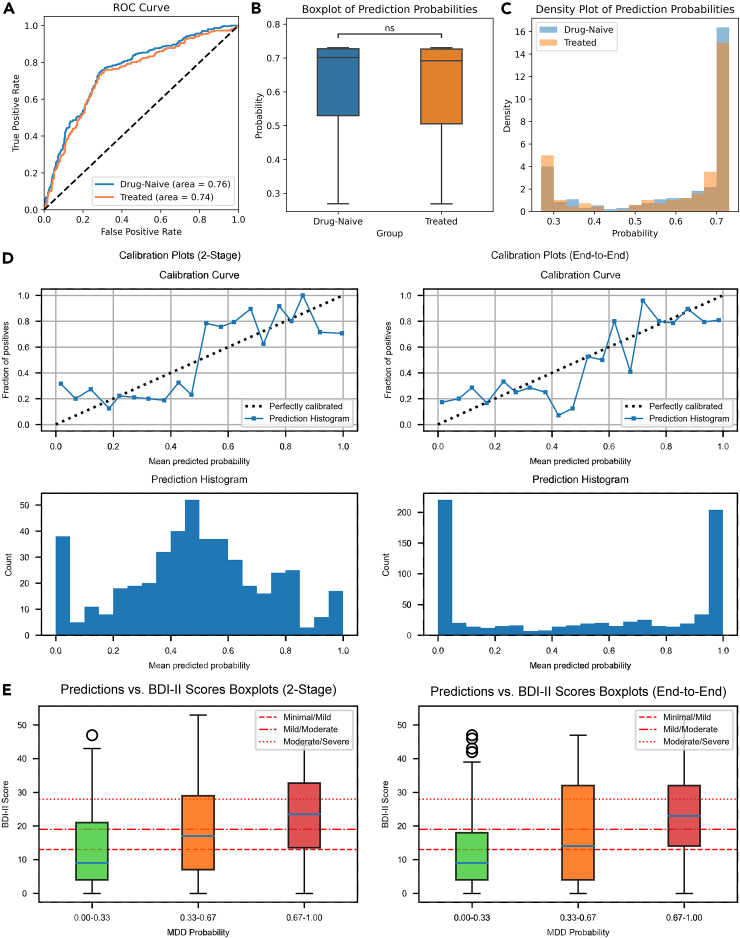
This study developed an artificial intelligence (AI) system using a local-global multimodal fusion graph neural network (LGMF-GNN) to address the challenge of diagnosing major depressive disorder (MDD), a complex disease influenced by social, psychological, and biological factors. Utilizing functional MRI, structural MRI, and electronic health records, the system offers an objective diagnostic method by integrating individual brain regions and population data. Tested across cohorts from China, Japan, and Russia with 1,182 healthy controls and 1,260 MDD patients from 24 institutions, it achieved a classification accuracy of 78.75%, an area under the receiver operating characteristic curve (AUROC) of 80.64%, and correctly identified MDD subtypes. The system further discovered distinct brain connectivity patterns in MDD, including reduced functional connectivity between the left gyrus rectus and right cerebellar lobule VIIB, and increased connectivity between the left Rolandic operculum and right hippocampus. Anatomically, MDD is associated with thickness changes of the gray and white matter interface, indicating potential neuropathological conditions or brain injuries.
本研究开发了一种使用局部-全局多模态融合图神经网络(LGMF-GNN)的人工智能(AI)系统,以应对诊断重度抑郁症(MDD)这一挑战,MDD是一种受社会、心理和生物因素影响的复杂疾病。该系统利用功能磁共振成像(fMRI)、结构磁共振成像(MRI)和电子健康记录,通过整合个体脑区和人群数据提供了一种客观的诊断方法。在来自中国、日本和俄罗斯的队列中进行测试,涉及来自24个机构的1182名健康对照和1260名MDD患者,其分类准确率达到78.75%,受试者操作特征曲线下面积(AUROC)为80.64%,并正确识别了MDD亚型。该系统进一步发现了MDD中不同的脑连接模式,包括左直回与右小脑小叶VIIB之间的功能连接减少,以及左中央前回盖与右海马之间的连接增加。在解剖学上,MDD与灰质和白质界面的厚度变化有关,表明存在潜在的神经病理学状况或脑损伤。