Liu Yijiang, Tao Huijing, Jia Shengjun, Wang Haozheng, Guo Long, Hu Zhuozheng, Zhang Wenxiong, Liu Fei
Department of Thoracic Surgery, The Second Affiliated Hospital, Jiangxi Medical College, Nanchang University, Nanchang, Jiangxi 330006, P.R. China.
Jiangxi Medical College, Nanchang University, Nanchang, Jiangxi 330006, P.R. China.
Mol Clin Oncol. 2024 Dec 13;22(2):19. doi: 10.3892/mco.2024.2814. eCollection 2025 Feb.
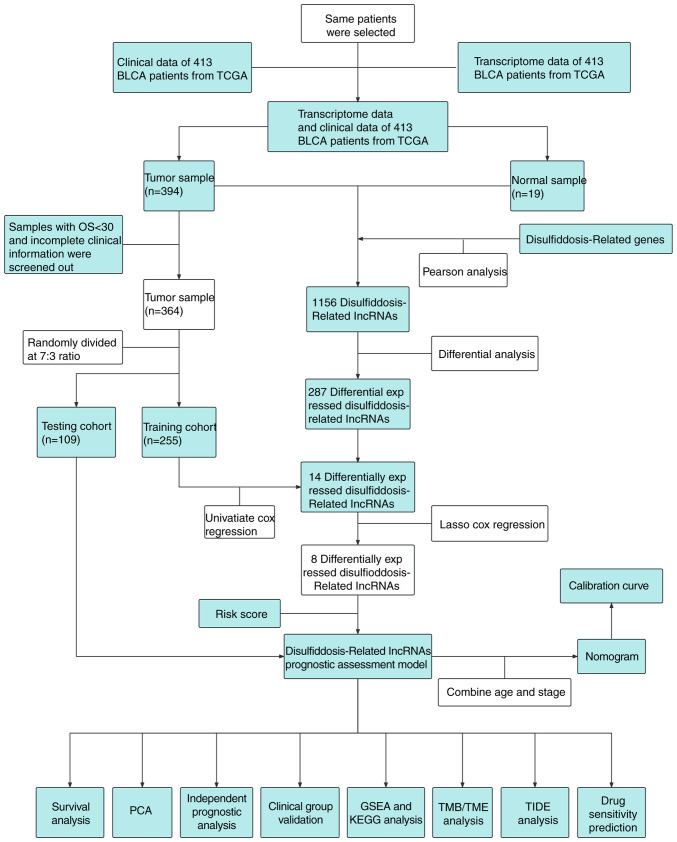
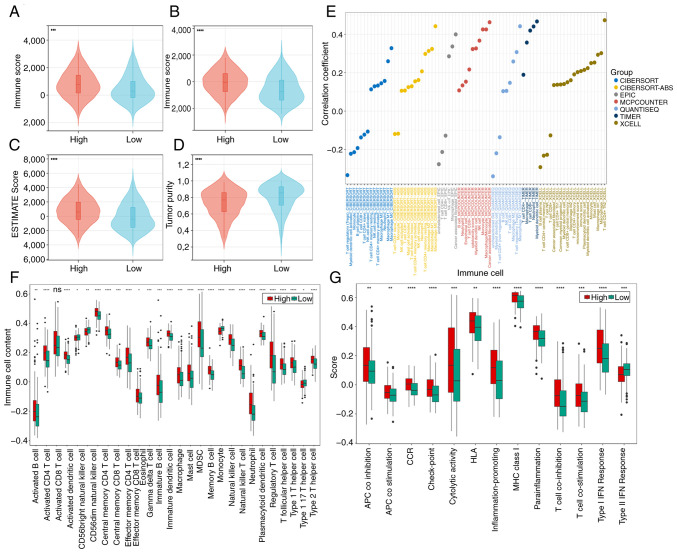
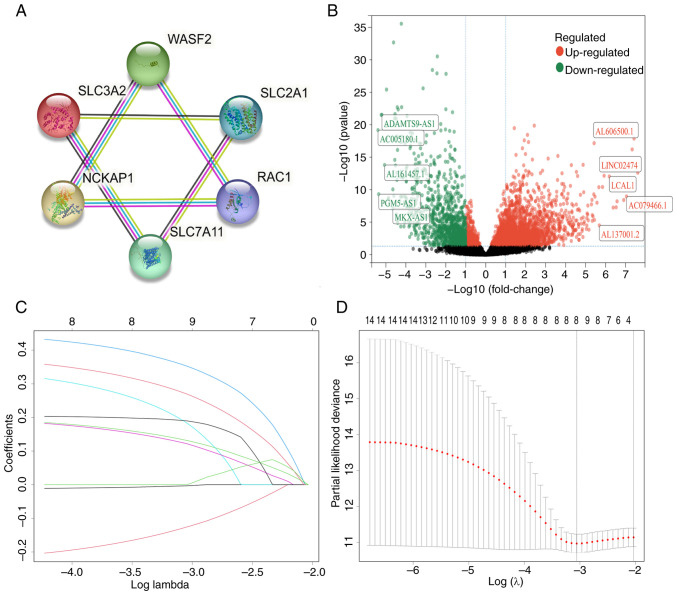
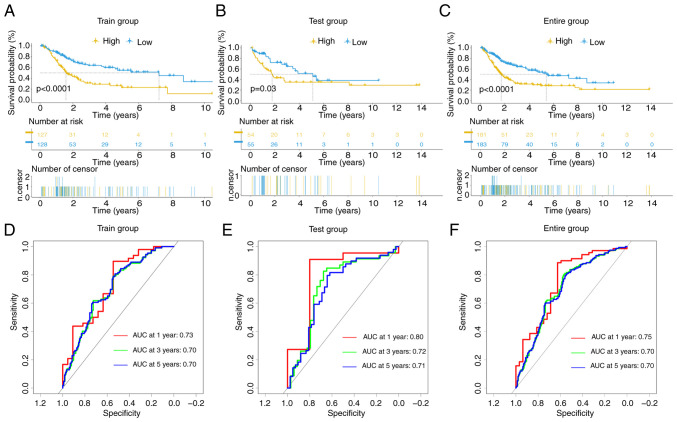
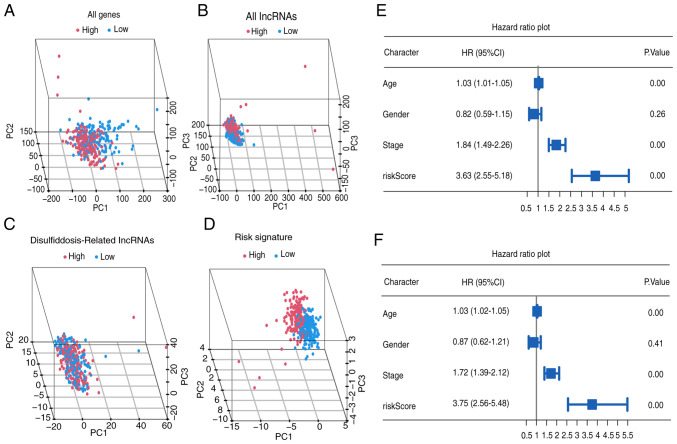
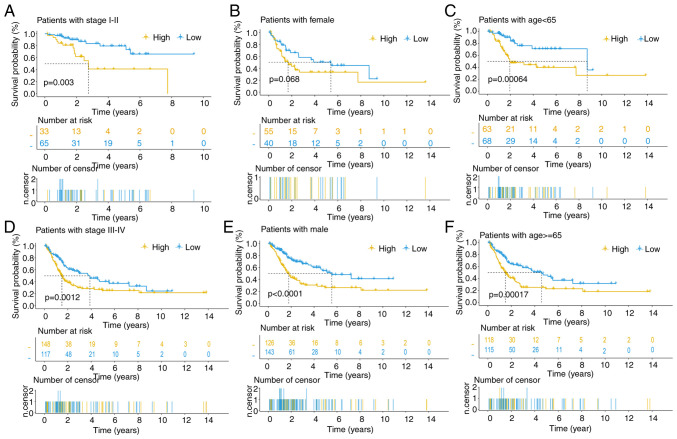
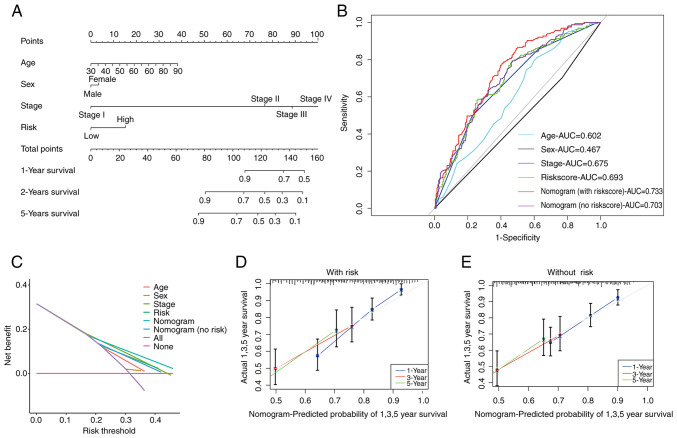
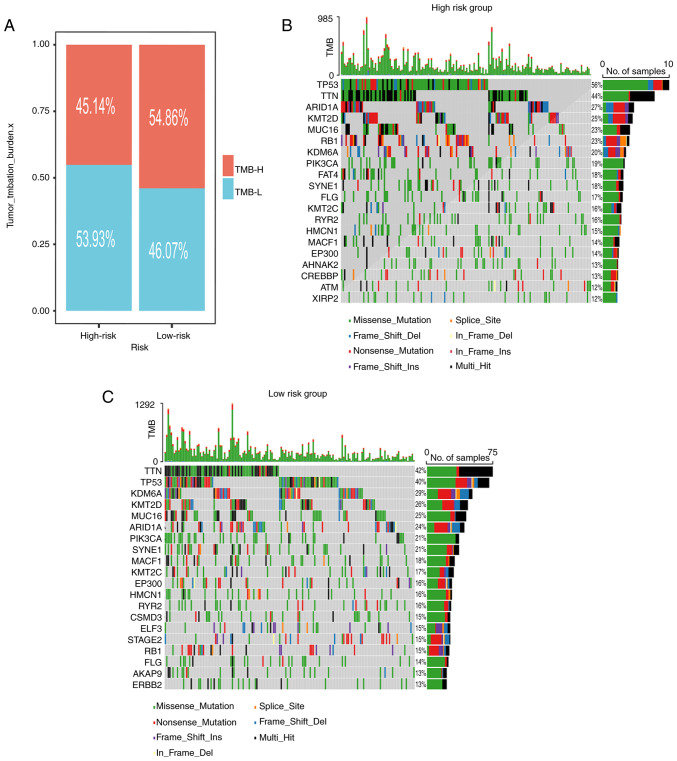
Disulfidptosis, which was recently identified, has shown promise as a potential cancer treatment. Nonetheless, the precise role of long non-coding RNAs (lncRNAs) in this phenomenon is currently unclear. To elucidate their significance in bladder cancer (BLCA), a signature of disulfidptosis-related lncRNAs (DRlncRNAs) was developed and their potential prognostic significance was explored. BLCA sample data were sourced from The Cancer Genome Atlas. A predictive signature comprising DRlncRNAs was formulated and subsequently validated. The combination of this signature with clinical characteristics facilitated the development of a nomogram with practical clinical utility. Additionally, enrichment analysis was conducted, the tumor microenvironment (TME) was assessed, the tumor mutational burden (TMB) was analyzed, and drug sensitivity was explored. Reverse transcription-quantitative PCR (RT-qPCR) was utilized to quantify lncRNA expression. The results revealed an eight-gene signature based on DRlncRNAs was established, and the predictive accuracy of the nomogram that incorporated the risk score [area under the curve (AUC)=0.733] outperformed the nomogram without it (AUC=0.703). High-risk groups were associated with pathways such as WNT signaling, focal adhesion and cell cycle pathways. The TME study revealed that high-risk patients had increased immune infiltration, whereas the TMB and tumor immune dysfunction and exclusion scores in low-risk patients indicated a potentially robust immune response. Drug sensitivity analysis identified appropriate antitumor drugs for each group. RT-qPCR experiments validated significant differences in DRlncRNAs expression between normal and BLCA cell lines. In conclusion, the prognostic risk signature, which includes the eight identified DRlncRNAs, demonstrates promise for predicting prognosis of patients with BLCA and guiding the selection of suitable immunotherapy and chemotherapy strategies.
最近发现的双硫死亡已显示出作为一种潜在癌症治疗方法的前景。尽管如此,长链非编码RNA(lncRNA)在这一现象中的确切作用目前尚不清楚。为了阐明它们在膀胱癌(BLCA)中的意义,我们开发了一种双硫死亡相关lncRNA(DRlncRNA)特征,并探讨了它们潜在的预后意义。BLCA样本数据来自癌症基因组图谱。制定了一个包含DRlncRNA的预测特征,随后进行了验证。该特征与临床特征相结合,有助于开发具有实际临床应用价值的列线图。此外,还进行了富集分析,评估了肿瘤微环境(TME),分析了肿瘤突变负担(TMB),并探索了药物敏感性。利用逆转录定量PCR(RT-qPCR)对lncRNA表达进行定量。结果显示,基于DRlncRNA建立了一个八基因特征,纳入风险评分的列线图的预测准确性[曲线下面积(AUC)=0.733]优于未纳入风险评分的列线图(AUC=0.703)。高风险组与WNT信号传导、粘着斑和细胞周期途径等通路相关。TME研究表明,高风险患者的免疫浸润增加,而低风险患者的TMB以及肿瘤免疫功能障碍和排除评分表明其可能具有强大的免疫反应。药物敏感性分析为每组确定了合适的抗肿瘤药物。RT-qPCR实验验证了正常细胞系和BLCA细胞系之间DRlncRNA表达的显著差异。总之,包括八个已鉴定的DRlncRNA的预后风险特征显示出有望预测BLCA患者的预后,并指导选择合适的免疫治疗和化疗策略。