Maxwell DruAnne L, Petriello Michael C, Pilsner J Richard
Department of Obstetrics and Gynecology, C.S. Mott Center for Human Growth and Development, School of Medicine, Wayne State University, Detroit, Michigan.
Department of Physiology, School of Medicine, Wayne State University, Detroit, Michigan.
Semin Reprod Med. 2024 Dec;42(4):288-301. doi: 10.1055/s-0044-1801363. Epub 2025 Jan 9.
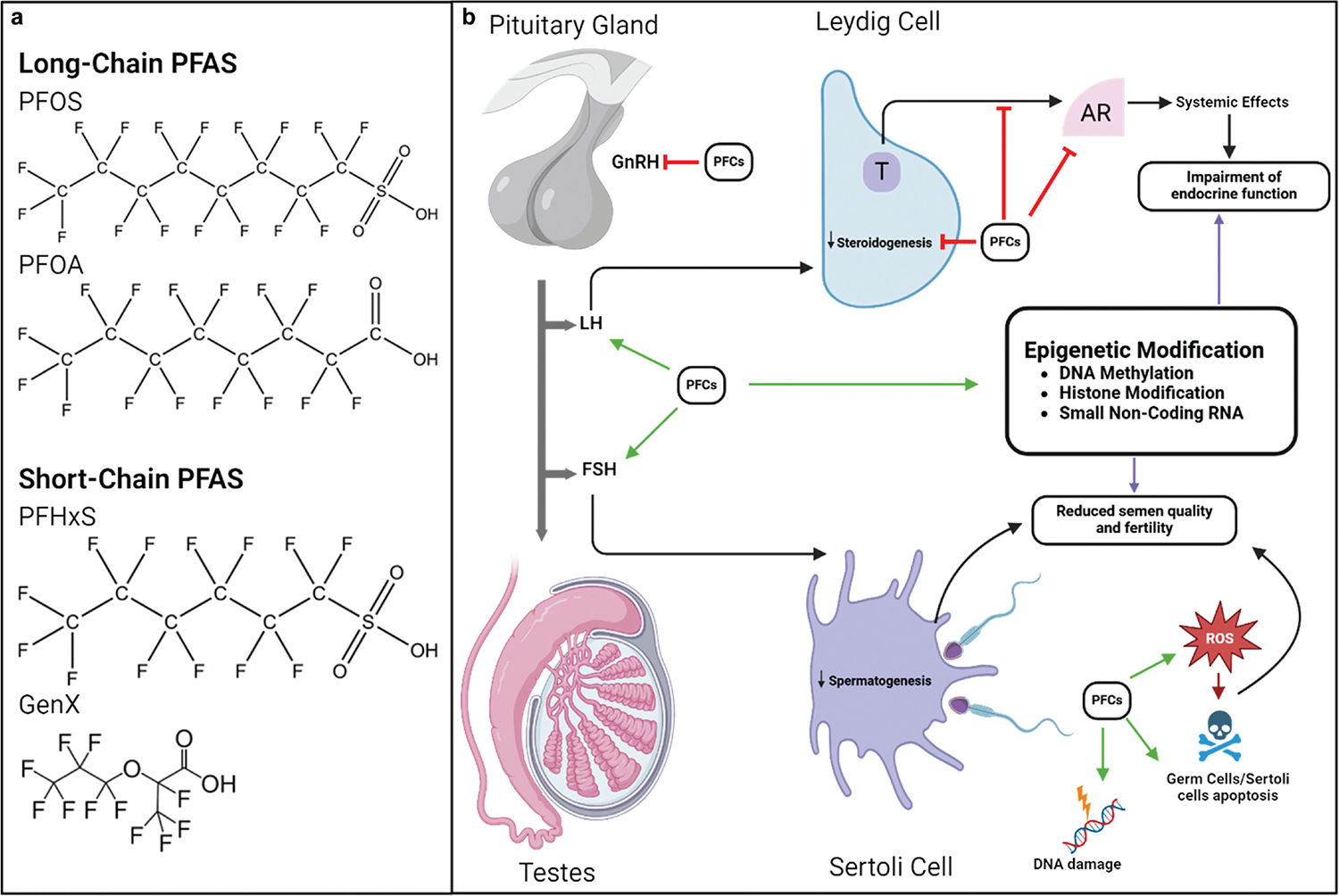
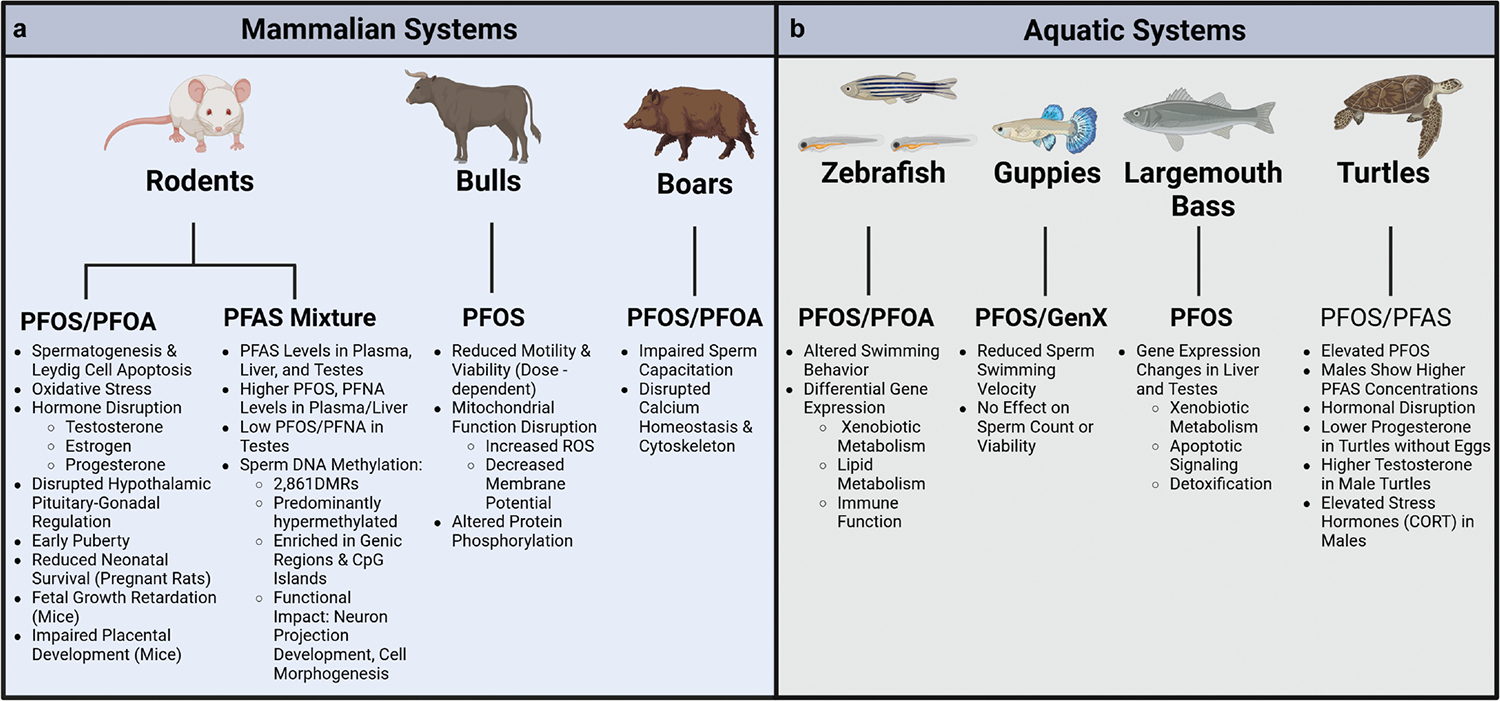
Per- and polyfluoroalkyl substances (PFASs) are persistent environmental contaminants found in human tissues and persist in the environment, posing significant risks to reproductive health. This review examines the impact of PFAS exposure on male reproductive health, with a focus on sperm epigenetics. PFASs disrupt endocrine function by altering key reproductive hormones and impairing sperm motility, quality, and viability. Epidemiologic and animal studies highlight inconsistent yet concerning associations between PFAS exposure and semen parameters, as well as altered gene expression and DNA methylation patterns. Moreover, PFAS exposure during critical windows of development has been linked to differential impacts on male versus female pubertal development, cognitive outcomes, and reproductive physiology, emphasizing the complexity of PFAS interactions. This comprehensive analysis highlights the need for continued research into the mechanisms by which PFASs influence reproductive health and development with potential implications for sperm epigenetics. The review emphasizes the importance of understanding the epigenetic mechanisms behind these disruptions, particularly DNA methylation and its role in heritable changes. Investigating the epigenetic modifications driven by PFAS exposure is crucial for elucidating the mechanisms by which these chemicals influence reproductive health. Future research should focus on understanding these epigenetic changes in both immediate fertility outcomes and transgenerational health risks.
全氟和多氟烷基物质(PFASs)是在人体组织中发现的持久性环境污染物,且在环境中持久存在,对生殖健康构成重大风险。本综述探讨了PFAS暴露对男性生殖健康的影响,重点关注精子表观遗传学。PFASs通过改变关键生殖激素和损害精子活力、质量及生存能力来扰乱内分泌功能。流行病学和动物研究凸显了PFAS暴露与精液参数之间存在不一致但令人担忧的关联,以及基因表达和DNA甲基化模式的改变。此外,在发育关键窗口期的PFAS暴露与对男性和女性青春期发育、认知结果及生殖生理学的不同影响有关,这强调了PFAS相互作用的复杂性。这一全面分析凸显了持续研究PFAS影响生殖健康和发育机制的必要性,这些机制可能对精子表观遗传学产生影响。该综述强调了理解这些干扰背后的表观遗传机制的重要性,尤其是DNA甲基化及其在遗传变化中的作用。研究由PFAS暴露驱动的表观遗传修饰对于阐明这些化学物质影响生殖健康的机制至关重要。未来的研究应专注于理解这些表观遗传变化对即时生育结果和跨代健康风险的影响。