Bonde Jens Peter, Flachs Esben Meulengracht, Rimborg Susie, Glazer Clara Helene, Giwercman Aleksander, Ramlau-Hansen Cecilia Høst, Hougaard Karin Sørig, Høyer Birgit Bjerre, Hærvig Katia Keglberg, Petersen Sesilje Bondo, Rylander Lars, Specht Ina Olmer, Toft Gunnar, Bräuner Elvira Vaclavik
Department of Occupational and Environmental Medicine, Bispebjerg University Hospital, DK-2400 Copenhagen NV, Denmark
Institute of Public Health, University of Copenhagen, DK-1016 Copenhagen K, Denmark.
Hum Reprod Update. 2016 Dec;23(1):104-125. doi: 10.1093/humupd/dmw036. Epub 2016 Sep 21.
More than 20 years ago, it was hypothesized that exposure to prenatal and early postnatal environmental xenobiotics with the potential to disrupt endogenous hormone signaling might be on the causal path to cryptorchidism, hypospadias, low sperm count and testicular cancer. Several consensus statements and narrative reviews in recent years have divided the scientific community and have elicited a call for systematic transparent reviews. We aimed to fill this gap in knowledge in the field of male reproductive disorders.
The aim of this study was to systematically synthesize published data on the risk of cryptorchidism, hypospadias, low sperm counts and testicular cancer following in utero or infant exposure to chemicals that have been included on the European Commission's list of Category 1 endocrine disrupting chemicals defined as having documented adverse effects due to endocrine disruption in at least one intact organism.
A systematic literature search for original peer reviewed papers was performed in the databases PubMed and Embase to identify epidemiological studies reporting associations between the outcomes of interest and exposures documented by biochemical analyses of biospecimens including maternal blood or urine, placenta or fat tissue as well as amnion fluid, cord blood or breast milk; this was followed by meta-analysis of quantitative data.
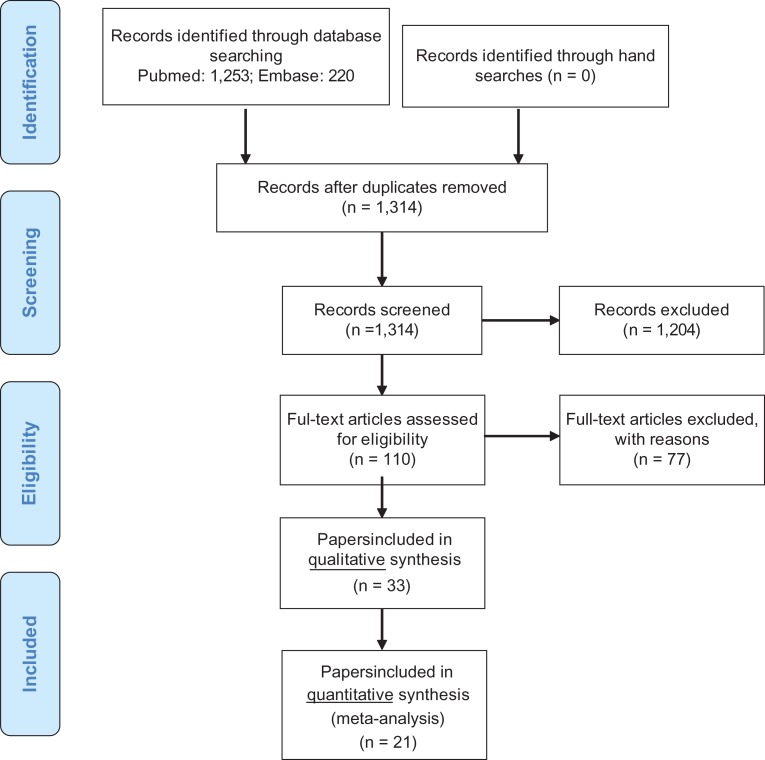
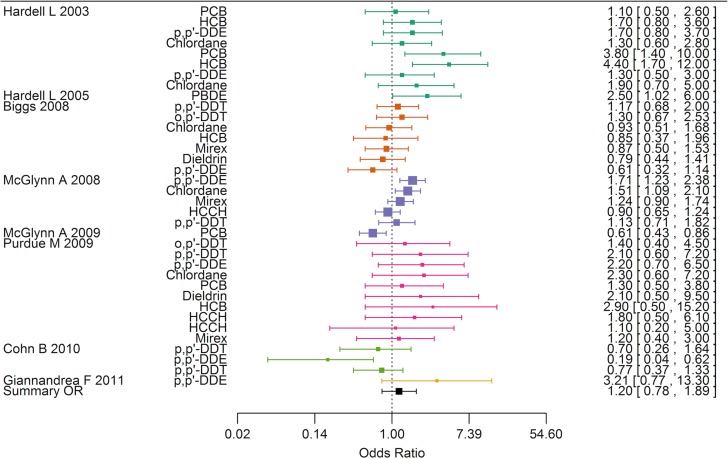
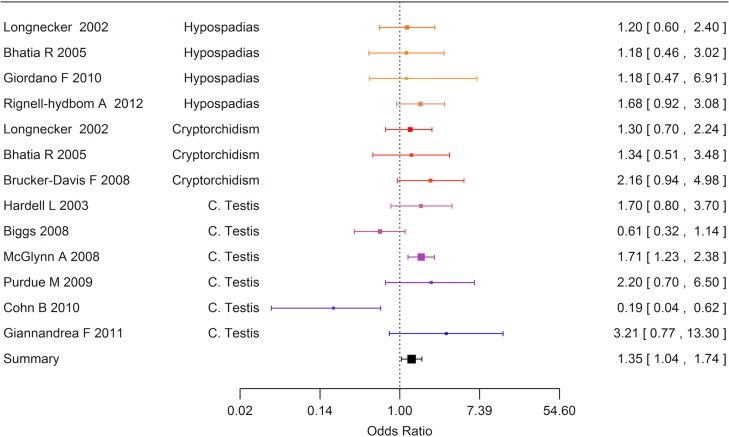
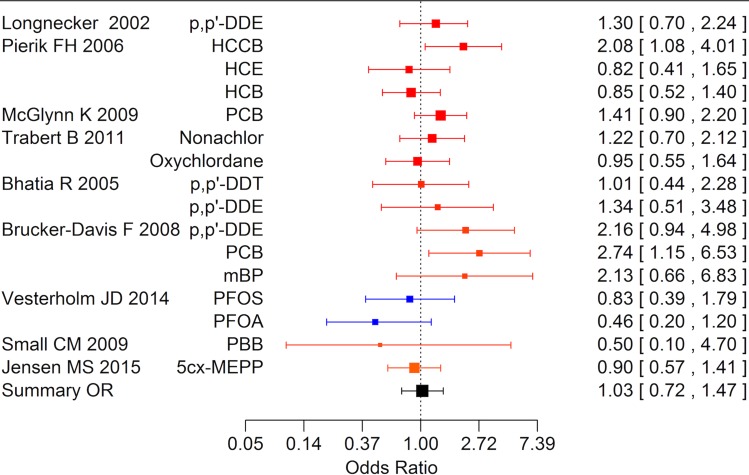
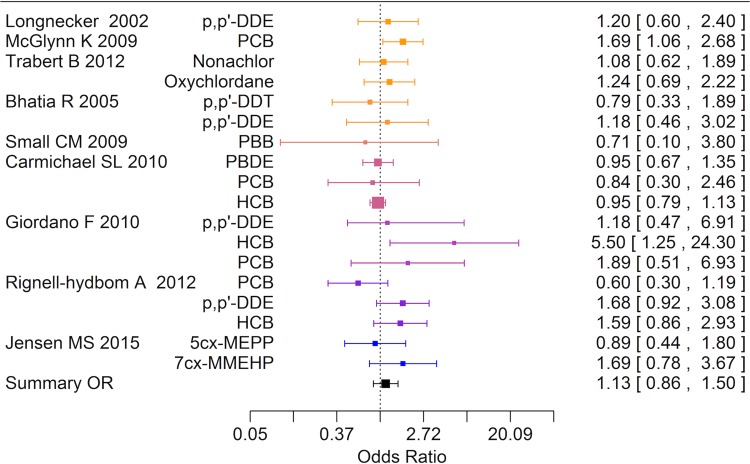
The literature search resulted in 1314 references among which we identified 33 papers(28 study populations) fulfilling the eligibility criteria. These provided 85 risk estimates of links between persistent organic pollutants and rapidly metabolized compounds (phthalates and Bisphenol A) and male reproductive disorders. The overall odds ratio (OR) across all exposures and outcomes was 1.11 (95% CI 0.91-1.35). When assessing four specific chemical subgroups with sufficient data for meta-analysis for all outcomes, we found that exposure to one of the four compounds, p,p'-DDE, was related to an elevated risk: OR 1.35 (95% CI 1.04-1.74). The data did not indicate that this increased risk was driven by any specific disorder.
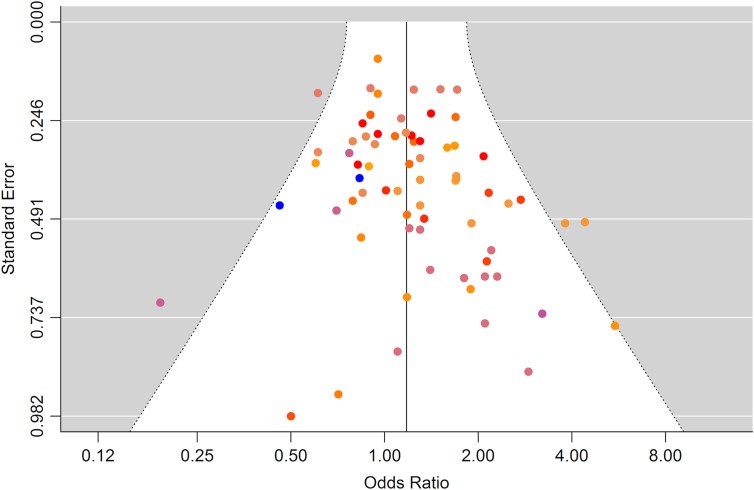
The current epidemiological evidence is compatible with a small increased risk of male reproductive disorders following prenatal and postnatal exposure to some persistent environmental chemicals classified as endocrine disruptors but the evidence is limited. Future epidemiological studies may change the weight of the evidence in either direction. No evidence of distortion due to publication bias was found, but exposure-response relationships are not evident. There are insufficient data on rapidly metabolized endocrine disruptors and on specific exposure-outcome relations. A particular data gap is evident with respect to delayed effects on semen quality and testicular cancer. Although high quality epidemiological studies are still sparse, future systematic and transparent reviews may provide pieces of evidence contributing to the narrative and weight of the evidence assessments in the field.
20多年前,有人提出,孕期和出生后早期接触可能干扰内源性激素信号的环境异生素,可能是隐睾症、尿道下裂、精子数量低和睾丸癌的致病因素。近年来的几份共识声明和叙述性综述使科学界产生了分歧,并引发了对系统性透明综述的呼吁。我们旨在填补男性生殖系统疾病领域的这一知识空白。
本研究的目的是系统地综合已发表的数据,这些数据涉及子宫内或婴儿期接触被列入欧盟委员会第1类内分泌干扰物清单的化学物质后,发生隐睾症、尿道下裂、精子数量低和睾丸癌的风险。该清单中的化学物质被定义为在至少一种完整生物体中因内分泌干扰而有记录的不良反应。
在PubMed和Embase数据库中对经过同行评审的原始论文进行了系统的文献检索,以确定流行病学研究,这些研究报告了感兴趣的结果与通过对生物样本(包括母体血液或尿液、胎盘或脂肪组织以及羊水、脐带血或母乳)进行生化分析记录的暴露之间的关联;随后对定量数据进行荟萃分析。
文献检索共得到1314篇参考文献,其中我们确定了33篇论文(28个研究群体)符合纳入标准。这些论文提供了85个关于持久性有机污染物和快速代谢化合物(邻苯二甲酸盐和双酚A)与男性生殖系统疾病之间联系的风险估计值。所有暴露和结果的总体优势比(OR)为1.11(95%CI 0.91-1.35)。在评估有足够数据进行所有结果荟萃分析的四个特定化学亚组时,我们发现接触四种化合物之一的p,p'-二氯二苯二氯乙烯(p,p'-DDE)与风险升高有关:OR为1.35(95%CI 1.04-1.74)。数据并未表明这种风险增加是由任何特定疾病驱动的。
目前的流行病学证据与产前和产后接触某些被归类为内分泌干扰物的持久性环境化学物质后男性生殖系统疾病风险略有增加相一致,但证据有限。未来的流行病学研究可能会改变证据在任何一个方向上的权重。未发现因发表偏倚导致的扭曲证据,但暴露-反应关系不明显。关于快速代谢的内分泌干扰物以及特定暴露-结果关系的数据不足。关于对精液质量和睾丸癌的延迟影响,存在明显的数据空白。尽管高质量的流行病学研究仍然很少,但未来系统和透明的综述可能会提供有助于该领域证据叙述和权重评估的证据。