Farashi Sajjad, Momtaz Hossein Emad
Neurophysiology Research Center, Institute of Neuroscience and Mental Health, Avicenna Health Research Institute, Hamadan University of Medical Sciences, Hamadan, Iran.
Urology and Nephrology Research Center, Avicenna Institute of Clinical Sciences, Avicenna Health Research Institute, Hamadan University of Medical Sciences, Hamadan, Iran.
BMC Med Inform Decis Mak. 2025 Jan 9;25(1):13. doi: 10.1186/s12911-024-02819-2.
Urinary tract infection (UTI) is a frequent health-threatening condition. Early reliable diagnosis of UTI helps to prevent misuse or overuse of antibiotics and hence prevent antibiotic resistance. The gold standard for UTI diagnosis is urine culture which is a time-consuming and also an error prone method. In this regard, complementary methods are demanded. In the recent decade, machine learning strategies that employ mathematical models on a dataset to extract the most informative hidden information are the center of interest for prediction and diagnosis purposes.
In this study, machine learning approaches were used for finding the important variables for a reliable prediction of UTI. Several types of machines including classical and deep learning models were used for this purpose.
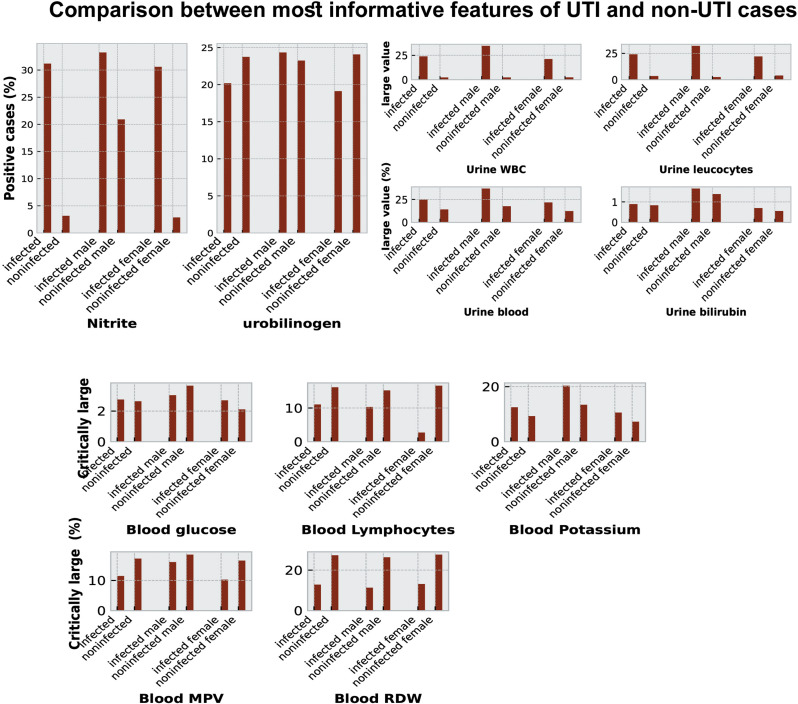
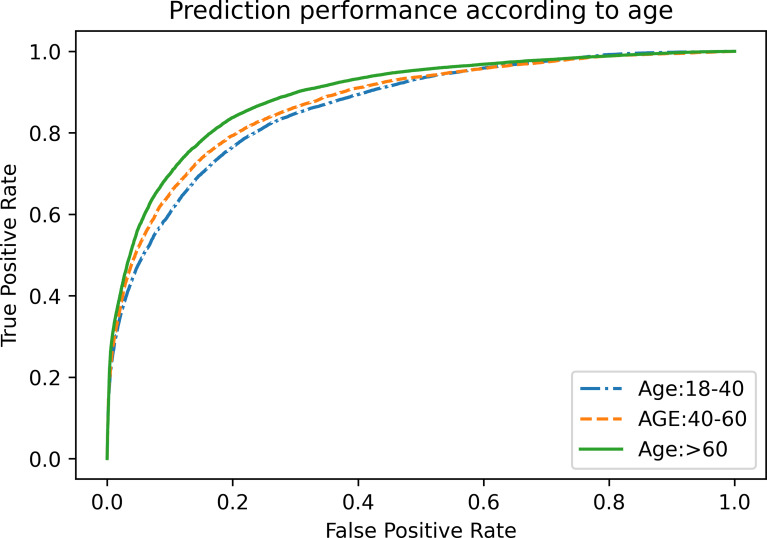
Eighteen selected features from urine test, blood test, and demographic data were found as the most informative features. Factors extracted from urine such as WBC, nitrite, leukocyte, clarity, color, blood, bilirubin, urobilinogen, and factors extracted from blood test like mean platelet volume, lymphocyte, glucose, red blood cell distribution width, and potassium, and demographic data such as age, gender and previous use of antibiotics were the determinative factors for UTI prediction. An ensemble combination of XGBoost, decision tree, and light gradient boosting machines with a voting scheme obtained the highest accuracy for UTI prediction (AUC: 88.53 (0.25), accuracy: 85.64 (0.20)%), according to the selected features. Furthermore, the results showed the importance of gender and age for UTI prediction.
This study highlighted the potential of machine learning strategies for UTI prediction.
尿路感染(UTI)是一种常见的威胁健康的疾病。UTI的早期可靠诊断有助于防止抗生素的滥用或过度使用,从而预防抗生素耐药性。UTI诊断的金标准是尿培养,这是一种耗时且容易出错的方法。在这方面,需要补充方法。在最近十年中,利用数学模型在数据集上提取最具信息的隐藏信息的机器学习策略成为预测和诊断目的的关注焦点。
在本研究中,使用机器学习方法来寻找可靠预测UTI的重要变量。为此使用了几种类型的机器,包括经典和深度学习模型。
从尿液检测、血液检测和人口统计学数据中选择的18个特征被发现是最具信息的特征。从尿液中提取的因素,如白细胞、亚硝酸盐、白细胞酯酶、透明度、颜色、血液、胆红素、尿胆原,以及从血液检测中提取的因素,如平均血小板体积、淋巴细胞、葡萄糖、红细胞分布宽度和钾,以及人口统计学数据,如年龄、性别和既往抗生素使用情况,是UTI预测的决定性因素。根据所选特征,XGBoost、决策树和轻梯度提升机器的集成组合采用投票方案,在UTI预测中获得了最高准确率(AUC:88.53(0.25),准确率:85.64(0.20)%)。此外,结果显示了性别和年龄对UTI预测的重要性。
本研究突出了机器学习策略在UTI预测中的潜力。