
智能皮肤-XAI:智能医疗中用于增强皮肤癌诊断的可解释深度学习方法。
SmartSkin-XAI: An Interpretable Deep Learning Approach for Enhanced Skin Cancer Diagnosis in Smart Healthcare.
作者信息
Hamim Sultanul Arifeen, Tamim Mubasshar U I, Mridha M F, Safran Mejdl, Che Dunren
机构信息
Department of Computer Science, American International University-Bangladesh, Dhaka 1229, Bangladesh.
Department of Computer Science, College of Computer and Information Sciences, King Saud University, P.O. Box 51178, Riyadh 11543, Saudi Arabia.
出版信息
Diagnostics (Basel). 2024 Dec 30;15(1):64. doi: 10.3390/diagnostics15010064.
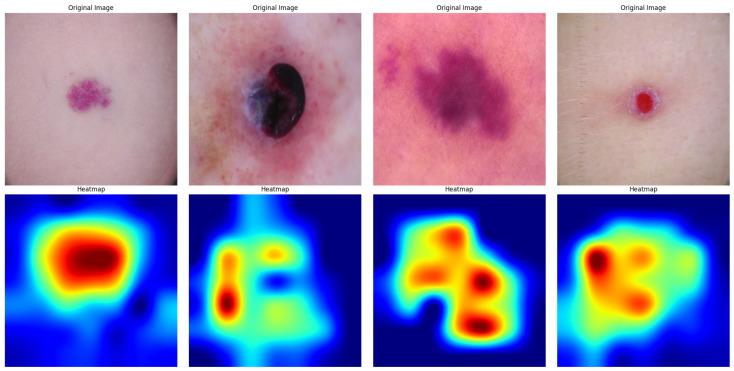
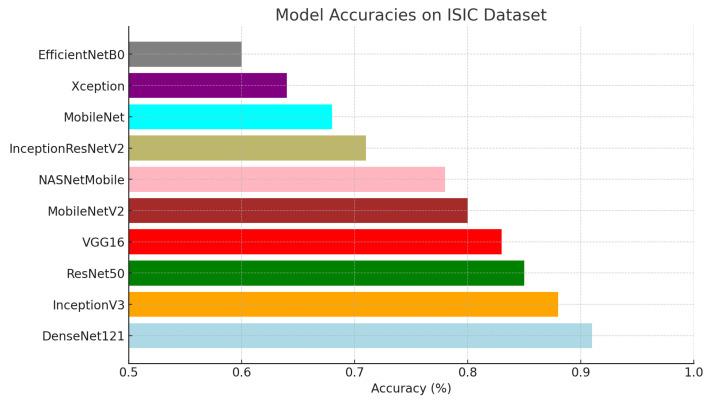
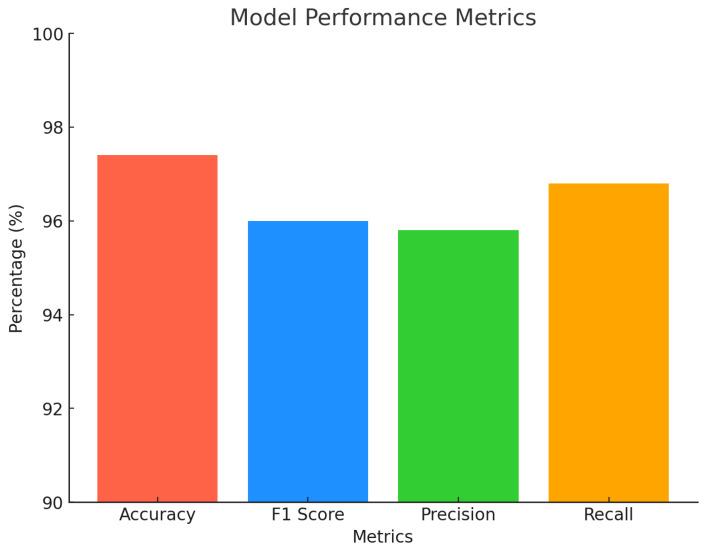
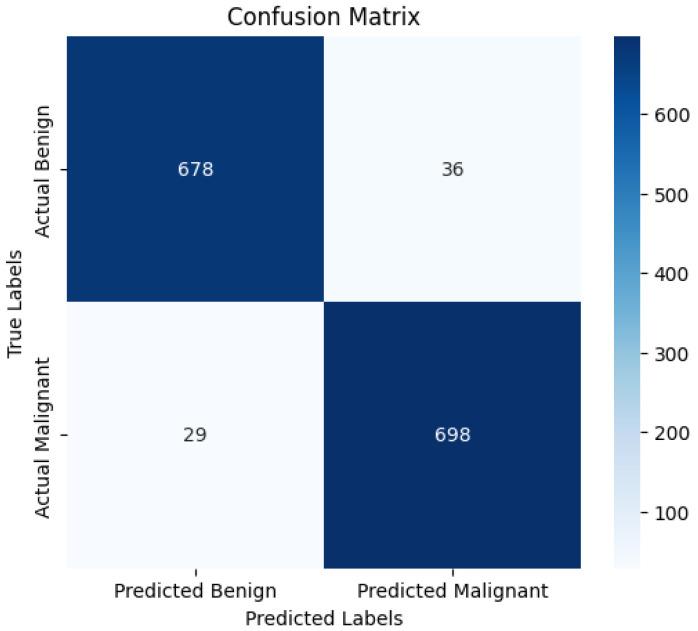
Skin cancer, particularly melanoma, poses significant challenges due to the heterogeneity of skin images and the demand for accurate and interpretable diagnostic systems. Early detection and effective management are crucial for improving patient outcomes. Traditional AI models often struggle with balancing accuracy and interpretability, which are critical for clinical adoption. The SmartSkin-XAI methodology incorporates a fine-tuned DenseNet121 model combined with XAI techniques to interpret predictions. This approach improves early detection and patient management by offering a transparent decision-making process. The model was evaluated using two datasets: the ISIC dataset and the Kaggle dataset. Performance metrics such as classification accuracy, precision, recall, and F1 score were compared against benchmark models, including DenseNet121, InceptionV3, and esNet50. SmartSkin-XAI achieved a classification accuracy of 97% on the ISIC dataset and 98% on the Kaggle dataset. The model demonstrated high stability in precision, recall, and F1 score measures, outperforming the benchmark models. These results underscore the robustness and applicability of SmartSkin-XAI for real-world healthcare scenarios. SmartSkin-XAI addresses critical challenges in melanoma diagnosis by integrating state-of-the-art architecture with XAI methods, providing both accuracy and interpretability. This approach enhances clinical decision-making, fosters trust among healthcare professionals, and represents a significant advancement in incorporating AI-driven diagnostics into medicine, particularly for bedside applications.
皮肤癌,尤其是黑色素瘤,由于皮肤图像的异质性以及对准确且可解释的诊断系统的需求,带来了重大挑战。早期检测和有效管理对于改善患者预后至关重要。传统的人工智能模型常常难以在准确性和可解释性之间取得平衡,而这两点对于临床应用至关重要。SmartSkin-XAI方法结合了经过微调的DenseNet121模型与可解释人工智能技术来解释预测结果。这种方法通过提供透明的决策过程来改善早期检测和患者管理。该模型使用两个数据集进行评估:国际皮肤影像协作组(ISIC)数据集和Kaggle数据集。将分类准确率、精确率、召回率和F1分数等性能指标与基准模型进行比较,这些基准模型包括DenseNet121、InceptionV3和esNet50。SmartSkin-XAI在ISIC数据集上的分类准确率达到97%,在Kaggle数据集上达到98%。该模型在精确率、召回率和F1分数测量方面表现出高度稳定性,优于基准模型。这些结果强调了SmartSkin-XAI在现实世界医疗场景中的稳健性和适用性。SmartSkin-XAI通过将先进的架构与可解释人工智能方法相结合,解决了黑色素瘤诊断中的关键挑战,同时提供了准确性和可解释性。这种方法增强了临床决策,增进了医疗专业人员之间的信任,代表了将人工智能驱动的诊断方法纳入医学领域,特别是床边应用方面的重大进展。








 Zotero 插件