Carrier Bryson, Marten Chaves Sofia, Navalta James W
School of Integrated Health Sciences, Department of Kinesiology and Nutrition Sciences, University of Nevada, Las Vegas, NV 89154, USA.
Sensors (Basel). 2025 Jan 6;25(1):275. doi: 10.3390/s25010275.
As wearable technology becomes increasingly popular and sophisticated, independent validation is needed to determine its accuracy and potential applications. Therefore, the purpose of this study was to evaluate the accuracy (validity) of VO2max estimates and blood oxygen saturation measured via pulse oximetry using the Garmin fēnix 6 with a general population participant pool.
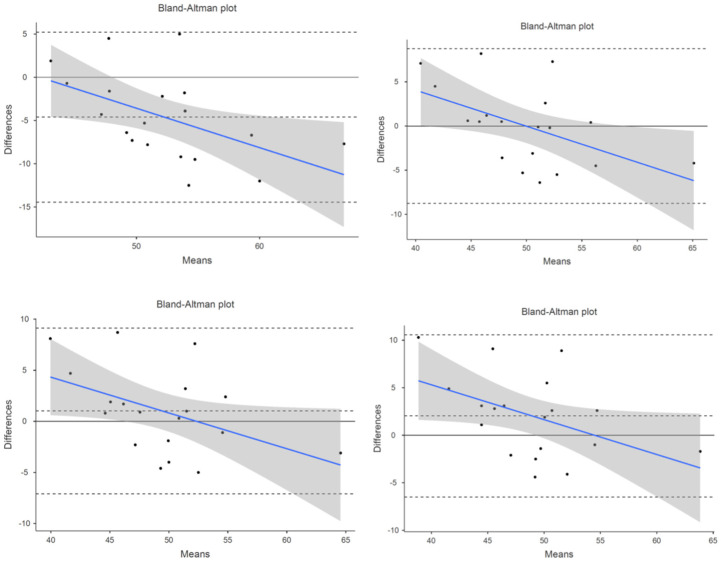
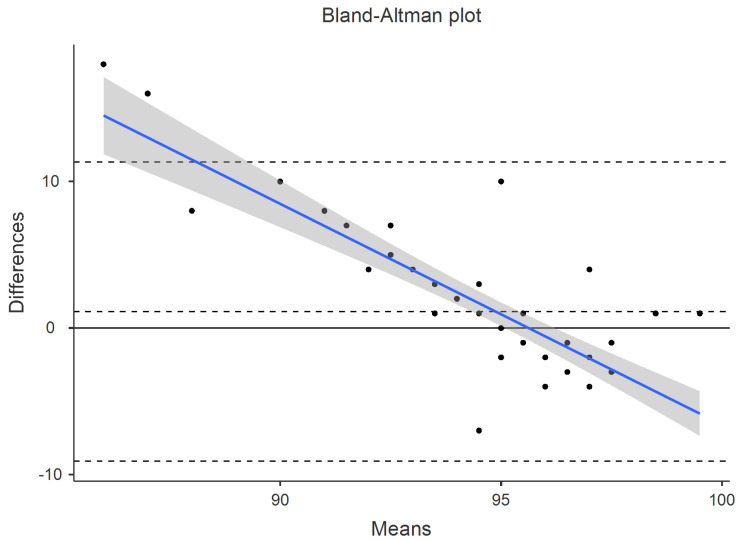
We recruited apparently healthy individuals (both active and sedentary) for VO2max (n = 19) and pulse oximetry testing (n = 22). VO2max was assessed through a graded exercise test and an outdoor run, comparing results from the Garmin fēnix 6 to a criterion measurement obtained from a metabolic system. Pulse oximetry involved comparing fēnix 6 readings under normoxic and hypoxic conditions against a medical-grade pulse oximeter. Data analysis included descriptive statistics, error analysis, correlation analysis, equivalence testing, and bias assessment, with the validation criteria set at a concordance correlation coefficient (CCC) > 0.7 and a mean absolute percentage error (MAPE) < 10%.
The Garmin fēnix 6 provided accurate VO2max estimates, closely aligning with the 15 s and 30 s averaged laboratory data (MAPE for 30 s avg = 7.05%; Lin's concordance correlation coefficient for 30 s avg = 0.73). However, it failed to accurately measure blood oxygen saturation (BOS) under any condition or combined analysis (MAPE for combined conditions BOS = 4.29%; Lin's concordance correlation coefficient for combined conditions BOS = 0.10).
While the Garmin fēnix 6 shows promise for estimating the VO2max, reflecting its utility for both individuals and researchers, it falls short in accurately measuring BOS, limiting its application for monitoring acclimatization and managing pulmonary diseases. This research underscores the importance of validating wearable technology to leverage its full potential in enhancing personal health and advancing public health research.
随着可穿戴技术越来越受欢迎且日益复杂,需要进行独立验证以确定其准确性和潜在应用。因此,本研究的目的是在一般人群参与者中,评估使用佳明fēnix 6通过脉搏血氧饱和度测定法测量的最大摄氧量(VO2max)估计值和血氧饱和度的准确性(效度)。
我们招募了明显健康的个体(包括活跃和久坐的)进行最大摄氧量测试(n = 19)和脉搏血氧饱和度测试(n = 22)。通过分级运动测试和户外跑步评估最大摄氧量,将佳明fēnix 6的结果与从代谢系统获得的标准测量结果进行比较。脉搏血氧饱和度测定涉及在常氧和低氧条件下将fēnix 6的读数与医用级脉搏血氧仪进行比较。数据分析包括描述性统计、误差分析、相关性分析、等效性测试和偏差评估,验证标准设定为一致性相关系数(CCC)> 0.7且平均绝对百分比误差(MAPE)< 10%。
佳明fēnix 6提供了准确的最大摄氧量估计值,与15秒和30秒平均实验室数据密切相符(30秒平均MAPE = 7.05%;30秒平均林氏一致性相关系数 = 0.73)。然而,它在任何条件或综合分析下都未能准确测量血氧饱和度(BOS)(综合条件下BOS的MAPE = 4.29%;综合条件下BOS的林氏一致性相关系数 = 0.10)。
虽然佳明fēnix 6在估计最大摄氧量方面显示出前景,反映了其对个人和研究人员的实用性,但它在准确测量血氧饱和度方面存在不足,限制了其在监测适应过程和管理肺部疾病方面的应用。这项研究强调了验证可穿戴技术以充分发挥其在促进个人健康和推进公共卫生研究方面的全部潜力的重要性。