Hasan Alexandru Madalin, Cavalu Simona, Kira Ahmed Y, Hamad Rabab S, Abdel-Reheim Mustafa Ahmed, Elmorsy Elsayed A, El-Kott Attalla F, Morsy Kareem, AlSheri Ali S, Negm Sally, Saber Sameh
Department of Preclinical Sciences, Faculty of Medicine and Pharmacy, University of Oradea, Oradea, 410087, Romania.
Department of Pharmaceutics, Faculty of Pharmacy, Delta University for Science and Technology, Gamasa, 11152, Egypt.
Int J Nanomedicine. 2025 Jan 18;20:741-770. doi: 10.2147/IJN.S502833. eCollection 2025.
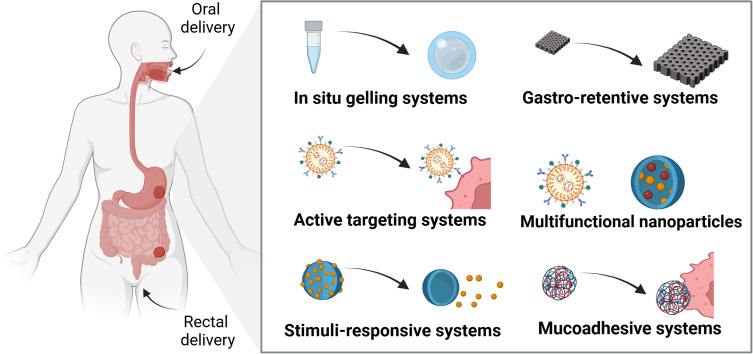
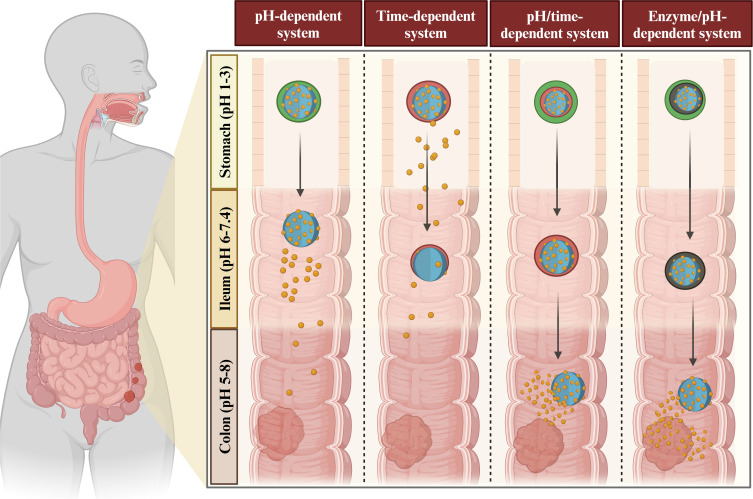
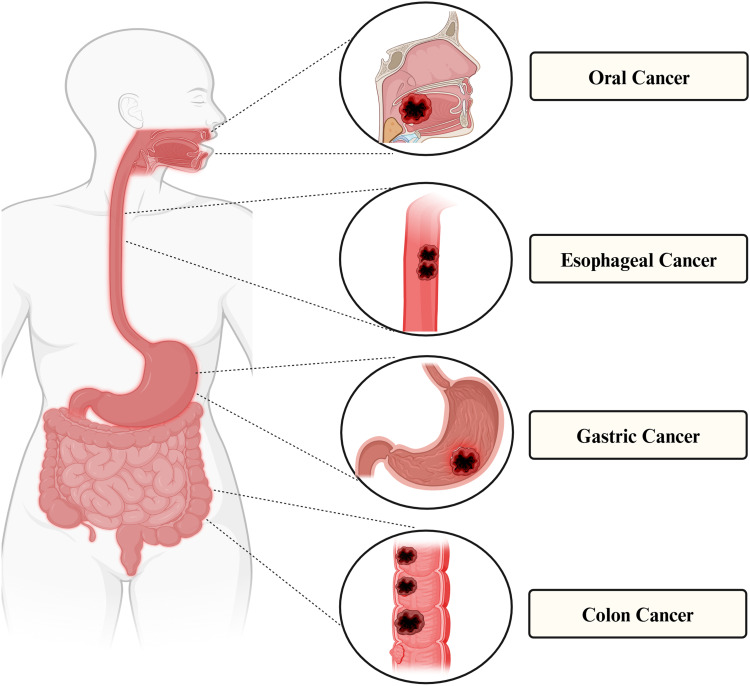
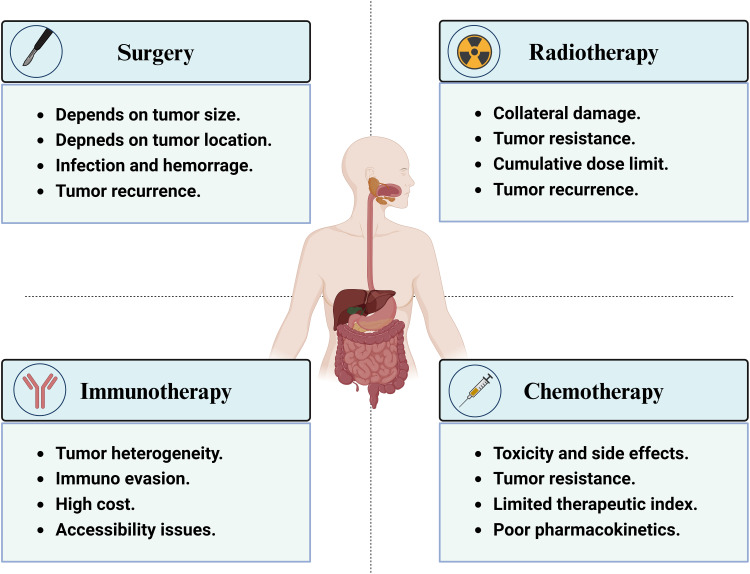
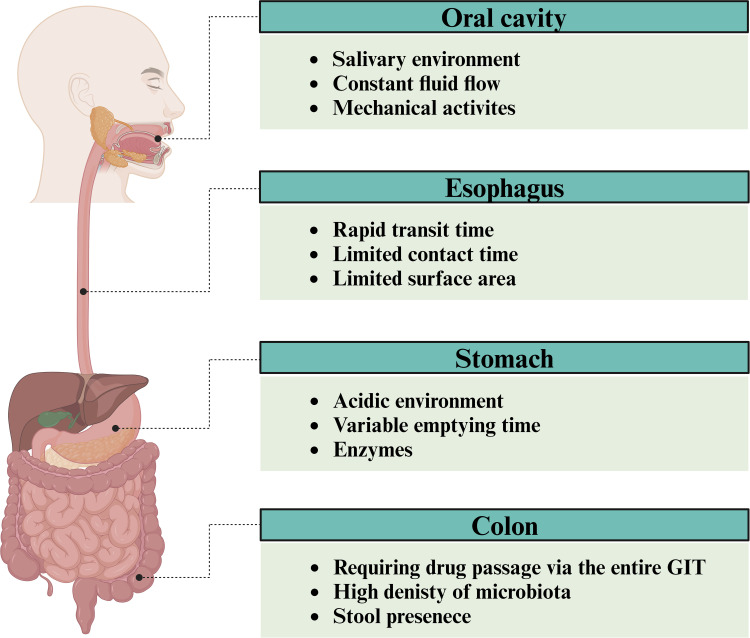
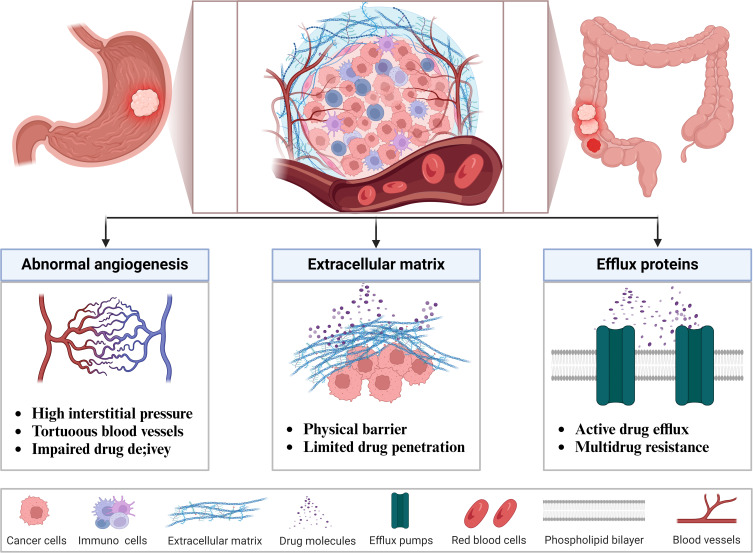
Different types of cancers affect the gastrointestinal tract (GIT), starting from the oral cavity and extending to the colon. In general, most of the current research focuses on the systemic delivery of the therapeutic agents, which leads to undesired side effects and a limited enhancement in the therapeutic outcomes. As a result, localized delivery within gastrointestinal (GI) cancers is favorable in overcoming these limitations. However, the localized delivery via oral administration faces many challenges related to the complex structure of GIT (varied pH levels and transit times) as well as the harsh environment within tumor cells (hypoxia, efflux pumps, and acidity). To overcome these obstacles, nano-drug delivery systems (NDDs) have been designed and proved their potential by exploiting these challenges in favor of offering a specific delivery to the desired target. The current review begins with an overview of different GI cancers and their impact globally. Then, it discusses the current treatment approaches and their corresponding limitations. Additionally, the different challenges associated with localized drug delivery for GI cancers are summarized. Finally, the review discusses in detail the recent therapeutic and diagnostic applications of NDDs that have been conducted in oral, esophageal, gastric, colon, and liver cancers, aiming to offer valuable insights into the current and future state of utilizing NDDs for the local treatment of GI cancers.
不同类型的癌症会影响胃肠道(GIT),从口腔开始,一直延伸到结肠。一般来说,目前的大多数研究都集中在治疗药物的全身递送,这会导致不良副作用,并且治疗效果的提升有限。因此,胃肠道(GI)癌症的局部递送有利于克服这些限制。然而,通过口服给药进行局部递送面临许多与胃肠道复杂结构(不同的pH值水平和转运时间)以及肿瘤细胞内恶劣环境(缺氧、外排泵和酸性)相关的挑战。为了克服这些障碍,人们设计了纳米药物递送系统(NDDs),并通过利用这些挑战来证明其潜力,以实现向所需靶点的特异性递送。本综述首先概述了不同的胃肠道癌症及其在全球范围内的影响。然后,讨论了当前的治疗方法及其相应的局限性。此外,还总结了与胃肠道癌症局部药物递送相关的不同挑战。最后,本综述详细讨论了纳米药物递送系统在口腔癌、食管癌、胃癌、结肠癌和肝癌中进行的最新治疗和诊断应用,旨在为当前和未来利用纳米药物递送系统进行胃肠道癌症局部治疗的现状提供有价值的见解。