Podină Nicoleta, Gheorghe Elena Codruța, Constantin Alina, Cazacu Irina, Croitoru Vlad, Gheorghe Cristian, Balaban Daniel Vasile, Jinga Mariana, Țieranu Cristian George, Săftoiu Adrian
"Carol Davila" University of Medicine and Pharmacy, Bucharest, Romania.
Department of Gastroenterology, Ponderas Academic Hospital, Bucharest, Romania.
United European Gastroenterol J. 2025 Feb;13(1):55-77. doi: 10.1002/ueg2.12723. Epub 2025 Jan 26.
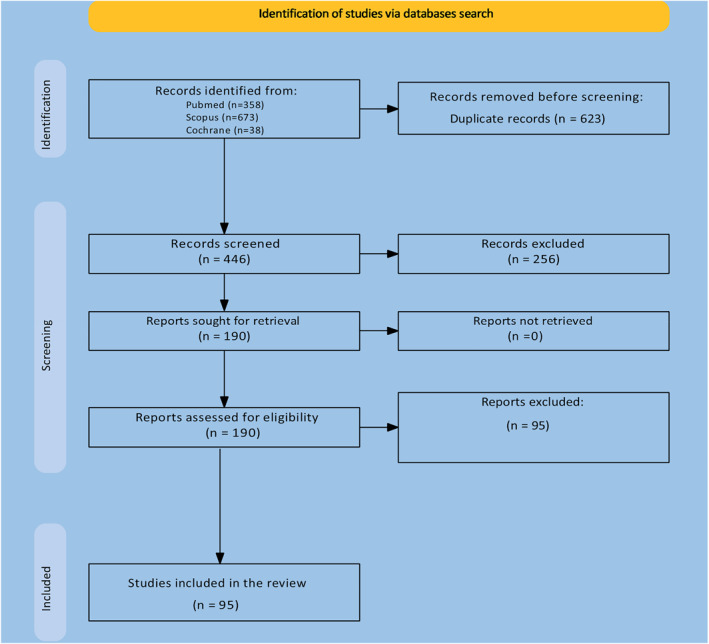
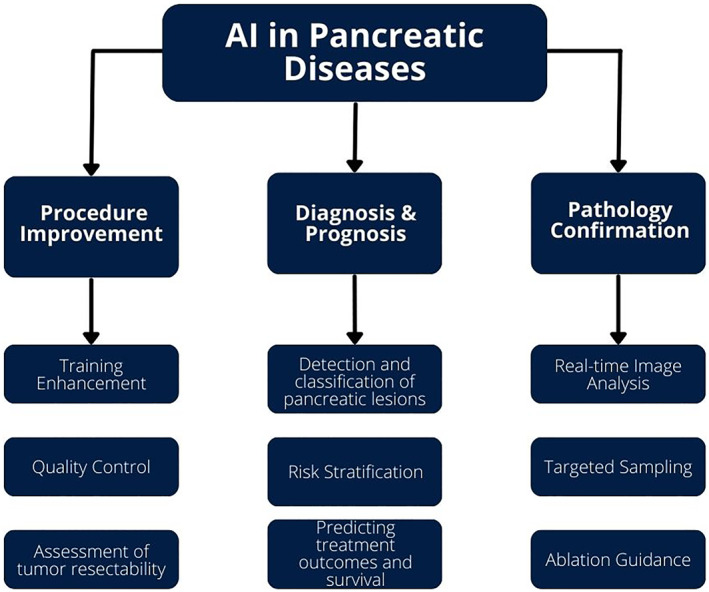
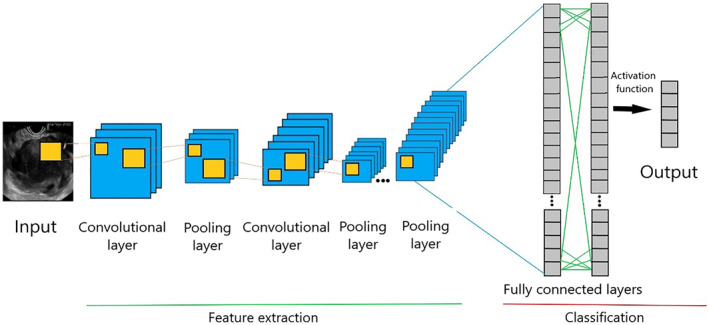
The rising incidence of pancreatic diseases, including acute and chronic pancreatitis and various pancreatic neoplasms, poses a significant global health challenge. Pancreatic ductal adenocarcinoma (PDAC) for example, has a high mortality rate due to late-stage diagnosis and its inaccessible location. Advances in imaging technologies, though improving diagnostic capabilities, still necessitate biopsy confirmation. Artificial intelligence, particularly machine learning and deep learning, has emerged as a revolutionary force in healthcare, enhancing diagnostic precision and personalizing treatment. This narrative review explores Artificial intelligence's role in pancreatic imaging, its technological advancements, clinical applications, and associated challenges. Following the PRISMA-DTA guidelines, a comprehensive search of databases including PubMed, Scopus, and Cochrane Library was conducted, focusing on Artificial intelligence, machine learning, deep learning, and radiomics in pancreatic imaging. Articles involving human subjects, written in English, and published up to March 31, 2024, were included. The review process involved title and abstract screening, followed by full-text review and refinement based on relevance and novelty. Recent Artificial intelligence advancements have shown promise in detecting and diagnosing pancreatic diseases. Deep learning techniques, particularly convolutional neural networks (CNNs), have been effective in detecting and segmenting pancreatic tissues as well as differentiating between benign and malignant lesions. Deep learning algorithms have also been used to predict survival time, recurrence risk, and therapy response in pancreatic cancer patients. Radiomics approaches, extracting quantitative features from imaging modalities such as CT, MRI, and endoscopic ultrasound, have enhanced the accuracy of these deep learning models. Despite the potential of Artificial intelligence in pancreatic imaging, challenges such as legal and ethical considerations, algorithm transparency, and data security remain. This review underscores the transformative potential of Artificial intelligence in enhancing the diagnosis and treatment of pancreatic diseases, ultimately aiming to improve patient outcomes and survival rates.
包括急性和慢性胰腺炎以及各种胰腺肿瘤在内的胰腺疾病发病率不断上升,这对全球健康构成了重大挑战。例如,胰腺导管腺癌(PDAC)由于诊断较晚且位置难以触及,死亡率很高。成像技术的进步虽然提高了诊断能力,但仍需要活检确认。人工智能,特别是机器学习和深度学习,已成为医疗保健领域的一股变革力量,提高了诊断精度并实现了治疗个性化。这篇叙述性综述探讨了人工智能在胰腺成像中的作用、其技术进步、临床应用以及相关挑战。遵循PRISMA - DTA指南,对包括PubMed、Scopus和Cochrane图书馆在内的数据库进行了全面搜索,重点关注人工智能、机器学习、深度学习和胰腺成像中的放射组学。纳入了涉及人类受试者、用英文撰写且截至2024年3月31日发表的文章。综述过程包括标题和摘要筛选,随后基于相关性和新颖性进行全文审查和完善。最近的人工智能进展在检测和诊断胰腺疾病方面显示出了前景。深度学习技术,特别是卷积神经网络(CNN),在检测和分割胰腺组织以及区分良性和恶性病变方面很有效。深度学习算法也被用于预测胰腺癌患者的生存时间、复发风险和治疗反应。放射组学方法从CT、MRI和内镜超声等成像模态中提取定量特征,提高了这些深度学习模型的准确性。尽管人工智能在胰腺成像方面具有潜力,但法律和伦理考量、算法透明度和数据安全等挑战依然存在。这篇综述强调了人工智能在加强胰腺疾病诊断和治疗方面的变革潜力,最终目标是改善患者预后和生存率。