Wang Lidong, Ma Wen, Zhang Changbin, Wang Sihang, Nie Gending, Li Ming
Department of Oral and Maxillofacial Surgery, Kunming Medical University School and Hospital of Stomatology, Kunming, China.
Yunnan Key Laboratory of Stomatology, Kunming, China.
J Dent Sci. 2025 Jan;20(1):578-585. doi: 10.1016/j.jds.2024.04.022. Epub 2024 May 1.
BACKGROUND/PURPOSE: The functional and aesthetic reconstruction of the mandible can be achieved by using the double-barrel vascularized free fibula flap. The purpose of this study was to use multiple integrated techniques to more effectively reconstruct the mandible, some contains of our unique ideas.
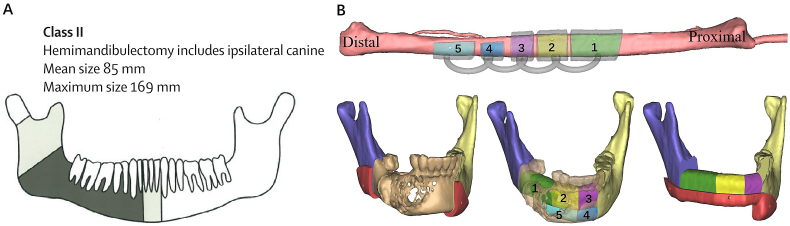
21 patients were included in this study. Computed tomography (CT) data of the patient's mandible and fibula were acquired preoperatively. Individualized surgical simulation was performed by using computer-aided surgical simulation (CASS) technology, about 6 kinds of integrated 3D design ideas were simultaneously perfectly transferred to real surgery. The accuracy of reconstruction was evaluated by superimposing the postoperative and preoperative image of mandible, measuring the linear and angular deviation of landmarks between the planned and actual outcomes.
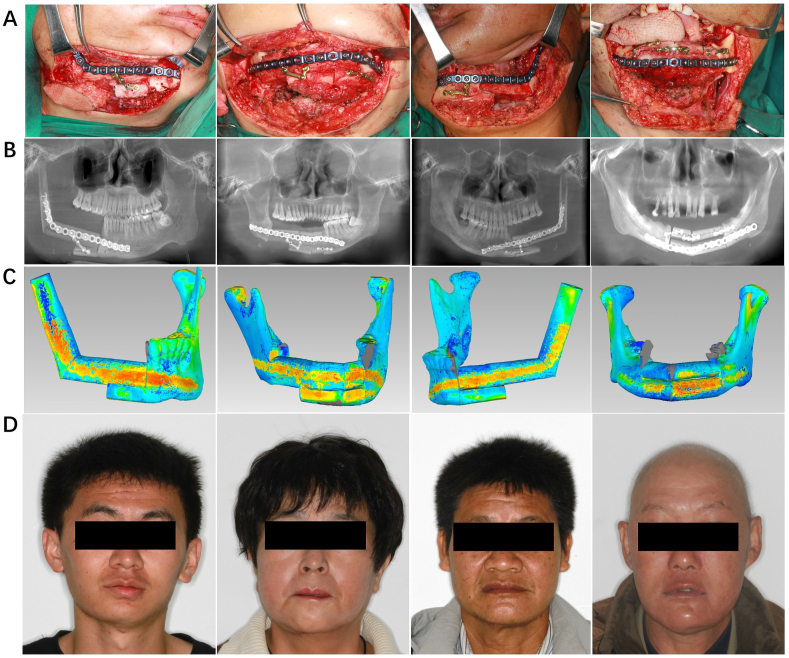
The mandibular reconstruction was effectively performed on all patients, and the result analysis showed that the surgical plan was precisely performed. The facial contours of the postoperative patients were harmonized and the largest mean linear and angular differences were 1.47 ± 0.31 mm and 3.97 ± 0.63°, respectively.
This study system illustrates how to select and position the fibula for reconstruction of various types of segmental mandibular defects by using double-barrel vascularized free fibula flap. It will provide valuable guidance and enhance the accessibility and efficiency of mandibular defects treatment.
背景/目的:采用双蒂带血管游离腓骨瓣可实现下颌骨的功能与美学重建。本研究旨在运用多种综合技术更有效地重建下颌骨,其中包含一些我们独特的理念。
本研究纳入21例患者。术前获取患者下颌骨和腓骨的计算机断层扫描(CT)数据。采用计算机辅助手术模拟(CASS)技术进行个体化手术模拟,约6种综合3D设计理念同时完美转化为实际手术。通过叠加下颌骨术后和术前图像,测量计划与实际结果之间标志点的线性和角度偏差,评估重建的准确性。
所有患者均成功进行了下颌骨重建,结果分析表明手术计划得到精确执行。术后患者面部轮廓协调,最大平均线性差异和角度差异分别为1.47±0.31毫米和3.97±0.63°。
本研究系统阐述了如何使用双蒂带血管游离腓骨瓣选择和定位腓骨以重建各种类型的节段性下颌骨缺损。它将提供有价值的指导,并提高下颌骨缺损治疗的可及性和效率。