Nylén-Eriksen Mats, Stojiljkovic Marko, Lillekroken Daniela, Lindeflaten Katrin, Hessevaagbakke Elisabeth, Flølo Tone Nygaard, Hovland Olav Johannes, Solberg Ada Marie Svarstad, Hansen Sylvia, Bjørnnes Ann Kristin, Tørris Christine
Institute of Nursing and Health Promotion, Oslo Metropolitan University, Oslo, Norway.
BMC Med Educ. 2025 Jan 29;25(1):140. doi: 10.1186/s12909-024-06531-7.
The digital shift in higher education is moving from teacher-focused models to active learning with digital technologies, including the integration of game-based learning strategies. We aim to identify, assess, and summarize the findings of evidence and determine the effectiveness of game-thinking on learning outcomes in nursing education.
A comprehensive search for relevant literature was conducted between April and May 2022 Seven databases ERIC, Scopus, ProQuest Education Source, MEDLINE, CINAHL, Web of Science, and Embase were utilized to locate original, peer-reviewed papers published in English. The review was conducted and reported in compliance with the Preferred Reporting Items for Systematic Reviews and Meta-Analyses (PRISMA) 2020 guidelines.
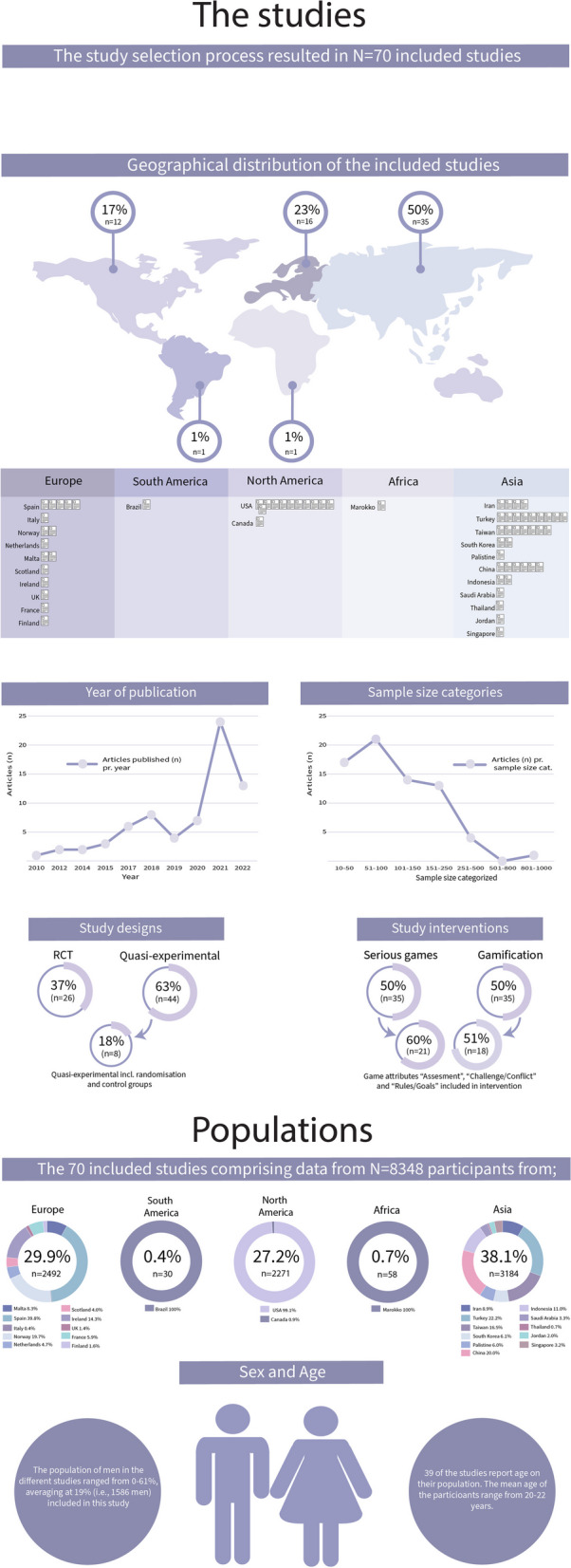
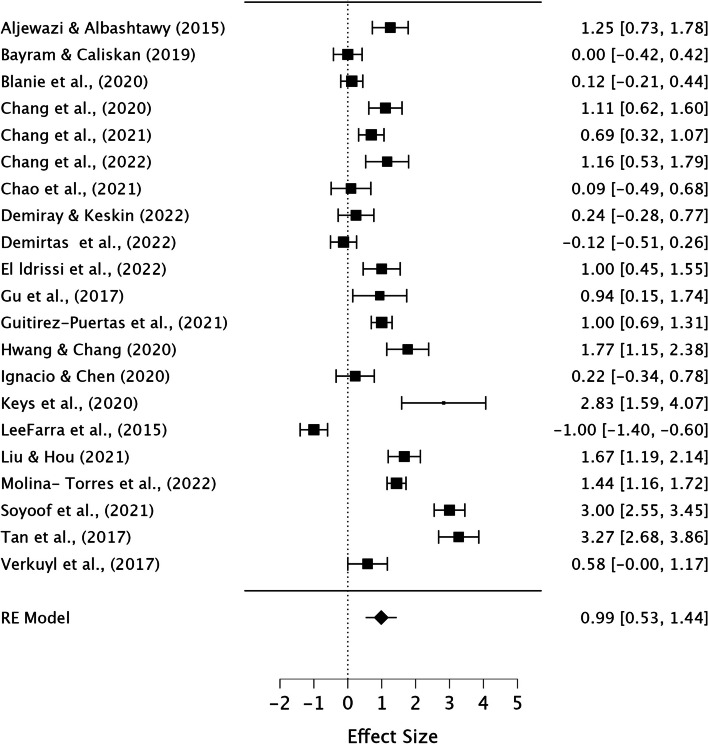
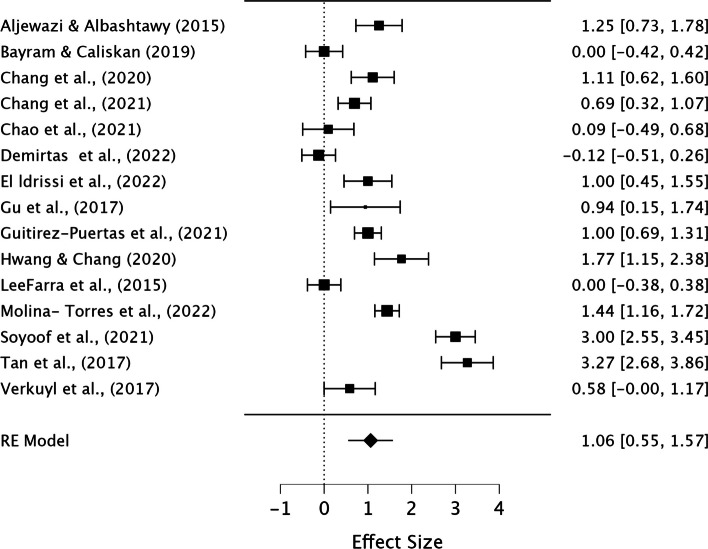
Overall, 3302 studies were initially screened based on their titles and abstract. From this selection 281 studies were then assessed for full-text eligibility. In the end, 70 studies, consisting of 27 Randomized Controlled Trials (RCTs) and 43 Quasi-experimental studies were included in the review. These studies encompassed data from a total of 8348 participants. The results from the narrative synthesis of the results revealed consistencies across the included studies and their findings. The meta-analysis suggested that game-thinking could be beneficial in nursing education, notably improving students' academic achievement (Pooled ES = 0.99, [95%CI 0.53, 1.44]). The most significant effect of game-thinking on academic achievement was observed in the academic knowledge performance of nursing students (Pooled ES = 1.06, [95%CI 0.55, 1.57]), followed by academic skill performance (Pooled ES = 0.54, [95%CI 0.06, 1.03]).
The systematic review and meta-analysis provide evidence supporting the effectiveness of game-thinking in nursing education. The findings highlight the potential of game-based learning in enhancing nursing education through knowledge acquisition, albeit with a nuanced effect on skill development. As nursing education continues to adapt to the digital era, integration of game-thinking strategies could serve as a valuable method for creating engaging and effective learning experiences for nursing students.
高等教育的数字化转型正从以教师为中心的模式转向利用数字技术进行主动学习,包括整合基于游戏的学习策略。我们旨在识别、评估和总结证据的结果,并确定游戏思维在护理教育中对学习成果的有效性。
于2022年4月至5月对相关文献进行了全面检索。利用七个数据库——教育资源信息中心(ERIC)、Scopus、ProQuest教育资源库、医学文献数据库(MEDLINE)、护理学与健康领域数据库(CINAHL)、科学引文索引(Web of Science)和荷兰医学文摘数据库(Embase)——来查找以英文发表的原创、同行评审论文。该综述按照系统评价和Meta分析的首选报告项目(PRISMA)2020指南进行实施和报告。
总体而言,最初根据标题和摘要筛选出3302项研究。在此基础上,对281项研究进行了全文合格性评估。最终,该综述纳入了70项研究,其中包括27项随机对照试验(RCT)和43项准实验研究。这些研究涵盖了总共8348名参与者的数据。结果的叙述性综合分析显示,纳入研究及其结果具有一致性。Meta分析表明,游戏思维在护理教育中可能有益,尤其能提高学生的学业成绩(合并效应量ES = 0.99,[95%置信区间0.53,1.44])。游戏思维对学业成绩的最显著影响体现在护理专业学生的学术知识表现上(合并效应量ES = 1.06,[95%置信区间0.55,1.57]),其次是学术技能表现(合并效应量ES = 0.54,[95%置信区间0.06,1.03])。
该系统评价和Meta分析提供了证据,支持游戏思维在护理教育中的有效性。研究结果凸显了基于游戏的学习在通过知识获取加强护理教育方面的潜力,尽管对技能发展的影响存在细微差别。随着护理教育不断适应数字时代,整合游戏思维策略可成为为护理专业学生创造引人入胜且有效的学习体验的宝贵方法。