Azimzadeh Philippe N, Birchenough George M, Gualbuerto Nathaniel C, Pinkner Jerome S, Tamadonfar Kevin O, Beatty Wandy, Hannan Thomas J, Dodson Karen W, Ibarra Enid C, Kim Seonyoung, Schreiber Henry L, Janetka James W, Kau Andrew L, Earl Ashlee M, Miller Mark J, Hansson Gunnar C, Hultgren Scott J
Department of Molecular Microbiology, Washington University in St. Louis, School of Medicine, St. Louis, MO 63110, USA.
Department of Medical Biochemistry and Cell Biology, Institute of Biomedicine, University of Gothenburg, Gothenburg, Sweden; Wallenberg Centre for Molecular and Translational Medicine, University of Gothenburg, Gothenburg, Sweden.
Sci Adv. 2025 Jan 31;11(5):eadp7066. doi: 10.1126/sciadv.adp7066.
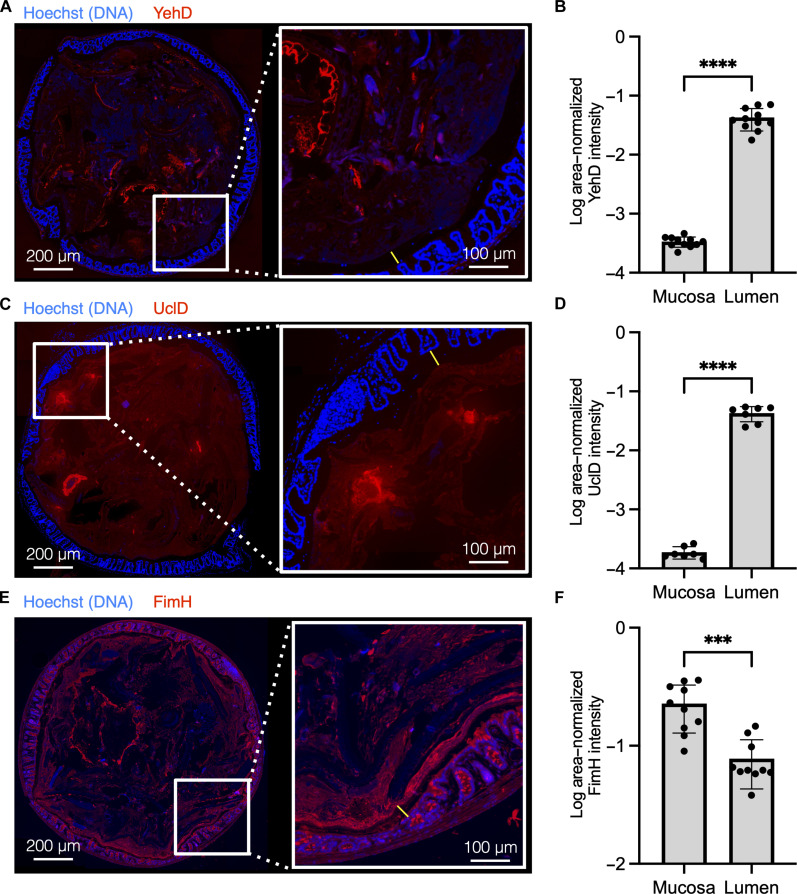
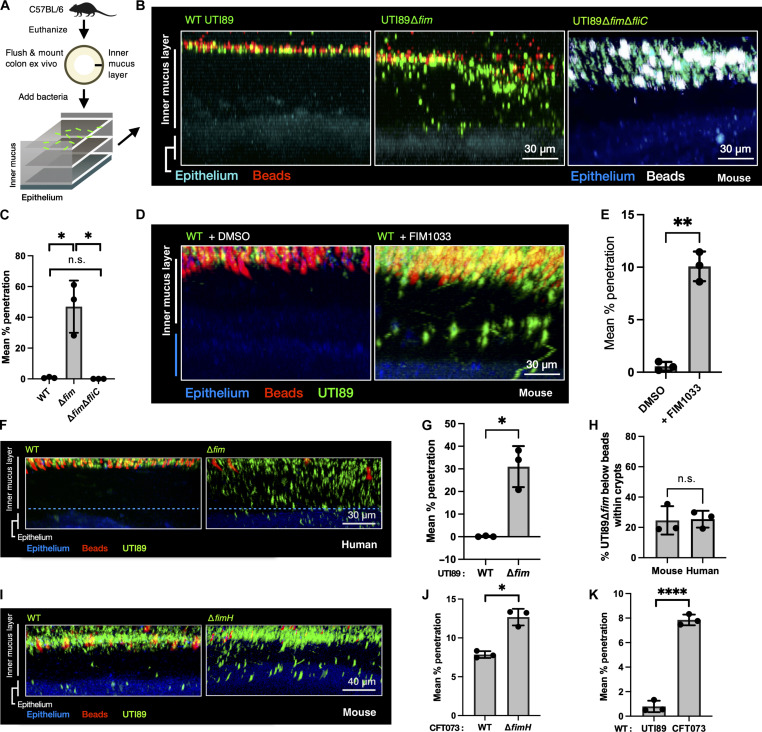
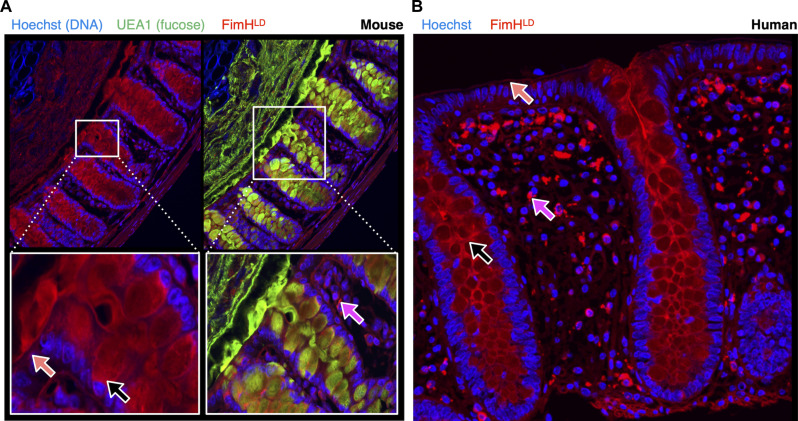
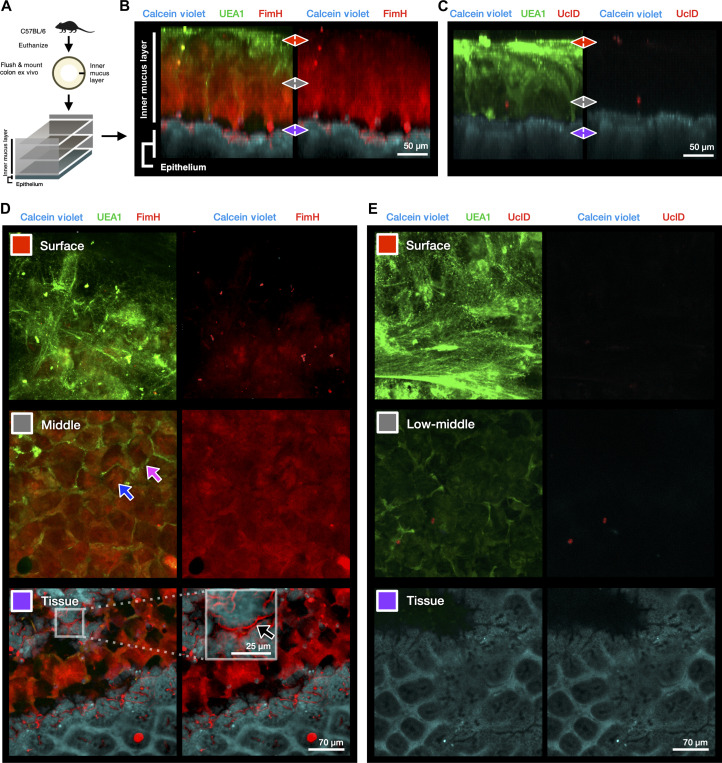
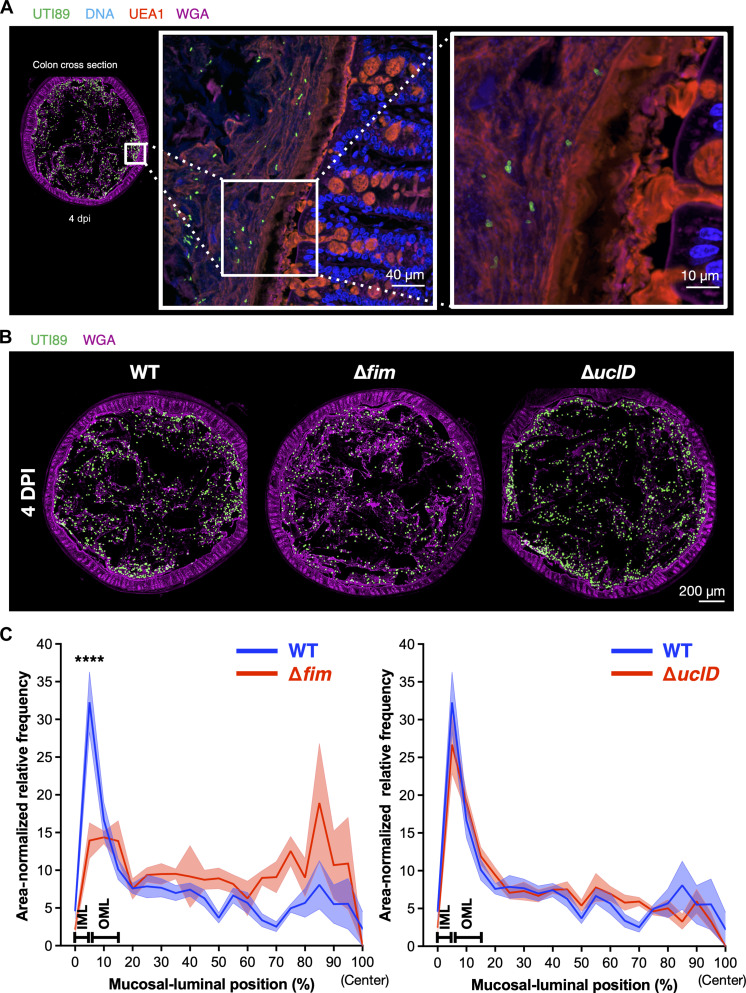
Urinary tract infections (UTIs) are highly recurrent and frequently caused by Uropathogenic (UPEC) strains that can be found in patient intestines. Seeding of the urinary tract from this intestinal reservoir likely contributes to UTI recurrence (rUTI) rates. Thus, understanding the factors that promote UPEC intestinal colonization is of critical importance to designing therapeutics to reduce rUTI incidence. Although is found in high abundance in large intestine mucus, little is known about how it is able to maintain residence in this continuously secreted hydrogel. We discovered that the FimH adhesin of type 1 pili (T1P) bound throughout the secreted mucus layers of the colon and to epithelial cells in mouse and human samples. Disruption of T1P led to reduced association with colon mucus. Notably, this mutant up-regulated flagellar production and infiltrated the protective inner mucus layer of the colon. This could explain how UPEC resists being washed off by the continuously secreted mucus layers of the colon.
尿路感染(UTIs)具有高度复发性,且常由可在患者肠道中发现的尿路致病性大肠杆菌(UPEC)菌株引起。来自该肠道菌库的尿路播散可能导致尿路感染复发(rUTI)率升高。因此,了解促进UPEC肠道定植的因素对于设计降低rUTI发生率的治疗方法至关重要。尽管在大肠黏液中大量存在,但对于它如何能够在这种持续分泌的水凝胶中保持存在却知之甚少。我们发现1型菌毛(T1P)的FimH黏附素结合在结肠分泌的黏液层各处以及小鼠和人类样本的上皮细胞上。T1P的破坏导致与结肠黏液的结合减少。值得注意的是,这种突变体上调了鞭毛的产生,并渗入了结肠保护性的内层黏液层。这可以解释UPEC如何抵抗被结肠持续分泌的黏液层冲走。