Darabi Fatemeh, Ziapour Arash, Ahmadinia Hassan
Department of Public Health, Asadabad School of Medical Sciences, Asadabad, Iran.
Cardiovascular Research Center, Health Policy and Promotion Institute, Kermanshah University of Medical Sciences, Kermanshah, Iran.
BMC Med Educ. 2025 Feb 7;25(1):206. doi: 10.1186/s12909-025-06774-y.
Digital health literacy is integral to accessing reliable information, especially for students making informed health decisions. This study aims to assess the digital health literacy level as well as sociodemographic factors of students of universities in Asadabad County, Hamadan, Western Iran.
The present research was a descriptive-cross-sectional study conducted between May to June 2024. The statistical population included 500 students from the following Iranian universities in Asadabad county: Islamic Azad University, Payame Noor University, Technical and Vocational College, and Asadabad School of Medical Sciences. The van der Vaart Digital Health Literacy Scale was used for data collection.
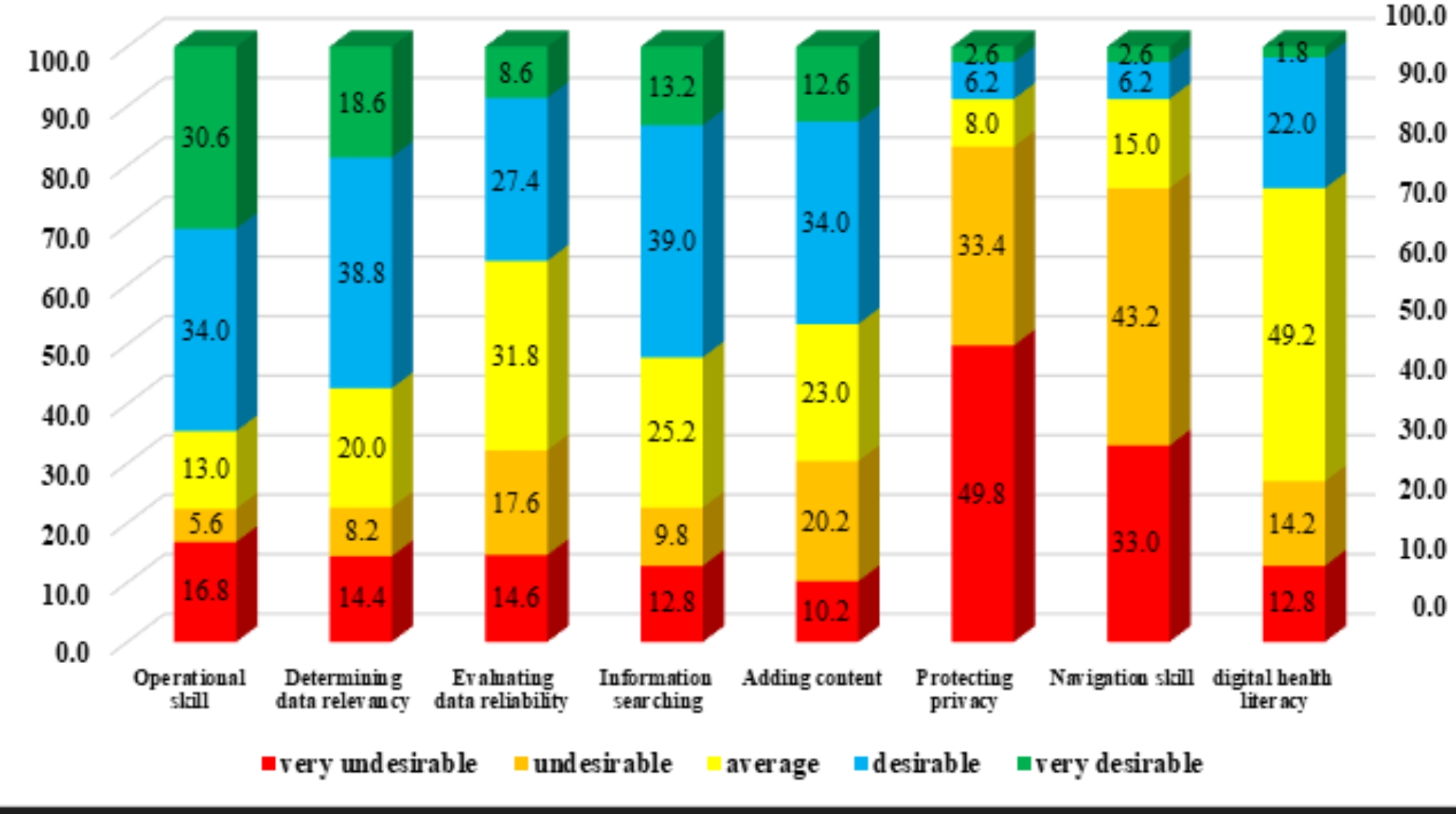
The study showed that students' digital health literacy status is moderate (47.19 ± 8.34). In the dimensions of digital health literacy, operational skills (61.84 ± 32.97) were at a desirable level, with the most significant issues related to privacy protection (23.51 ± 21.72). The mean digital health literacy score of students of Medical Sciences University was significantly higher than Azad University (P < 0.001) but lower than Technical and Vocational University (P = 0.048). There was a significant relationship between digital health literacy and the variables of the university of study (p < 0.001), gender (p = 0.049), education level (p = 0.017), nativity status (p = 0.001), and residence status (p < 0.001).
The results of the present study revealed that the digital health literacy of students in Iran was moderate, depending on sociodemographic factors. The findings from this study can be used to develop and implement interventions and strategies to improve digital health literacy.
数字健康素养对于获取可靠信息至关重要,尤其是对于那些需要做出明智健康决策的学生而言。本研究旨在评估伊朗西部哈马丹省阿萨达巴德县各大学学生的数字健康素养水平以及社会人口学因素。
本研究为描述性横断面研究,于2024年5月至6月进行。统计总体包括来自阿萨达巴德县以下伊朗大学的500名学生:伊斯兰阿扎德大学、帕亚梅努尔大学、技术与职业学院以及阿萨达巴德医学科学学院。采用范德瓦特数字健康素养量表进行数据收集。
研究表明,学生的数字健康素养状况为中等(47.19±8.34)。在数字健康素养的各个维度中,操作技能(61.84±32.97)处于理想水平,其中与隐私保护相关的问题最为突出(23.51±21.72)。医学科学大学学生的数字健康素养平均得分显著高于阿扎德大学(P<0.001),但低于技术与职业大学(P=0.048)。数字健康素养与就读大学的变量(p<0.001)、性别(p=0.049)、教育水平(p=0.017)、出生地状况(p=0.001)和居住状况(p<0.001)之间存在显著关系。
本研究结果显示,伊朗学生的数字健康素养中等,且取决于社会人口学因素。本研究结果可用于制定和实施提高数字健康素养的干预措施和策略。