Kovács Kamilla, Szierer Ádám, Mészáros Enikő, Molnár Árpád, Rónavári Andrea, Kónya Zoltán, Feigl Gábor
Department of Plant Biology, University of Szeged, H-6726 Szeged, Közép fasor 52, Szeged, Hungary.
Doctoral School of Biology, University of Szeged, Szeged, Hungary.
BMC Plant Biol. 2025 Feb 13;25(1):188. doi: 10.1186/s12870-025-06193-7.
Abiotic stressors such as heavy metals and nanoparticles pose significant challenges to sustainable agriculture, with copper oxide nanoparticles (CuO NPs) known to inhibit root growth and induce oxidative stress in plants. While silica nanoparticles (SiO NPs) have been shown to increase abiotic stress tolerance, their role in mitigating CuO NP-induced stress in crops, especially monocots, remains poorly understood. This study addresses this critical knowledge gap by investigating how SiO NP pretreatment modulates CuO NP-induced stress responses, with a particular focus on root growth inhibition and nitro-oxidative stress pathways.
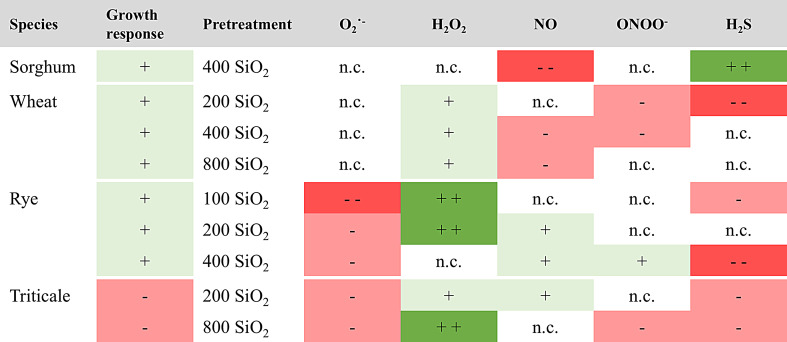
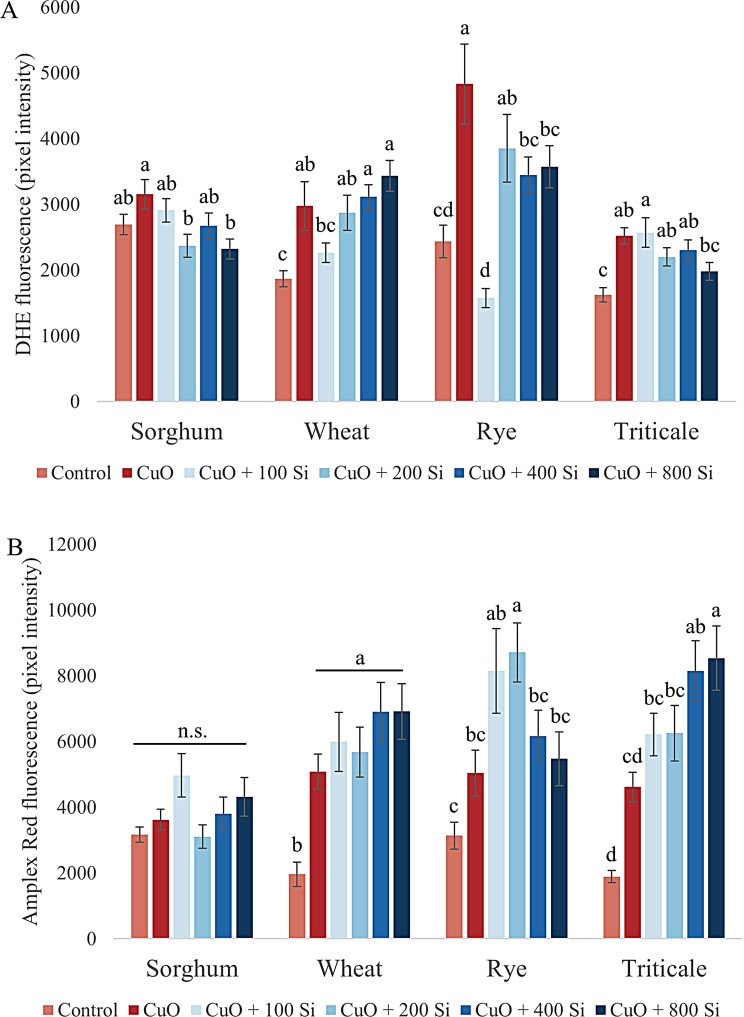
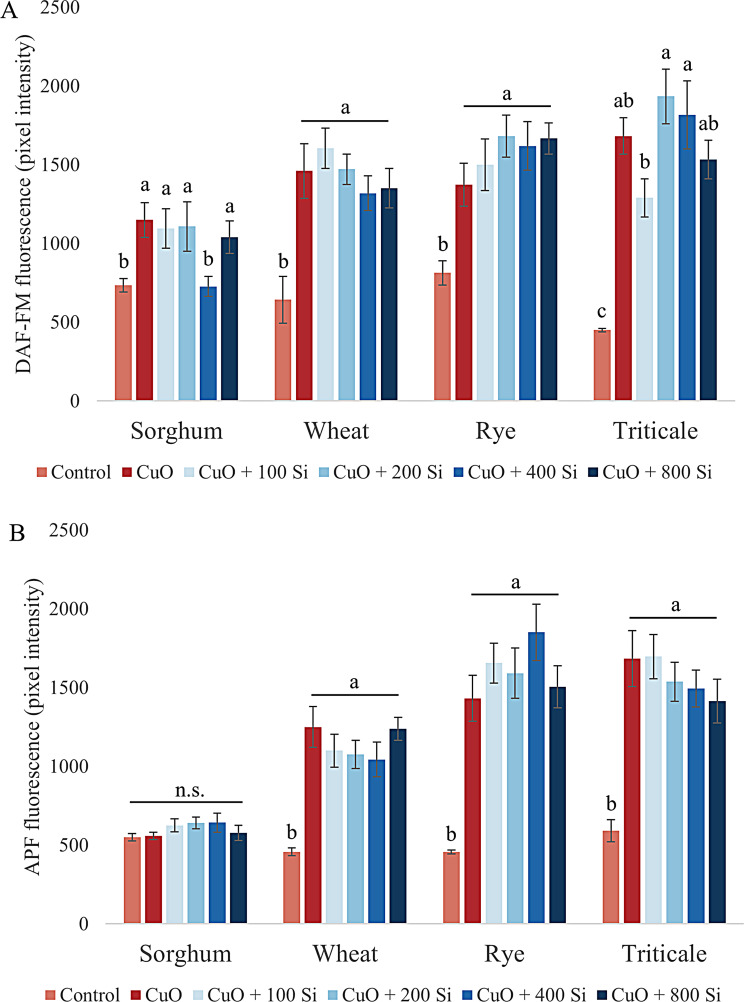
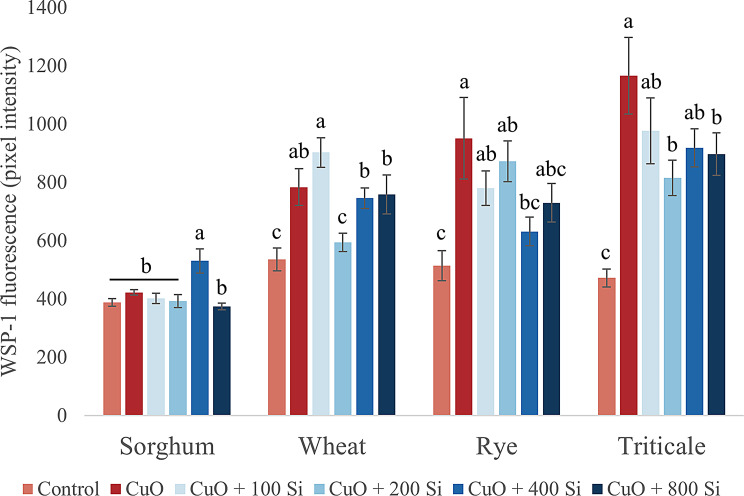
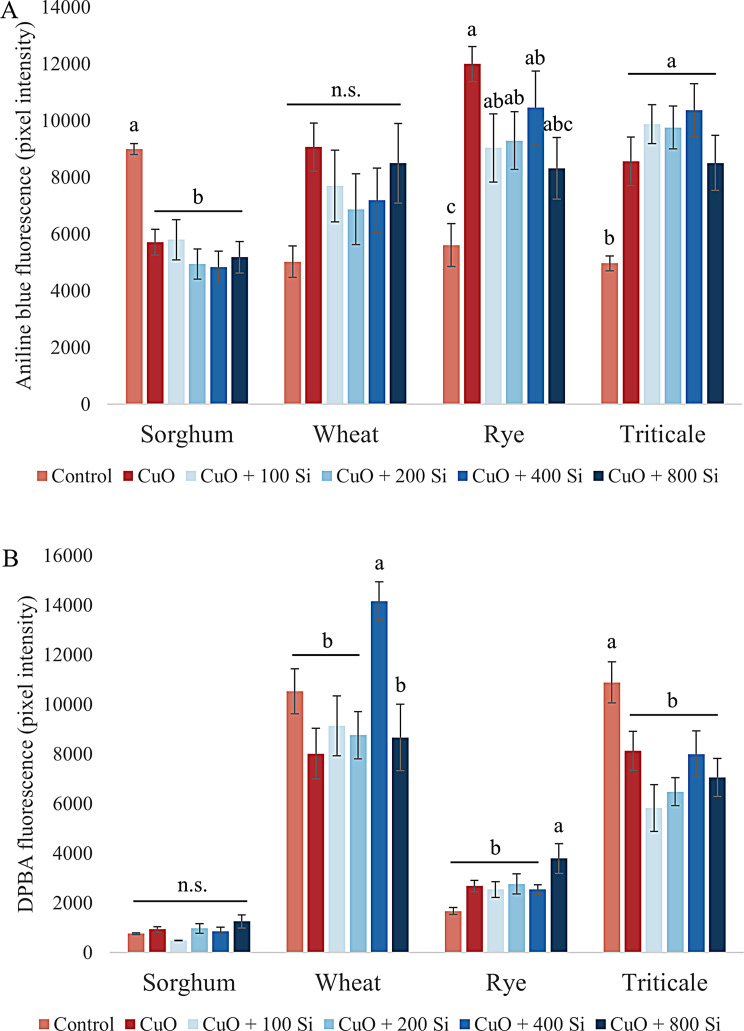
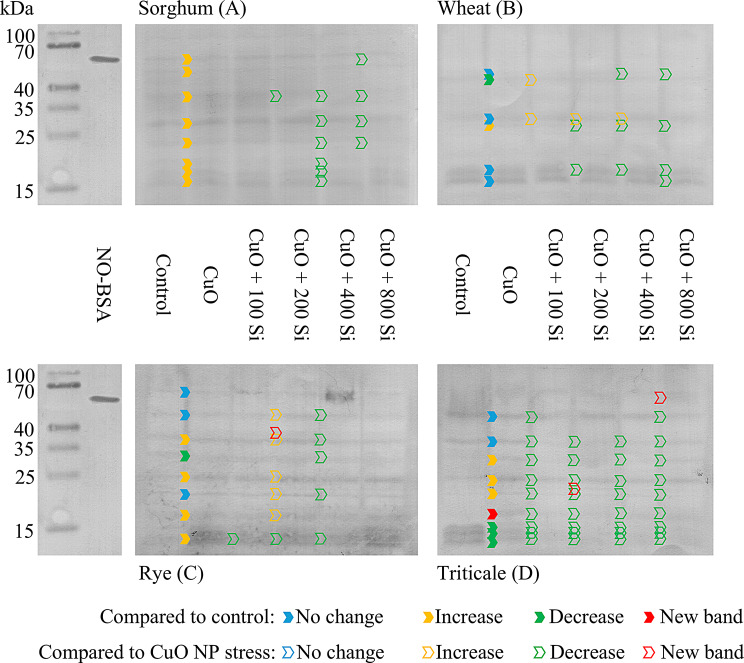
Using an in vitro semihydroponic system, seeds were pretreated with varying concentrations of SiO NPs (100-800 mg/L) before exposure to CuO NPs at levels known to inhibit root growth by 50%. SiO NP pretreatment alleviated CuO NP-induced root growth inhibition in sorghum, wheat, and rye but intensified it in triticale. These responses are associated with species-specific alterations in reactive signaling molecules, including a reduction in nitric oxide levels and an increase in hydrogen sulfide in sorghum, a decrease in superoxide anion levels in rye, and elevated hydrogen peroxide levels in wheat. Protein tyrosine nitration, a marker of nitro-oxidative stress, was reduced in most cases, further indicating the stress-mitigating role of SiO NPs. These signaling molecules were selected for their established roles in mediating oxidative and nitrosative stress responses under abiotic stress conditions.
SiO NP pretreatment modulates CuO NP-induced stress responses through species-specific regulation of reactive oxygen and nitrogen species, demonstrating its potential as a tool for enhancing crop resilience. These findings advance the understanding of nanoparticle‒plant interactions and provide a foundation for future applications of nanotechnology in sustainable agriculture.
Not applicable.
重金属和纳米颗粒等非生物胁迫因素对可持续农业构成重大挑战,已知氧化铜纳米颗粒(CuO NPs)会抑制植物根系生长并诱导氧化应激。虽然二氧化硅纳米颗粒(SiO NPs)已被证明可提高植物对非生物胁迫的耐受性,但其在减轻作物(尤其是单子叶植物)中CuO NP诱导的胁迫方面的作用仍知之甚少。本研究通过研究SiO NP预处理如何调节CuO NP诱导的胁迫反应来填补这一关键的知识空白,特别关注根系生长抑制和硝基氧化应激途径。
使用体外半水培系统,在种子暴露于已知能抑制根系生长50%的CuO NPs之前,用不同浓度的SiO NPs(100 - 800 mg/L)进行预处理。SiO NP预处理减轻了CuO NP对高粱、小麦和黑麦根系生长的抑制,但加剧了对小黑麦根系生长的抑制。这些反应与活性信号分子的物种特异性变化有关,包括高粱中一氧化氮水平的降低和硫化氢水平的升高、黑麦中超氧阴离子水平的降低以及小麦中过氧化氢水平的升高。在大多数情况下,蛋白质酪氨酸硝化(硝基氧化应激的标志物)减少,进一步表明SiO NPs的胁迫减轻作用。选择这些信号分子是因为它们在非生物胁迫条件下介导氧化和亚硝化应激反应中已确立的作用。
SiO NP预处理通过对活性氧和氮物种的物种特异性调节来调节CuO NP诱导的胁迫反应,证明了其作为增强作物抗逆性工具的潜力。这些发现增进了对纳米颗粒与植物相互作用的理解,并为纳米技术在可持续农业中的未来应用奠定了基础。
不适用。