State Key Laboratory of Crop Biology, Shandong Provincial Key Laboratory for Biology of Vegetable Diseases and Insect Pests, College of Plant Protection, Shandong Agricultural University, Taian, 271018, Shandong, People's Republic of China.
Yantai Academy of Agricultural Sciences, Yantai, China.
J Nanobiotechnology. 2022 Apr 22;20(1):197. doi: 10.1186/s12951-022-01420-x.
By 2050, the world population will increase to 10 billion which urged global demand for food production to double. Plant disease and land drought will make the situation more dire, and safer and environment-friendly materials are thus considered as a new countermeasure. The rice blast fungus, Magnaporthe oryzae, causes one of the most destructive diseases of cultivated rice worldwide that seriously threatens rice production. Unfortunately, traditional breeding nor chemical approaches along control it well. Nowadays, nanotechnology stands as a new weapon against these mounting challenges and silica nanoparticles (SiO NPs) have been considered as potential new safer agrochemicals recently but the systematically studies remain limited, especially in rice.
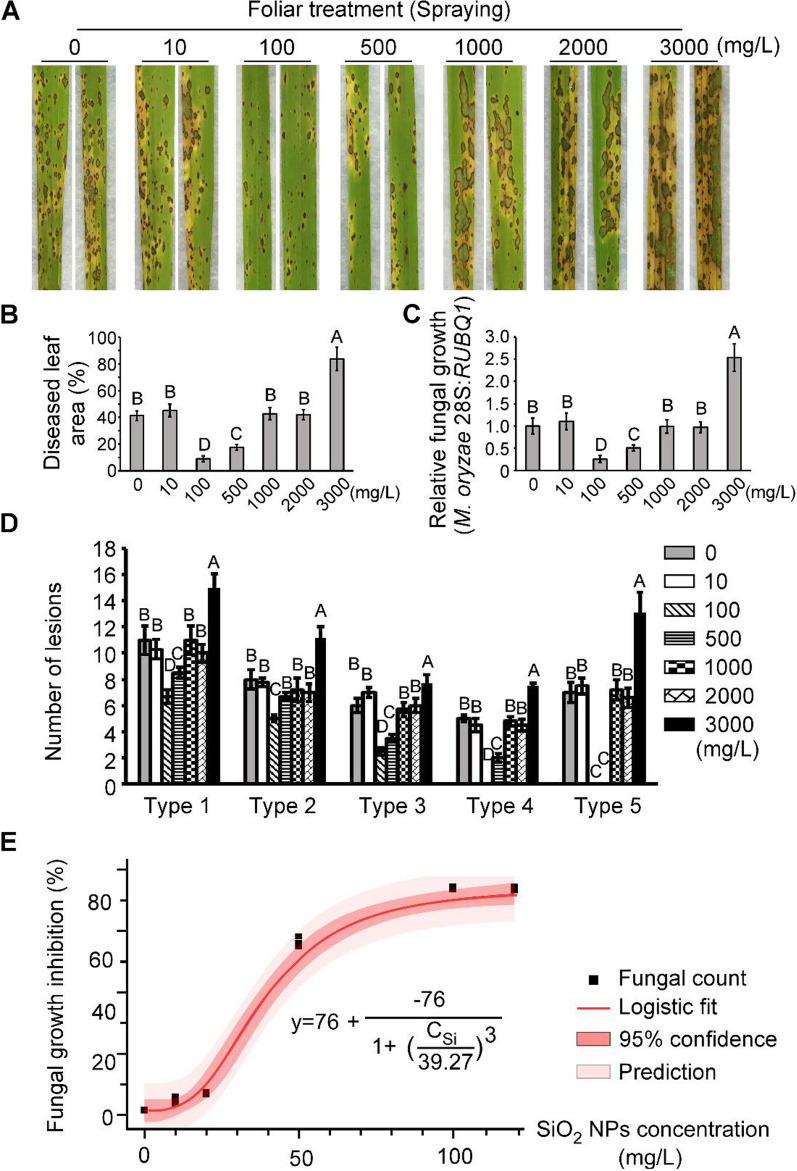
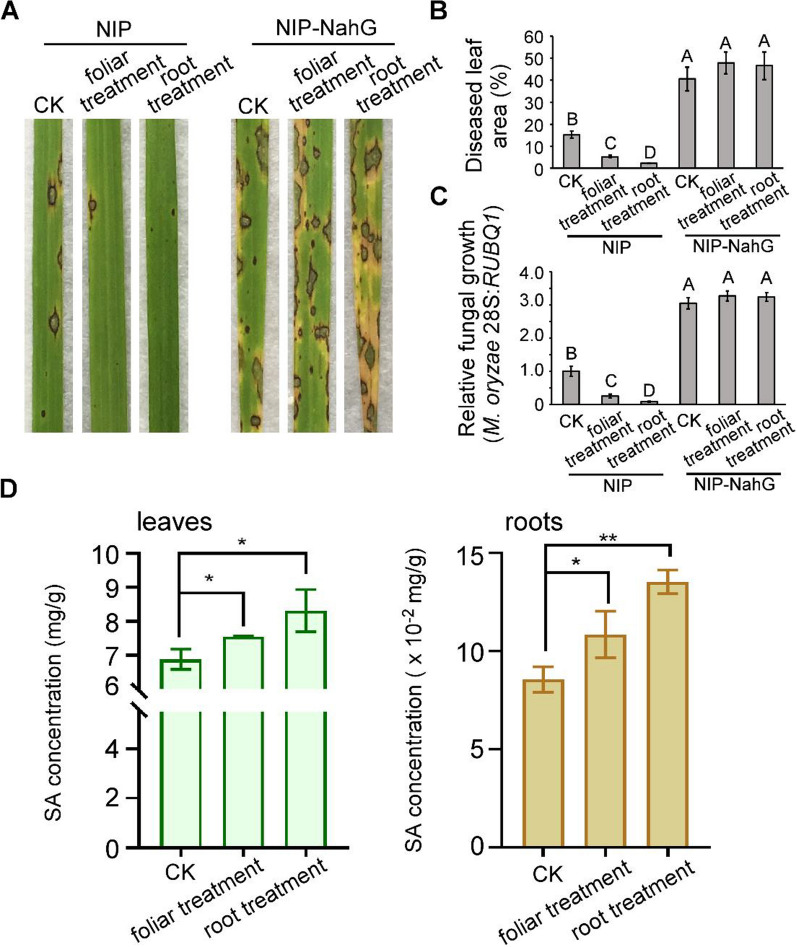
Salicylic acid (SA) is a key plant hormone essential for establishing plant resistance to several pathogens and its further affected a special form of induced resistance, the systemic acquired resistance (SAR), which considered as an important aspect of plant innate immunity from the locally induced disease resistance to the whole plant. Here we showed that SiO NPs could stimulate plant immunity to protect rice against M. oryzae through foliar treatment that significantly decreased disease severity by nearly 70% within an appropriate concentration range. Excessive concentration of foliar treatment led to disordered intake and abnormal SA responsive genes expressions which weaken the plant resistance and even aggravated the disease. Importantly, this SA-dependent fungal resistance could achieve better results with root treatment through a SAR manner with no phytotoxicity since the orderly and moderate absorption. What's more, root treatment with SiO NPs could also promote root development which was better to deal with drought.
Taken together, our findings not only revealed SiO NPs as a potential effective and safe strategy to protect rice against biotic and abiotic stresses, but also identify root treatment for the appropriate application method since it seems not causing negative effects and even have promotion on root development.
到 2050 年,世界人口将增加到 100 亿,这促使人们对粮食生产的需求增加了一倍。植物病害和土地干旱将使情况更加严峻,因此更安全、更环保的材料被认为是一种新的对策。稻瘟病菌,稻瘟病菌,是世界范围内造成最具破坏性的农作物病害之一,严重威胁着水稻生产。不幸的是,传统的育种方法或化学方法都不能很好地控制它。如今,纳米技术成为应对这些日益严峻挑战的新武器,硅纳米颗粒(SiO NPs)最近已被认为是潜在的新型更安全的农用化学品,但系统研究仍很有限,特别是在水稻方面。
水杨酸(SA)是植物对几种病原体建立抗性所必需的关键植物激素,它进一步影响了一种特殊形式的诱导抗性,即系统获得抗性(SAR),这被认为是植物固有免疫的一个重要方面,从局部诱导的疾病抗性到整个植物。在这里,我们表明,SiO NPs 可以通过叶面处理刺激植物免疫力,从而保护水稻免受稻瘟病菌的侵害,在适当的浓度范围内,叶面处理可使病情严重程度降低近 70%。叶面处理浓度过高会导致摄入紊乱和异常的 SA 响应基因表达,从而削弱植物的抗性,甚至加重病害。重要的是,这种依赖 SA 的真菌抗性可以通过 SAR 方式通过根部处理获得更好的效果,而没有植物毒性,因为吸收是有序和适度的。更重要的是,SiO NPs 根部处理还可以促进根系发育,更有利于应对干旱。
总之,我们的研究结果不仅揭示了 SiO NPs 作为一种潜在的有效和安全的策略来保护水稻免受生物和非生物胁迫,而且还确定了根部处理作为一种合适的应用方法,因为它似乎不会造成负面影响,甚至对根系发育有促进作用。