
将前庭系统与记忆联系起来的动物研究:新西兰的贡献。
Animal studies linking the vestibular system and memory: Aotearoa/New Zealand's contribution.
作者信息
Smith Paul F, Darlington Cynthia L, Zheng Yiwen
机构信息
Dept. Pharmacology and Toxicology, Faculty of Biomedical and Molecular Sciences, University of Otago, Dunedin, New Zealand.
出版信息
J R Soc N Z. 2024 Oct 14;55(3):424-440. doi: 10.1080/03036758.2024.2412085. eCollection 2025.
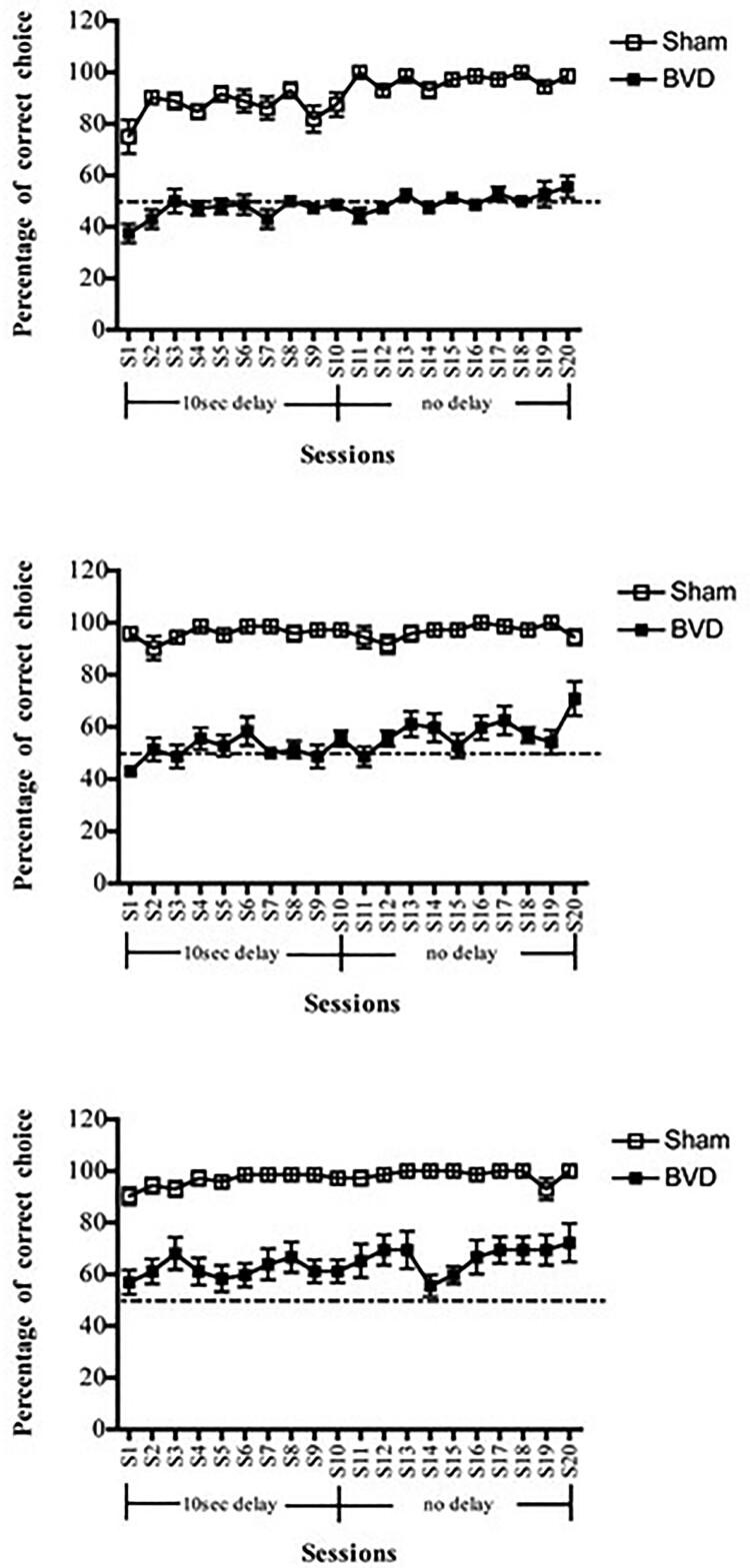
Animal studies of the mammalian vestibular system began at the University of Otago in 1987. From approximately 2000, these studies focused on the effects of vestibular lesions and stimulation, on spatial memory and the hippocampus. Our research has shown that, as well as the deficits in the vestibulo-ocular and vestibulo-spinal reflexes that occur following vestibular dysfunction, vestibular loss may also cause cognitive disorders, especially spatial memory deficits, some of which are related to the contribution of ascending vestibular pathways to the function of the limbic system and neocortex in regulating spatial orientation. In addition to behavioural demonstrations of spatial memory deficits, we have demonstrated that vestibular loss is associated with a variety of dysfunctional changes in the hippocampus, which may be responsible for the spatial memory deficits. These memory deficits are unlikely to be due to hearing loss, problems with motor control, oscillopsia or anxiety and depression. These animal studies have raised awareness of cognitive deficits associated with vestibular disorders and contributed to their recognition and treatment.
1987年,奥塔哥大学开始了对哺乳动物前庭系统的动物研究。从大约2000年起,这些研究聚焦于前庭损伤和刺激对空间记忆及海马体的影响。我们的研究表明,除了前庭功能障碍后出现的前庭眼反射和前庭脊髓反射缺陷外,前庭丧失还可能导致认知障碍,尤其是空间记忆缺陷,其中一些与前庭上行通路对边缘系统和新皮质调节空间定向功能的贡献有关。除了空间记忆缺陷的行为表现外,我们还证明前庭丧失与海马体的各种功能失调变化有关,这可能是导致空间记忆缺陷的原因。这些记忆缺陷不太可能是由于听力丧失、运动控制问题、视振荡或焦虑抑郁引起的。这些动物研究提高了人们对与前庭障碍相关的认知缺陷的认识,并有助于对其进行识别和治疗。




 Zotero 插件