Awasthi Saraswati, Hiremath Vikas M, Nain Sonam, Malik Shweta, Srinivasan Vanita, Rose Pooja, Choudhury Ashutosh, Grover Ritika, Sharma Rakesh
CSIR-Institute of Genomics and Integrative Biology, New Delhi, India.
Academy of Scientific and Innovative Research (AcSIR), Ghaziabad, Uttar Pradesh, 201002, India.
Environ Microbiome. 2025 Feb 25;20(1):25. doi: 10.1186/s40793-025-00684-8.
Urban dwellings serve as complex and diverse microbial community niches. Interactions and impact of house microbiome on the health of the inhabitants need to be clearly defined. Therefore, it is critical to understand the diversity of the house microbiota, the presence and abundance of potential pathogens, and antimicrobial resistance.
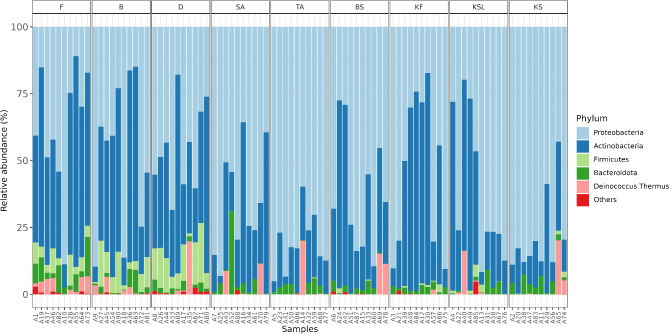
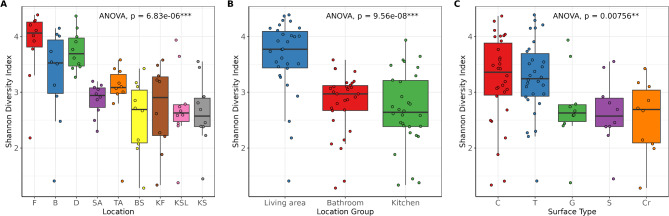
Shotgun metagenomics was used to analyze the samples collected from 9 locations in 10 houses in New Delhi, India. The microbiota includes more than 1409 bacterial, 5 fungal, and 474 viral species en masse. The most prevalent bacterial species were Moraxella osloensis, Paracoccus marcusii, Microbacterium aurum, Qipengyuania sp YIMB01966, and Paracoccus sphaerophysae, which were detected in at least 80 samples. The location was the primary factor influencing the microbiome diversity in the Indian houses. The overall diversity of different houses did not differ significantly from each other. The surface type influenced the microbial community, but the microbial diversity on the cemented and tiled floors did not vary significantly. A substantial fraction of the bacterial species were potentially pathogenic or opportunistic pathogens, including the ESKAPE pathogens. Escherichia coli was relatively more abundant in bedroom, foyer, and drawing room locations. Analysis of the house microbiome antimicrobial resistome revealed 669 subtypes representing 22 categories of antimicrobial resistance genes, with multidrug resistance genes being the most abundant, followed by aminoglycoside genes.
This study provides the first insight into the microbiomes of houses in New Delhi, showing that these houses have diverse microbiomes and that the location within the house significantly influences the microbiota. The presence of potential pathogens and a repertoire of antimicrobial resistance genes reflect possible health risks, as these could lead to infectious disease transmission. This study builds a framework for understanding the microbial diversity of houses in terms of geographical location, environment, building design, cleaning habits, and impact on the health of occupants.
城市住宅是复杂多样的微生物群落生态位。房屋微生物群对居民健康的相互作用和影响需要明确界定。因此,了解房屋微生物群的多样性、潜在病原体的存在和丰度以及抗菌药物耐药性至关重要。
采用鸟枪法宏基因组学分析了从印度新德里10所房屋的9个位置采集的样本。微生物群总共包括1409多种细菌、5种真菌和474种病毒。最常见的细菌物种是奥斯陆莫拉菌、马氏副球菌、金色微杆菌、YIMB01966奇彭元菌属和球形副球菌,至少在80个样本中检测到。位置是影响印度房屋微生物群多样性的主要因素。不同房屋的总体多样性彼此之间没有显著差异。表面类型影响微生物群落,但水泥地面和瓷砖地面上的微生物多样性没有显著差异。相当一部分细菌物种是潜在病原体或机会性病原体,包括ESKAPE病原体。大肠杆菌在卧室、门厅和客厅位置相对更为丰富。对房屋微生物群抗菌药物耐药组的分析揭示了代表22类抗菌药物耐药基因的669个亚型,其中多药耐药基因最为丰富,其次是氨基糖苷类基因。
本研究首次深入了解了新德里房屋的微生物群,表明这些房屋具有多样的微生物群,并且房屋内的位置对微生物群有显著影响。潜在病原体的存在和一系列抗菌药物耐药基因反映了可能的健康风险,因为这些可能导致传染病传播。本研究建立了一个框架,用于从地理位置、环境、建筑设计、清洁习惯以及对居住者健康的影响等方面理解房屋的微生物多样性。