Sasaki Ryoki, Kojima Sho, Saito Kei, Onishi Hideaki
Kanagawa University of Human Services, Heisei-Cho 1-10-1, Yokosuka City, Kanagawa, 238-8522, Japan.
Institute for Human Movement and Medical Sciences, Niigata University of Health and Welfare, Niigata City, Niigata, Japan.
J Neuroeng Rehabil. 2025 Mar 3;22(1):43. doi: 10.1186/s12984-025-01579-y.
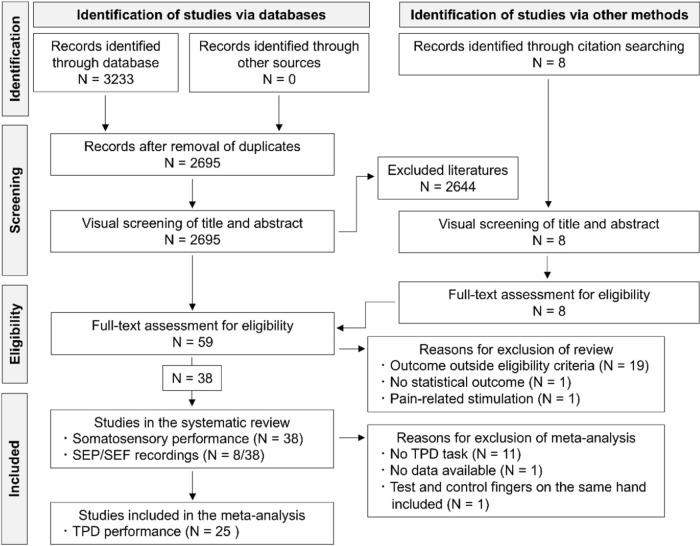
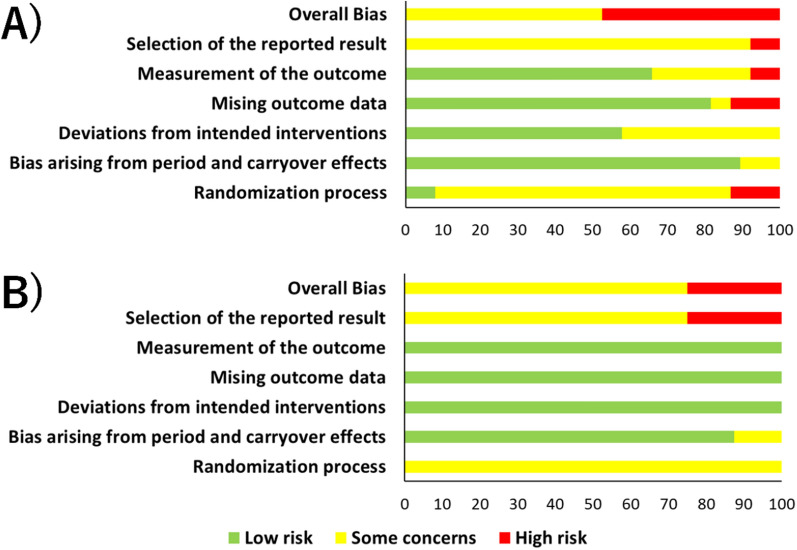
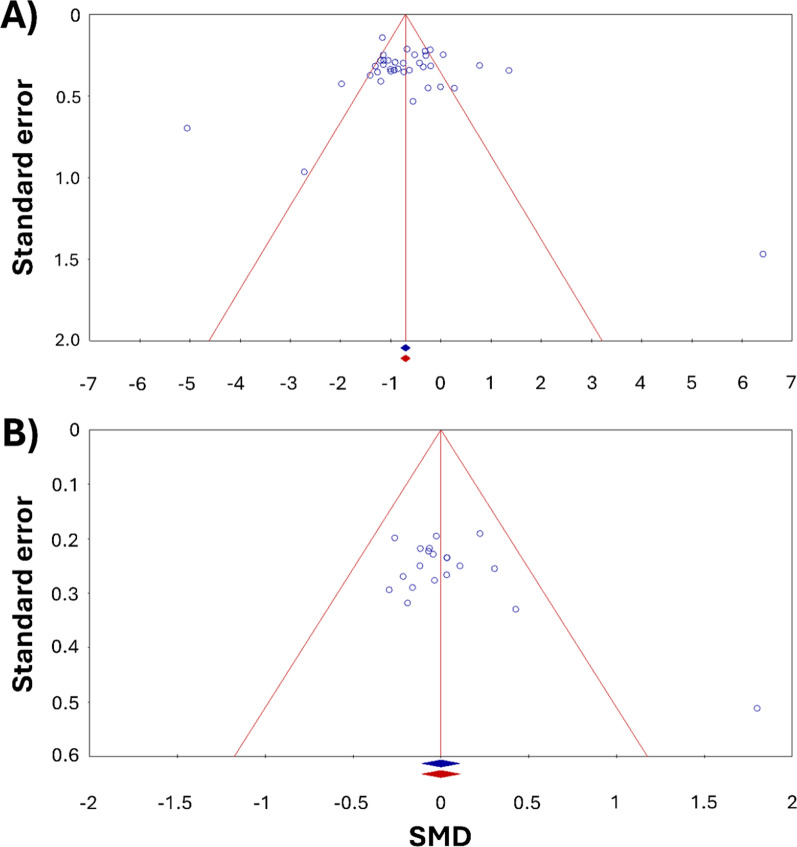
Somatosensory training, which involves repetitive somatosensory stimulation, has been employed to enhance somatosensory performance by modulating excitability in the primary somatosensory cortex. This process, known as perceptual learning, can benefit stroke patients with somatosensory deficits. However, its effectiveness in both healthy individuals and stroke patients has not been thoroughly investigated. This systematic review and meta-analysis aimed to evaluate the effectiveness of somatosensory training in these groups. However, no eligible data on stroke patients were identified, excluding them from the analysis. In healthy participants, somatosensory training improved performance in 61.2% datasets, but this effect was observed only at the stimulated site. Additionally, it increased early somatosensory-evoked potential amplitudes in 76.9% of datasets at the stimulated site, with no effect on the non-stimulated site. Despite these moderate improvements, the risk of bias assessment revealed methodological concerns including randomization process, proper control conditions, blinding information, and missing data. The meta-analysis focused on the impact of somatosensory training on tactile two-point discrimination (TPD) in various factors, including different age groups, stimulus durations, stimulus frequencies, and stimulus types. A marked reduction in TPD threshold was observed at the stimulated finger post-training compared to pre-training, though there was a noticeable heterogeneity across studies. In contrast, no significant changes occurred at the non-stimulated fingers, and the subgroup analysis found no specific factors influencing TPD improvements. Although somatosensory training benefits healthy individuals, the variability and methodological concerns highlight the need for further high-quality research to optimize its use in treating somatosensory deficits in stroke patients.
体感训练涉及重复性体感刺激,已被用于通过调节初级体感皮层的兴奋性来提高体感表现。这个过程,即知觉学习,对有体感缺陷的中风患者有益。然而,其在健康个体和中风患者中的有效性尚未得到充分研究。本系统综述和荟萃分析旨在评估体感训练在这些群体中的有效性。然而,未找到关于中风患者的符合条件的数据,因此将他们排除在分析之外。在健康参与者中,体感训练在61.2%的数据集中提高了表现,但这种效果仅在受刺激部位观察到。此外,它在76.9%的受刺激部位数据集中增加了早期体感诱发电位幅度,对未受刺激部位没有影响。尽管有这些适度的改善,但偏倚风险评估揭示了方法学上的问题,包括随机化过程、适当的对照条件、盲法信息和数据缺失。荟萃分析关注体感训练对触觉两点辨别(TPD)在不同因素中的影响,包括不同年龄组、刺激持续时间、刺激频率和刺激类型。与训练前相比,训练后受刺激手指的TPD阈值显著降低,尽管各研究之间存在明显的异质性。相比之下,未受刺激手指没有显著变化,亚组分析未发现影响TPD改善的特定因素。尽管体感训练对健康个体有益,但变异性和方法学问题凸显了进一步开展高质量研究以优化其在治疗中风患者体感缺陷中的应用的必要性。