
训练干预对预防膝关节损伤的影响:一项系统评价与荟萃分析。
The effects of training intervention on the prevention of knee joint injuries: a systematic review and meta-analysis.
作者信息
Zheng Gangbin, Zeng Sai, Li Tiangeng, Guo Liang, Li Ling
机构信息
School of Physical Education and Sports Science, South China Normal University, Guangzhou, China.
Department of Comprehensive Physical Education, Chencun Town Central Primary School, Foshan, China.
出版信息
Front Physiol. 2025 Feb 24;16:1455055. doi: 10.3389/fphys.2025.1455055. eCollection 2025.
OBJECTIVE
To evaluate the impact of neuromuscular, core strength, balance, and proprioceptive training on preventing knee injuries in young athletes, to identify optimal intervention characteristics.
METHODS
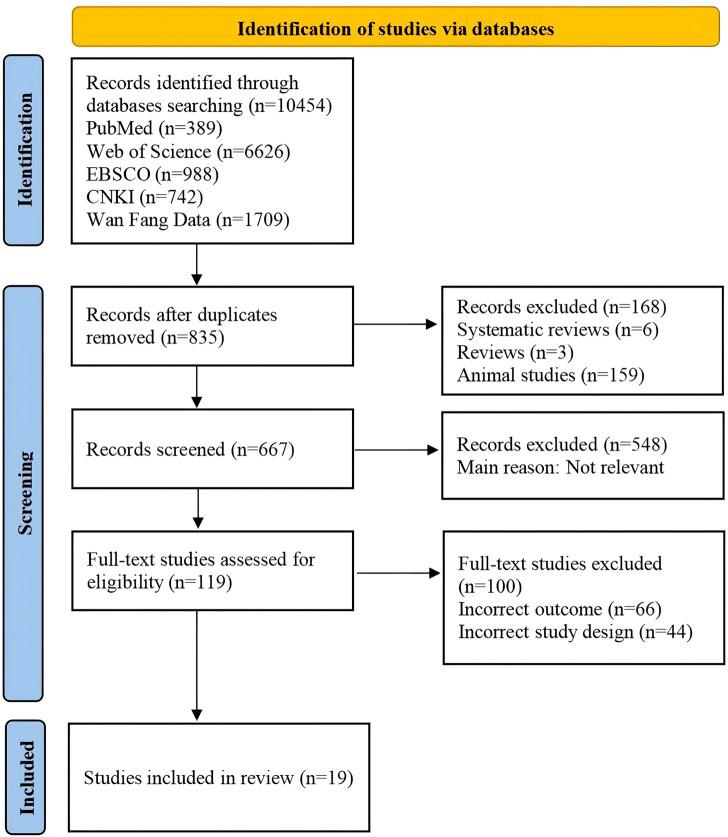
This review followed the 2020 guidelines of the Preferred Reporting Items for Systematic Reviews and Meta-Analyses (PRISMA). A systematic search of English and Chinese literature in databases included PubMed, Web of Science, EBSCO, CNKI, and Wanfang, covering studies published from January 1, 2000, to 12 April 2024. Inclusion criteria targeted randomized controlled trials (RCTs) on training interventions aimed at knee injury prevention among young athletes. The analysis used a random-effects model to pool data from studies meeting our criteria, ensuring a comprehensive evaluation of intervention effectiveness.
RESULTS
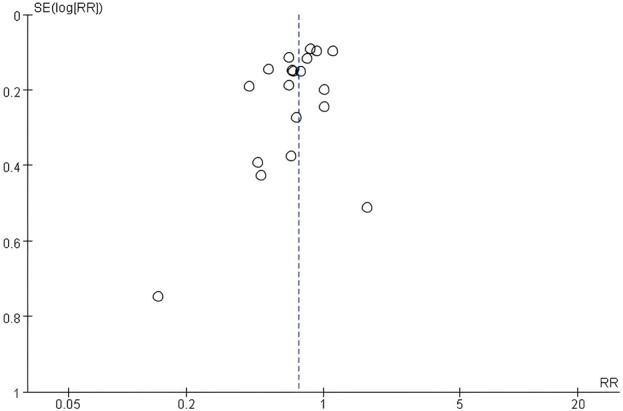
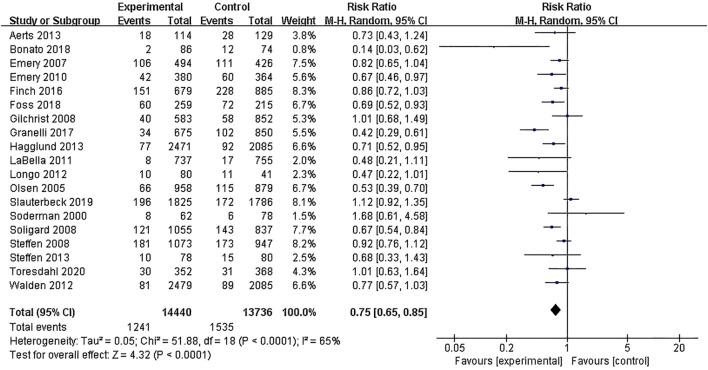
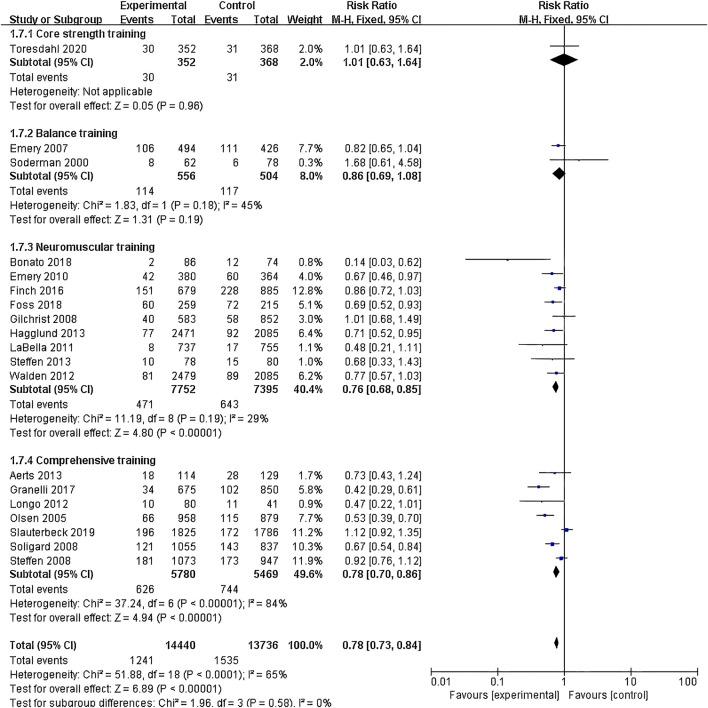
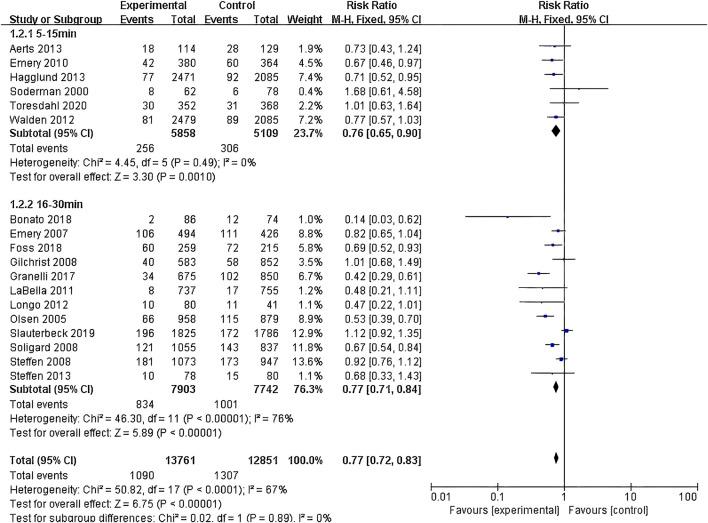
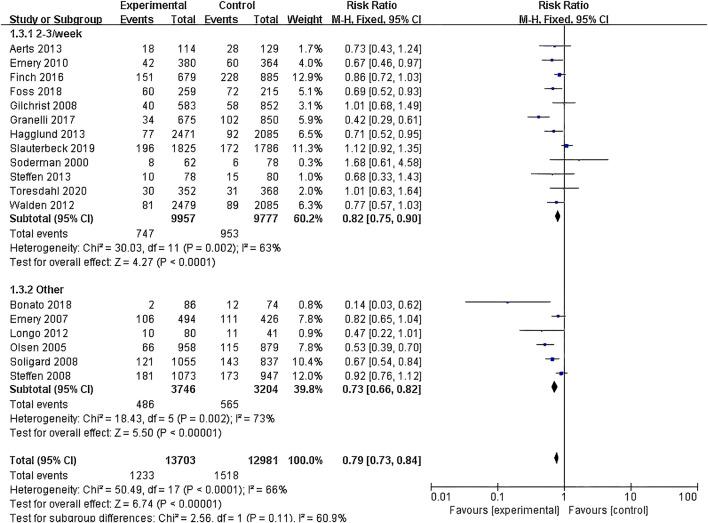
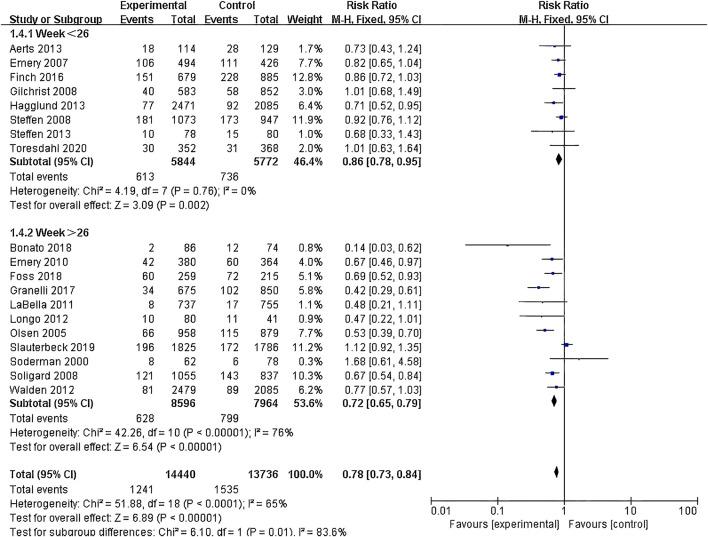
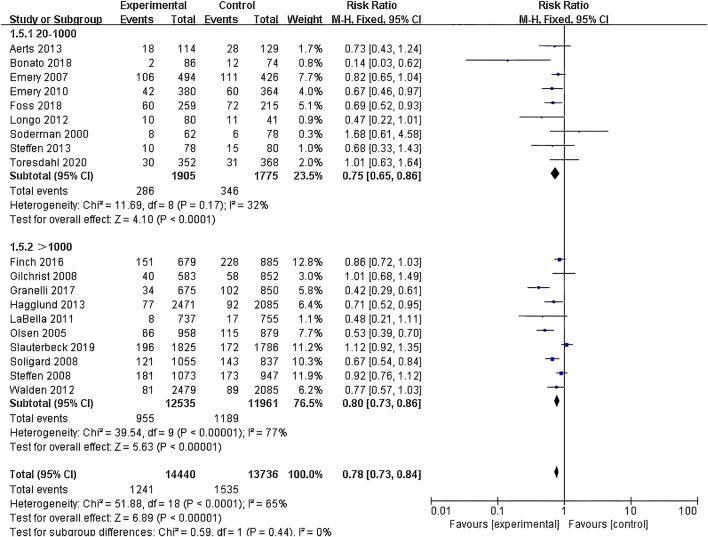
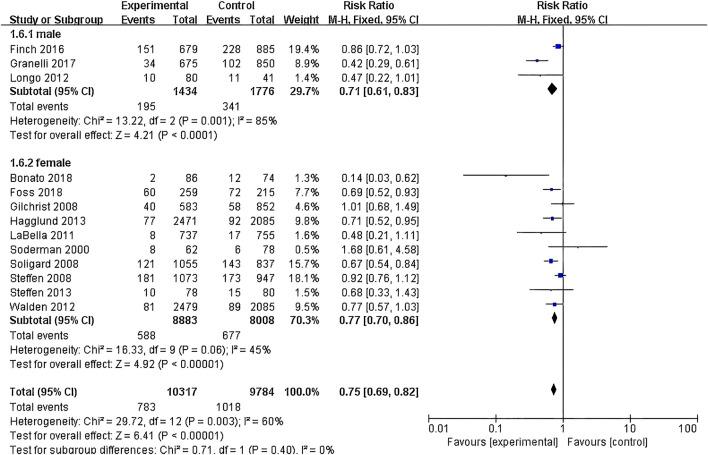
A total of 19 randomized controlled trials (RCTs) involving 28,176 subjects were included. The meta-analysis showed that training intervention programs reduced the risk of lower extremity knee injuries by 25% (RR = 0.75, 95% CI: 0.65-0.85). The most notable effects were observed in intervention with exercise duration of 5-15 min, frequencies of 4-5 times per week, and program lengths exceeding 26 weeks.
CONCLUSION
The findings highlight the effectiveness of specific training interventions in reducing knee injury risk among athletes. These insights provide a clear framework for designing training routines that effectively prevent knee injuries.
目的
评估神经肌肉、核心力量、平衡和本体感觉训练对预防年轻运动员膝关节损伤的影响,以确定最佳干预特征。
方法
本综述遵循系统评价和Meta分析的首选报告项目(PRISMA)2020年指南。在包括PubMed、Web of Science、EBSCO、中国知网和万方在内的数据库中对英文和中文文献进行系统检索,涵盖2000年1月1日至2024年4月12日发表的研究。纳入标准针对旨在预防年轻运动员膝关节损伤的训练干预的随机对照试验(RCT)。分析采用随机效应模型汇总符合我们标准的研究数据,以全面评估干预效果。
结果
共纳入19项涉及28176名受试者的随机对照试验(RCT)。Meta分析表明,训练干预计划将下肢膝关节损伤风险降低了25%(RR = 0.75,95%CI:0.65 - 0.85)。在运动持续时间为5 - 15分钟、每周频率为4 - 5次且计划长度超过26周的干预中观察到最显著的效果。
结论
研究结果突出了特定训练干预在降低运动员膝关节损伤风险方面的有效性。这些见解为设计有效预防膝关节损伤的训练常规提供了明确的框架。
 Zotero 插件