
曲克芦丁靶向唾液酸化相关基因EGLN3治疗肺腺癌的作用机制。
Mechanism of action for Troxerutin targeting the sialylation-related gene EGLN3 for the treatment of LUAD.
作者信息
Wu Yanan, Ge Yanlei, Gan Junqing, Jin Ye, Cui Yishuang, Zheng Xuan, Yao Xuemin, Sun Guogui
机构信息
School of Public Health, North China University of Science and Technology, Tangshan, 063210, Hebei, China.
Department of Radiotherapy and Chemotherapy, Affiliated Hospital of North China University of Science and Technology, Tangshan, 063000, Hebei, China.
出版信息
Sci Rep. 2025 Mar 18;15(1):9298. doi: 10.1038/s41598-025-92028-2.
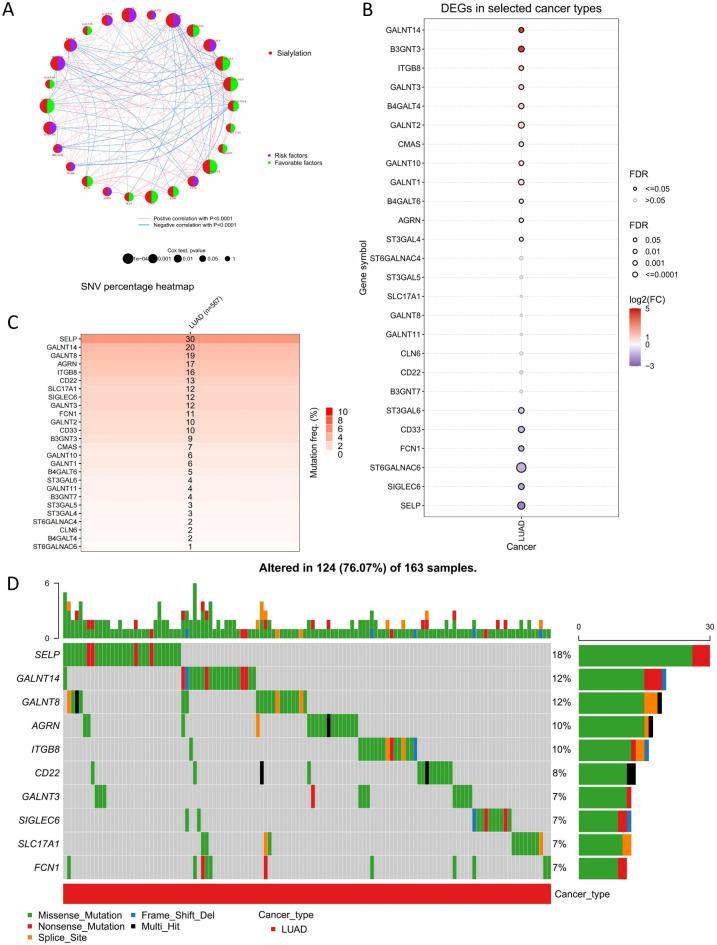
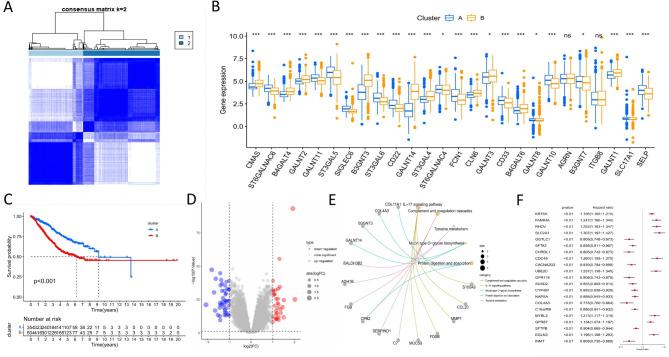
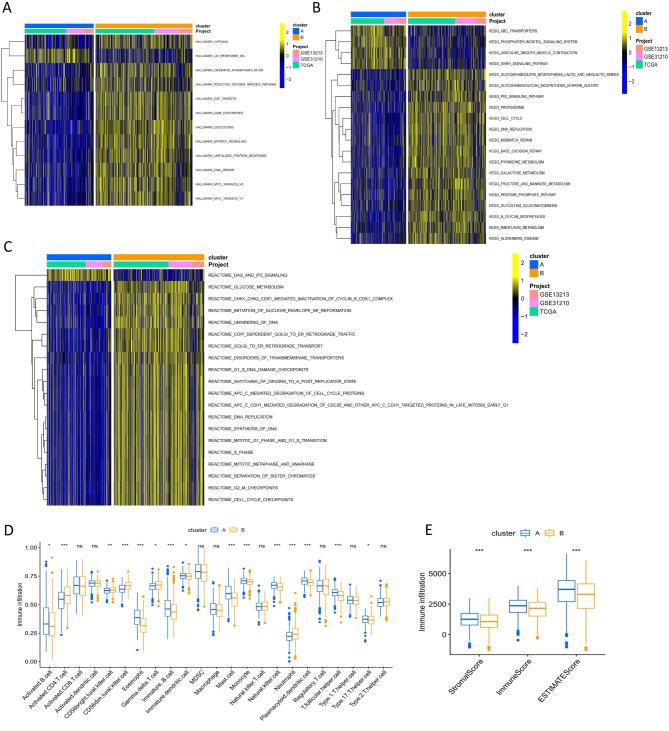
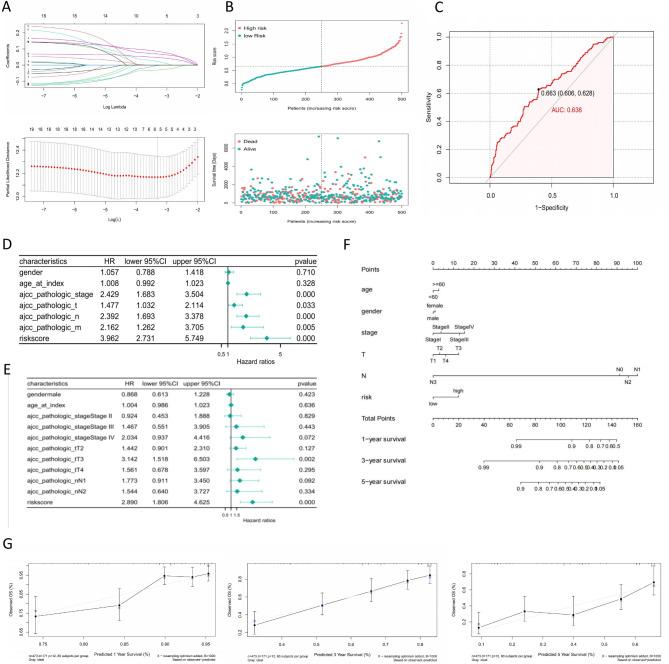
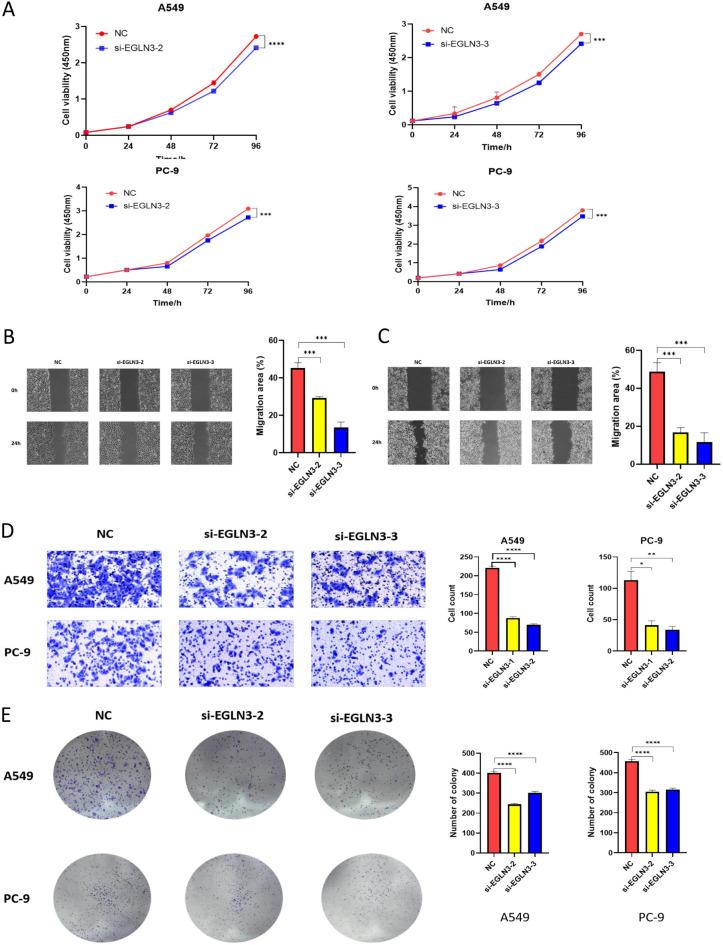
Studies have demonstrated that sialylation changes play a vital part in lung adenocarcinoma (LUAD), yet the specific mechanism is uncertain. Hence, in the present research, we screened sialylation-related biomarkers in LUAD using the bioinformatic strategy, predicted the drugs and performed relevant experiments to explore their role in regulating LUAD. The TCGA-LUAD, GSE31210, and GSE13213 datasets were combined to form LUAD ensemble. The sialylation-related genes (SRGs) linked with LUAD prognosis were determined by univariate Cox regression analysis, and their expressions and mutations in LUAD were analyzed in GSCA database. Then, depending on the consistent clustering of prognostic SRGs, LUAD patients were divided into sialylation-related subgroups, followed by the investigation of survival, immunity, and clinical characteristics in the subgroups. LASSO regression analysis was further employed to identify prognostic gene signatures and to build a sialylation-related model to predict the prognosis of LUAD patients. The gene signature were validated using RT-qPCR and used for predicting target medicines using molecular docking to further investigate the potential therapies for LUAD patients. A total of 26 SRGs in LUAD ensemble were associated with prognosis, and LUAD samples were classified into two sialylation-related subgroups based on these SRGs. Intergroup comparisons revealed that patients in Cluster A had greater survival rates, as well as higher immune infiltration. The risk prognostic model built based on 6 prognostic gene signature was able to effectively predict the survival of LUAD patients. Finally, the experimental findings indicated that Troxerutin exhibits a strong binding energy to the sialylation-related gene EGLN3, which could greatly reduce the growth of LUAD by inhibiting the expression of EGLN3, thus limiting the capacity of LUAD cells in the proliferation, migration, and invasion. Troxerutin could target and lower the expression of sialylation-related gene EGLN3, reducing LUAD cells' ability to proliferate, migrate, and invade, making it an essential reference for LUAD prevention and treatment.
研究表明,唾液酸化变化在肺腺癌(LUAD)中起着至关重要的作用,但其具体机制尚不清楚。因此,在本研究中,我们使用生物信息学策略筛选LUAD中与唾液酸化相关的生物标志物,预测药物并进行相关实验,以探索它们在调节LUAD中的作用。将TCGA-LUAD、GSE31210和GSE13213数据集合并形成LUAD整合数据集。通过单变量Cox回归分析确定与LUAD预后相关的唾液酸化相关基因(SRGs),并在GSCA数据库中分析它们在LUAD中的表达和突变情况。然后,根据预后SRGs的一致性聚类,将LUAD患者分为唾液酸化相关亚组,随后研究亚组中的生存、免疫和临床特征。进一步采用LASSO回归分析来识别预后基因特征,并建立一个与唾液酸化相关的模型来预测LUAD患者的预后。使用RT-qPCR对基因特征进行验证,并使用分子对接预测靶向药物,以进一步研究LUAD患者的潜在治疗方法。LUAD整合数据集中共有26个SRGs与预后相关,基于这些SRGs将LUAD样本分为两个唾液酸化相关亚组。组间比较显示,A组患者的生存率更高,免疫浸润也更高。基于6个预后基因特征构建的风险预后模型能够有效预测LUAD患者的生存情况。最后,实验结果表明,曲克芦丁与唾液酸化相关基因EGLN3具有很强的结合能,通过抑制EGLN3的表达可以大大降低LUAD的生长,从而限制LUAD细胞的增殖、迁移和侵袭能力。曲克芦丁可以靶向并降低唾液酸化相关基因EGLN3的表达,降低LUAD细胞的增殖、迁移和侵袭能力,这为LUAD的预防和治疗提供了重要参考。


 Zotero 插件