Liu Lin, Tai Hsing-Wei, Wang Teng, Qiao Liang, Cheng Kuo-Tai
School of Economics and Management, Beijing Jiaotong University, Beijing, 100044, China.
School of Architectural Engineering, Weifang University of Science and Technology, 262700, Weifang, China.
Sci Rep. 2025 Mar 18;15(1):9300. doi: 10.1038/s41598-025-92786-z.
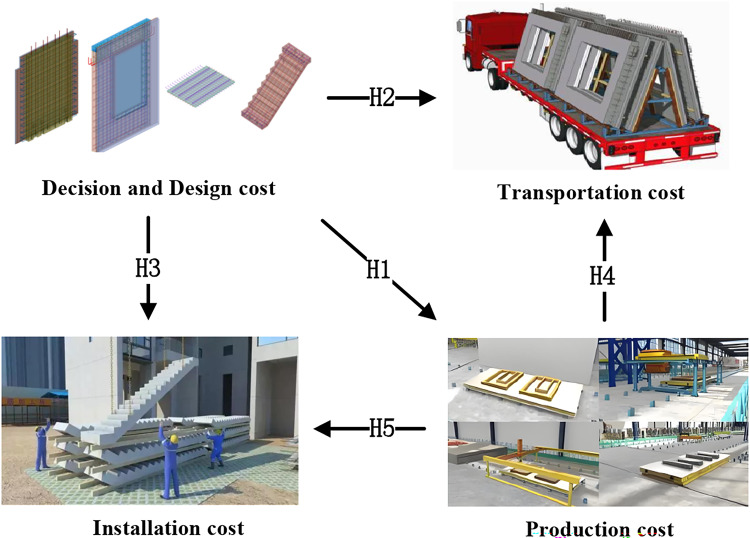
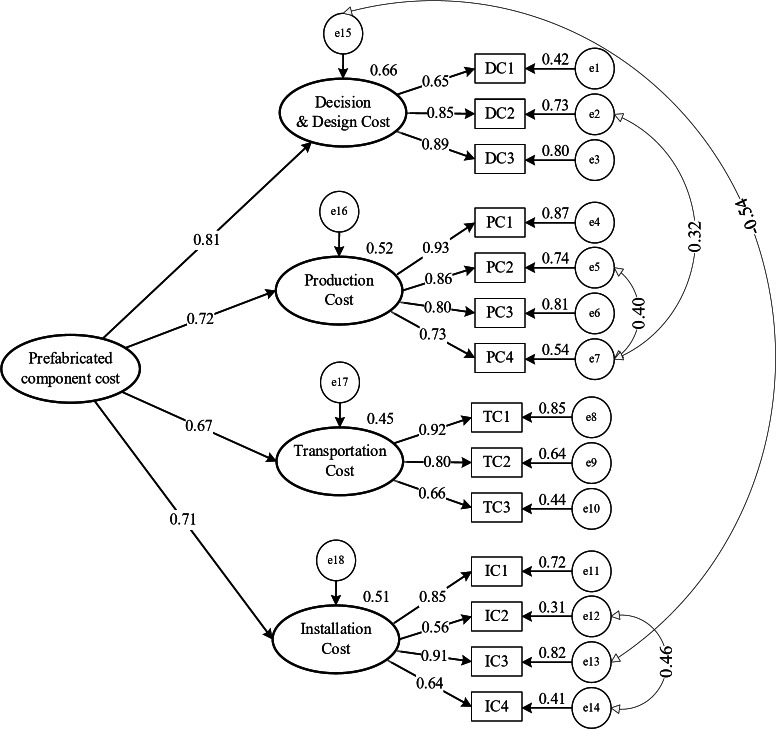
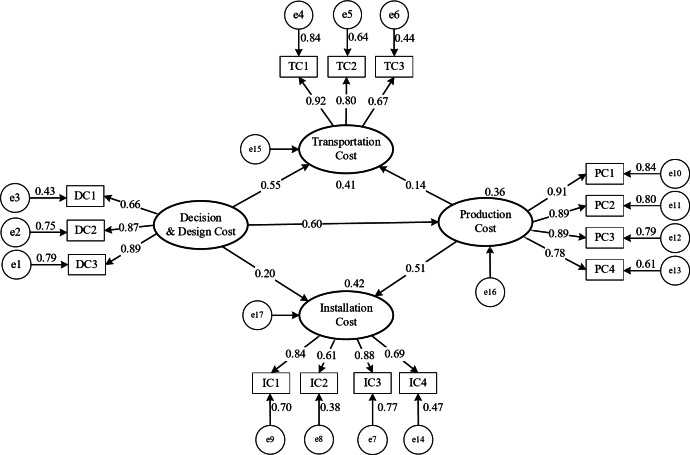
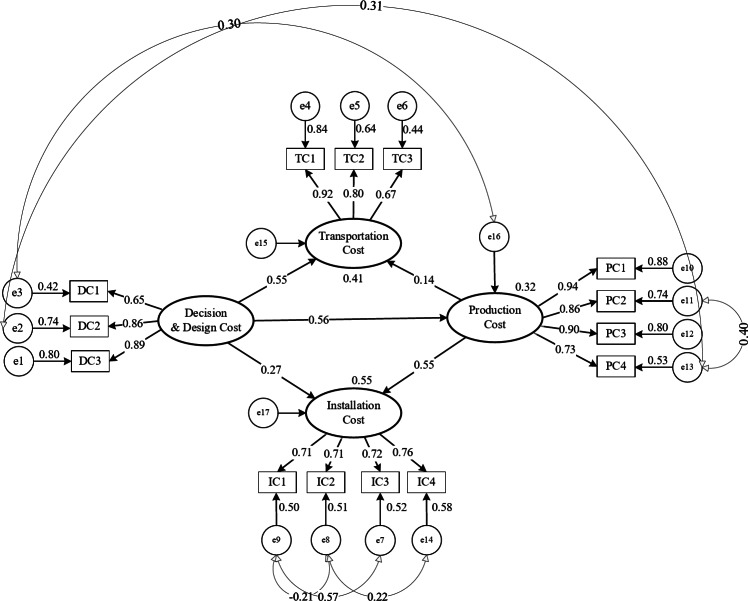
This study examines cost control challenges in prefabricated building construction, focusing on the design, production, transportation, and installation phases. A conceptual framework was developed through a literature review, and structural equation models were constructed using SPSS and AMOS based on data from Chinese prefabricated building firms. This study provides a holistic perspective on cost control in the prefabrication construction phase. The findings reveal that increased investment in design significantly reduces costs in subsequent phases, with design having the greatest impact on cost control. Production and installation have similar effects on overall costs, while transportation has the least impact. Key factors influencing cost management include prefabrication efficiency, IT proficiency, production scale, loading strategy, and installation complexity. By emphasizing the strategic role of design and production investments, this study delivers novel insights and practical recommendations for optimizing costs, offering decision-making support for improving cost efficiency in prefabricated buildings. These findings make a significant contribution to advancing research and industry practices in prefabricated building cost management.
本研究探讨预制建筑施工中的成本控制挑战,重点关注设计、生产、运输和安装阶段。通过文献综述建立了一个概念框架,并基于中国预制建筑公司的数据,使用SPSS和AMOS构建了结构方程模型。本研究提供了预制施工阶段成本控制的整体视角。研究结果表明,增加设计投资可显著降低后续阶段的成本,其中设计对成本控制的影响最大。生产和安装对总成本有类似影响,而运输的影响最小。影响成本管理的关键因素包括预制效率、信息技术熟练程度、生产规模、装载策略和安装复杂性。通过强调设计和生产投资的战略作用,本研究为优化成本提供了新颖的见解和实用建议,为提高预制建筑的成本效率提供决策支持。这些发现对推进预制建筑成本管理的研究和行业实践做出了重大贡献。