Caffarra Sendy, Karipidis Iliana I, Kruper John, Kubota Emily, Richie-Halford Adam, Takada Megumi, Rokem Ariel, Yeatman Jason D
Department of Biomedical, Metabolic and Neural Sciences, University of Modena and Reggio Emilia, Modena, Italy.
Division of Developmental-Behavioral Pediatrics, Stanford School of Medicine, Stanford, California, United States of America.
PLoS One. 2025 Mar 19;20(3):e0309574. doi: 10.1371/journal.pone.0309574. eCollection 2025.
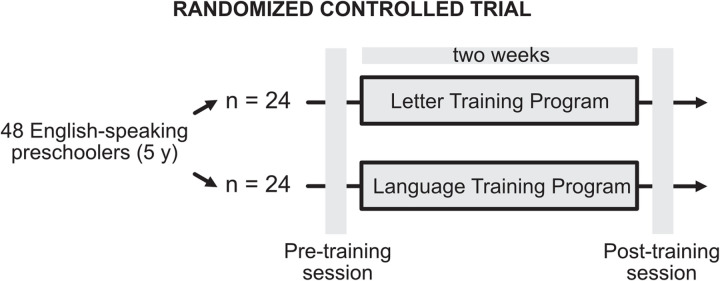
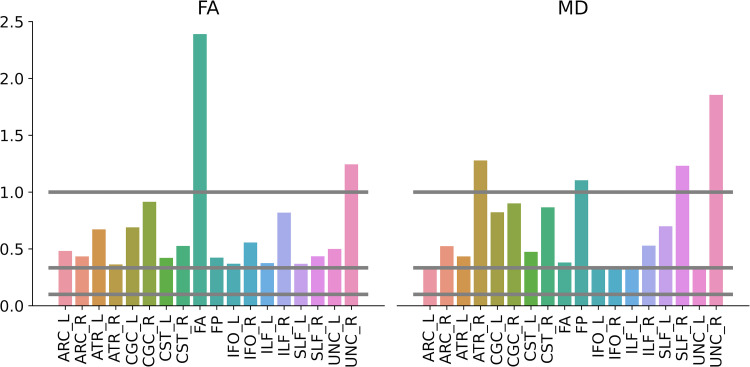
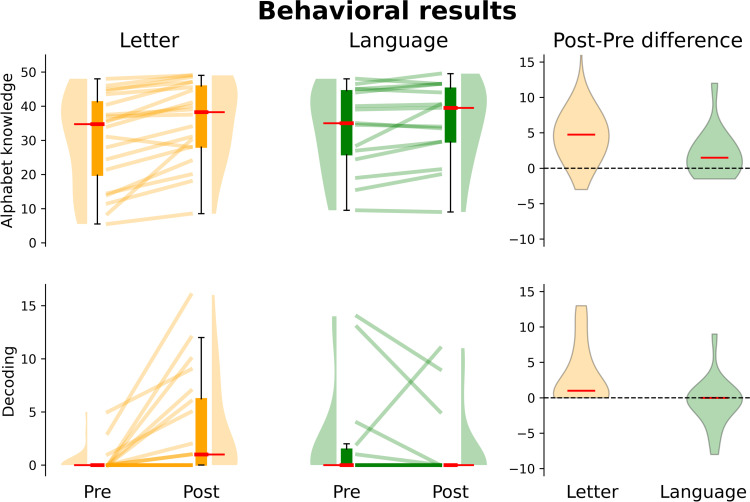
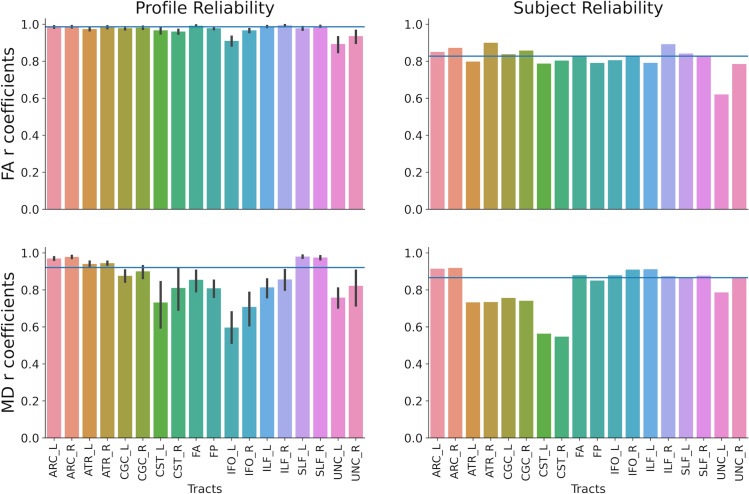
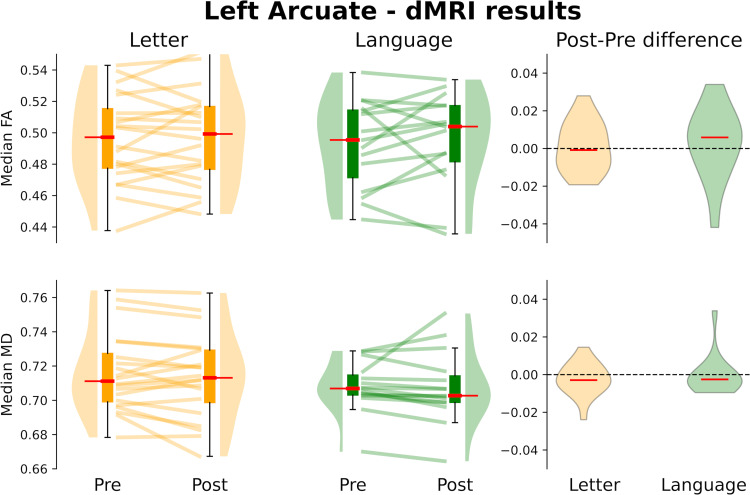
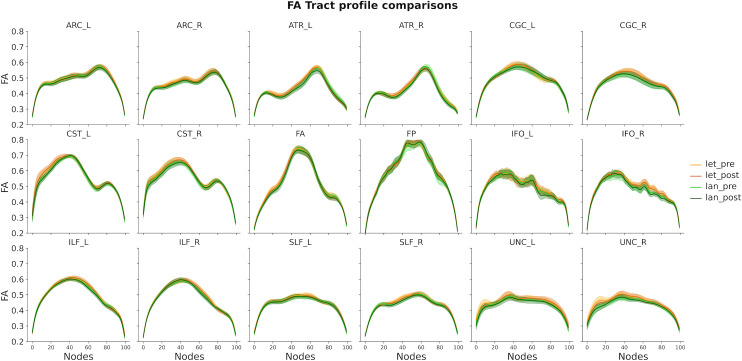
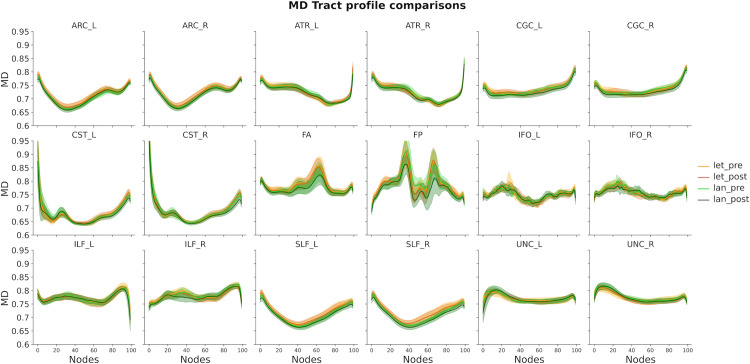
Reading is a cognitive skill that requires our brain to go through a myriad of changes during learning. While many studies have described how reading acquisition shapes children's brain function, less is known about the impact of reading on brain structure. Here we examined short-term causal effects of reading training on preschoolers' behavior and white matter structure. Forty-eight English-speaking preschoolers (4y10m to 6y2m) participated in a randomized controlled trial where they were randomly assigned to two training programs: the Letter training program was focused on key skills for reading (e.g., decoding and letter knowledge), while the Language training program strengthened oral language comprehension skills without exposure to text. Longitudinal behavioral data showed that only the Letter Training group increased letter knowledge and decoding skills after the two-week training. Diffusion MRI measures (FA and MD) of eighteen white matter pathways (including the left arcuate and the left inferior longitudinal fasciculus) did not reveal any statistically significant changes for either group despite high degrees of scan-rescan reliability across sessions. These findings suggest that a two-week reading training program can cause changes in preschoolers' letter knowledge and decoding abilities, without being accompanied by measurable changes in the diffusion properties of the major white matter pathways of the reading network. We conclude highlighting possible constraints (i.e., age, training onset and duration, cognitive profile) to reading-related white matter plasticity.
阅读是一种认知技能,在学习过程中需要我们的大脑经历无数变化。虽然许多研究描述了阅读习得如何塑造儿童的脑功能,但关于阅读对脑结构的影响却知之甚少。在这里,我们研究了阅读训练对学龄前儿童行为和白质结构的短期因果效应。48名说英语的学龄前儿童(4岁10个月至6岁2个月)参与了一项随机对照试验,他们被随机分配到两个训练项目中:字母训练项目侧重于阅读的关键技能(如解码和字母知识),而语言训练项目则在不接触文本的情况下强化口语理解技能。纵向行为数据显示,只有字母训练组在为期两周的训练后提高了字母知识和解码技能。尽管各阶段的扫描-重扫可靠性很高,但对18条白质通路(包括左弓状束和左下纵束)的扩散MRI测量(FA和MD)并未显示两组有任何统计学上的显著变化。这些发现表明,为期两周的阅读训练项目可以引起学龄前儿童字母知识和解码能力的变化,但阅读网络主要白质通路的扩散特性却没有可测量的变化。我们在结论中强调了与阅读相关的白质可塑性可能存在的限制因素(即年龄、训练开始时间和持续时间、认知特征)。