Garg Ravi, Torrealba-Acosta Gabriel, Mickenautsch Steffen, Berger Vance W
Department of Neurology, Division of Neurocritical Care, Loyola University Chicago Stritch School of Medicine, Maywood, Illinois, United States of America.
Department of Neurology, Duke University School of Medicine, Durham, North Carolina, United States of America.
PLoS One. 2025 Mar 19;20(3):e0315342. doi: 10.1371/journal.pone.0315342. eCollection 2025.
Little is known about the integrity of randomization for randomized controlled trials (RCT) included in alteplase for stroke meta-analyses. If the RCTs were not properly randomized, the results could not be accepted at face value. The objective was to assess the integrity of randomization in individual patient data (IPD) meta-analyses supporting alteplase for acute ischemic stroke.
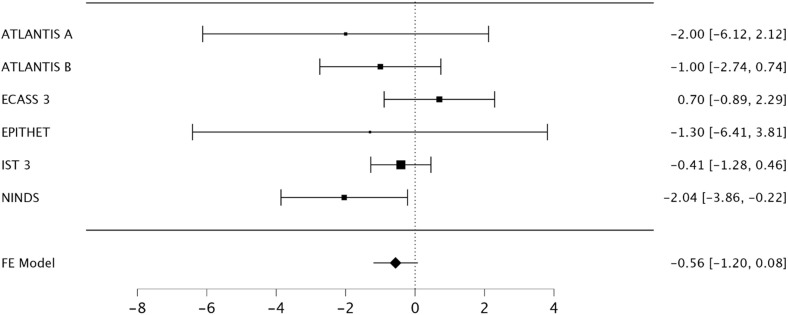
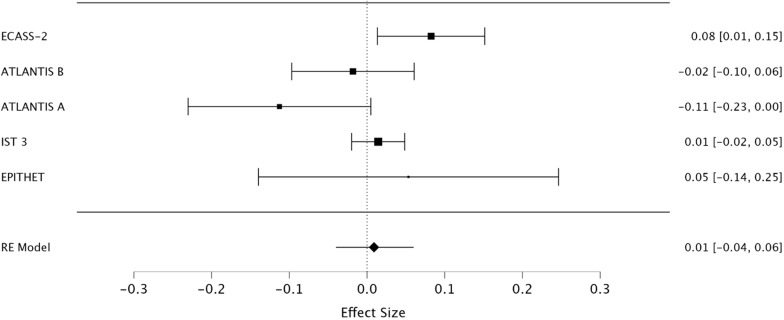
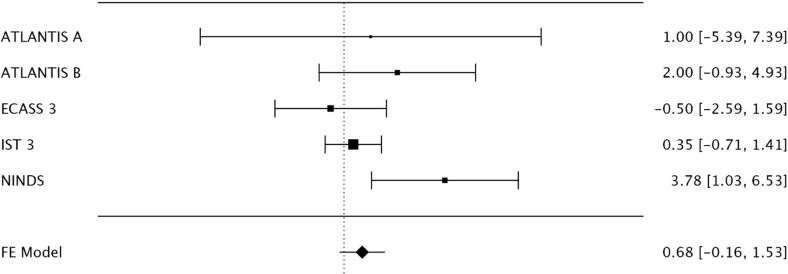
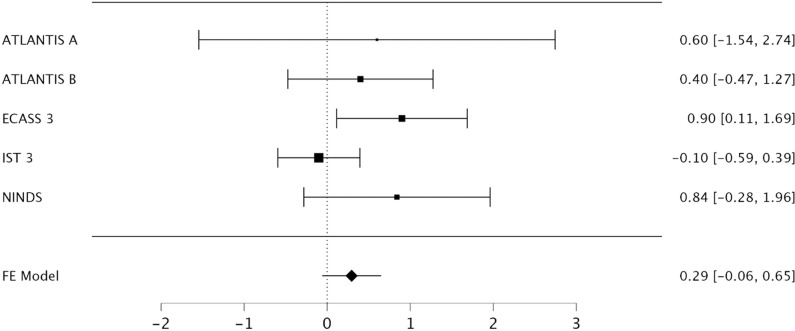
We assessed randomization reporting, performed qualitative risk of bias assessments arising from the randomization process, and performed fixed effects meta-analyses of baseline variables for which zero heterogeneity is expected if all included RCTs have unbiased randomization. Fixed-effects meta-analyses of baseline age, weight, and National Institute of Health Stroke Scale (NIHSS) score were performed. If heterogeneity was present (I2 > 0%), trials were systematically removed, starting with the RCT with the largest t-statistic until the I2 value was 0%.
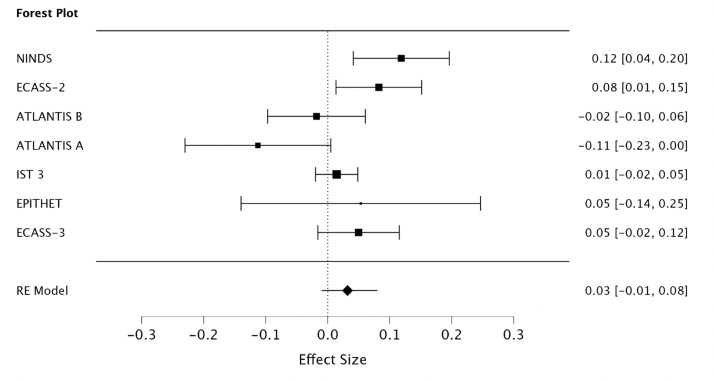
The NINDS rt-PA Stroke Study had a high risk of bias, the ECASS-3 RCT had some concerns, and all other trials were graded as low risk according to the Cochrane Risk of Bias (ROB-2) tool. The NINDS rt-PA Stroke Study contributed to heterogeneity in age and weight meta-analyses, and the ECASS-3 RCT contributed to heterogeneity in the NIHSS score meta-analysis. Removal of suspect trials resulted in the expected I2 value of 0%.
The NINDS rt-PA Stroke Study and ECASS-3 trials contributed to heterogeneity in fixed effects meta-analyses of baseline variables while there should have been none. These RCTs are likely a source of selection bias in IPD meta-analyses due to suspect randomization.
对于纳入阿替普酶治疗卒中荟萃分析的随机对照试验(RCT),其随机化的完整性了解甚少。如果随机对照试验没有进行恰当的随机分组,其结果就不能照单全收。本研究旨在评估支持阿替普酶治疗急性缺血性卒中的个体患者数据(IPD)荟萃分析中随机化的完整性。
我们评估了随机化报告情况,对随机化过程中产生的偏倚风险进行了定性评估,并对基线变量进行了固定效应荟萃分析。如果所有纳入的随机对照试验随机化无偏倚,那么基线变量预期无异质性。我们对基线年龄、体重和美国国立卫生研究院卒中量表(NIHSS)评分进行了固定效应荟萃分析。如果存在异质性(I2>0%),则系统地剔除试验,从t统计量最大的随机对照试验开始,直到I2值为0%。
根据Cochrane偏倚风险(ROB-2)工具,美国国立神经疾病与卒中研究所(NINDS)rt-PA卒中研究存在高偏倚风险,欧洲急性卒中协作研究-3(ECASS-3)随机对照试验存在一些问题,而所有其他试验均被评为低风险。NINDS rt-PA卒中研究导致年龄和体重荟萃分析存在异质性,ECASS-3随机对照试验导致NIHSS评分荟萃分析存在异质性。剔除可疑试验后,I2值达到预期的0%。
NINDS rt-PA卒中研究和ECASS-3试验在基线变量的固定效应荟萃分析中导致了异质性,而本应不存在异质性。由于随机化可疑,这些随机对照试验可能是IPD荟萃分析中选择偏倚的来源。