Dehnavieh Reza, Inayatullah Sohail, Yousefi Farzaneh, Nadali Mohsen
Health Foresight and Innovation Research Center, Institute for Futures Studies in Health, Kerman University of Medical Sciences, Kerman, Iran.
Department of Management, Policy and Health Economics, Faculty of Medical Information and Management, Kerman University of Medical Sciences, Kerman, Iran.
BMC Prim Care. 2025 Mar 21;26(1):75. doi: 10.1186/s12875-025-02773-6.
The rapid adoption of Artificial Intelligence (AI) in health service delivery underscores the need for awareness, preparedness, and strategic utilization of AI's potential to optimize Primary Health Care (PHC) systems. This study aims to equip Iran's PHC system for AI integration by envisioning potential futures while addressing past challenges and recognizing current trends.
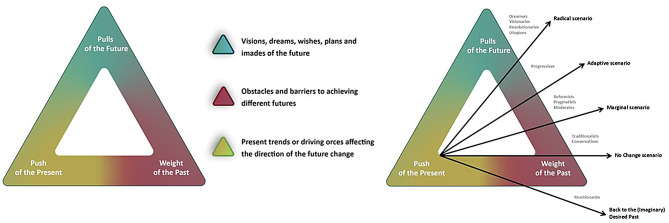
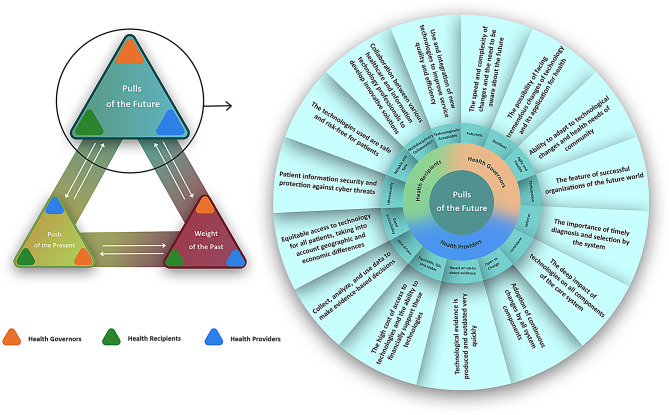
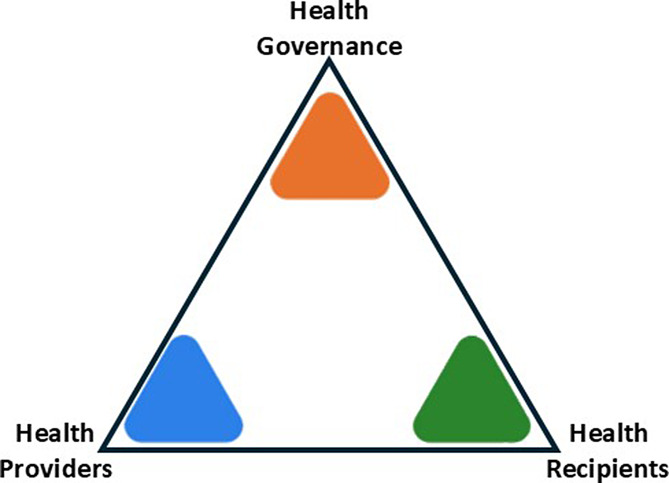
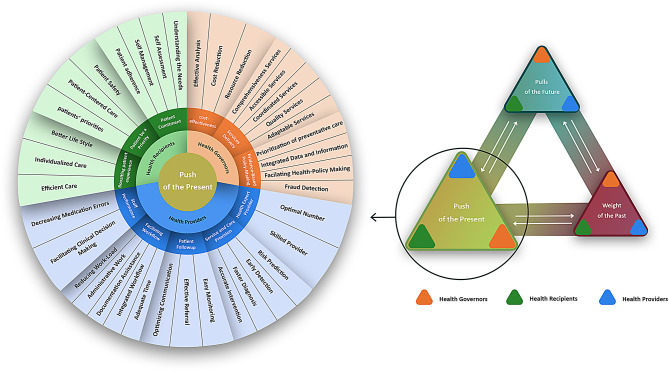
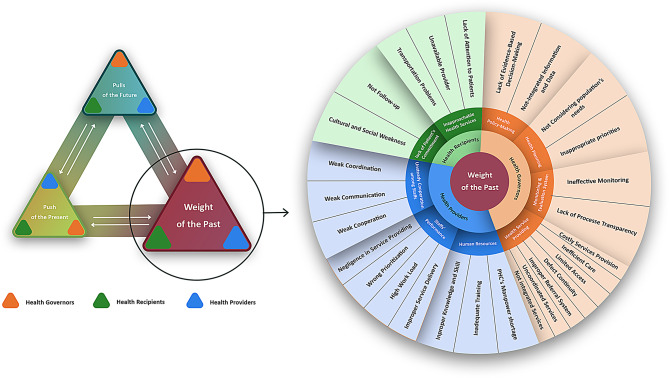
This study developed a conceptual framework based on the "Future Triangle" (FT) and the "Health Systems Governance" (HSG) models. This framework delineates the characteristics associated with the 'pulls on the future' for desired and intelligent PHC, as identified by a panel of experts. Additionally, the 'weights of the past'-referring to the challenges faced by Iran's PHC system in utilizing AI-, and the 'push of the present'-which captures the impacts of AI implementation in global primary care settings-were extracted through a review of relevant literature. The integration and analysis of the collected evidence facilitated the formulation of a range of potential future scenarios, including both optimistic and pessimistic scenarios.
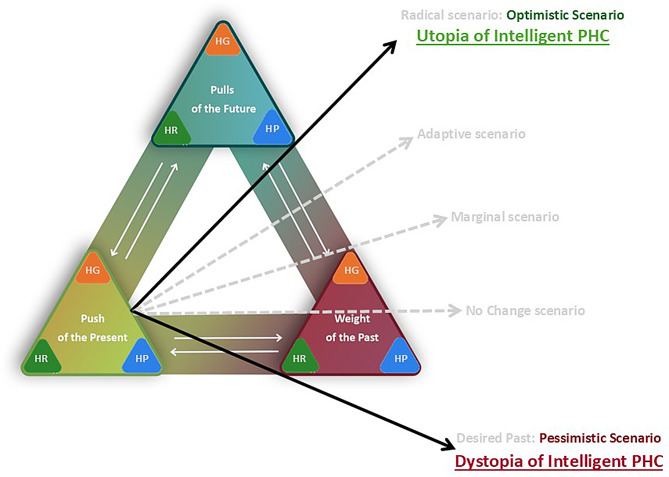
The interaction between the three elements of the FT will shape the future states of Iran's PHC, whether optimistic or pessimistic. Building an optimistic scenario for an AI-driven PHC system necessitates addressing past challenges, including deficiencies in the referral and family doctor systems, the absence of evidence-based decision-making, neglect of essential community health needs, fragmented service delivery, high provider workload, and inadequate follow-up on the health status of service recipients. Consideration must also be given to the current impacts of AI in primary care, including comprehensive, coordinated, and need-based service delivery with systematic and integrated monitoring, quality improvement, early disease prevention, precise diagnosis, and effective treatment. Furthermore, fostering a shared vision among stakeholders by defining and advocating for a future system characterized by foresight, resilience, agility, adaptability, and collaboration is essential.
Envisioning potential future states requires a balanced consideration of the influence of past, present, and future, recognizing the dual potential of AI to drive either positive or negative outcomes. Achieving the optimistic future or the "utopia of intelligent PHC" and avoiding the pessimistic future or the "dystopia of intelligent PHC" requires coherent planning, attention to the tripartite considerations of the future, past, and present, and a clear understanding of the roles, expectations, and needs of stakeholders.
人工智能(AI)在医疗服务提供中的迅速应用凸显了提高对其认识、做好准备并对其潜力进行战略利用以优化初级卫生保健(PHC)系统的必要性。本研究旨在通过设想潜在的未来,同时应对过去的挑战并认识当前的趋势,使伊朗的初级卫生保健系统具备整合人工智能的能力。
本研究基于“未来三角”(FT)和“卫生系统治理”(HSG)模型开发了一个概念框架。该框架描绘了由专家小组确定的与理想且智能化的初级卫生保健的“对未来的拉力”相关的特征。此外,通过对相关文献的回顾,提取了“过去的权重”(指伊朗初级卫生保健系统在利用人工智能方面面临的挑战)和“当前的推力”(反映人工智能在全球初级保健环境中的实施影响)。对收集到的证据进行整合和分析,有助于制定一系列潜在的未来情景,包括乐观情景和悲观情景。
FT的三个要素之间的相互作用将塑造伊朗初级卫生保健的未来状态,无论是乐观的还是悲观的。为人工智能驱动的初级卫生保健系统构建乐观情景需要应对过去的挑战,包括转诊和家庭医生系统的缺陷、缺乏循证决策、忽视基本的社区卫生需求、服务提供碎片化、提供者工作量大以及对服务接受者健康状况的随访不足。还必须考虑人工智能在初级保健中的当前影响,包括提供全面、协调且基于需求的服务,并进行系统和综合的监测、质量改进、早期疾病预防、精确诊断和有效治疗。此外,通过定义和倡导一个具有前瞻性、复原力、敏捷性、适应性和协作性的未来系统,在利益相关者之间培养共同愿景至关重要。
设想潜在的未来状态需要平衡考虑过去、现在和未来的影响,认识到人工智能推动积极或消极结果的双重潜力。实现乐观的未来或“智能初级卫生保健的乌托邦”,并避免悲观的未来或“智能初级卫生保健的反乌托邦”,需要连贯的规划、关注未来、过去和现在的三方考量,以及对利益相关者的角色、期望和需求有清晰的认识。