Rosas-Vidal Luis E, Naskar Saptarnab, Mayo Leah M, Perini Irene, Masroor Rameen, Altemus Megan, Ramos-Medina Liorimar, Zaidi S Danyal, Engelbrektsson Hilda, Jagasia Puja, Heilig Markus, Patel Sachin
Stephen M. Stahl Center for Psychiatric Neuroscience, Department of Psychiatry and Behavioral Sciences, Northwestern University, Feinberg School of Medicine, Chicago, Illinois, USA.
Hotchkiss Brain Institute and Mathison Centre for Mental Health Research and Education, Department of Psychiatry, Cumming School of Medicine, University of Calgary, Calgary, Alberta, Canada.
J Clin Invest. 2025 Mar 27;135(11). doi: 10.1172/JCI179881. eCollection 2025 Jun 2.
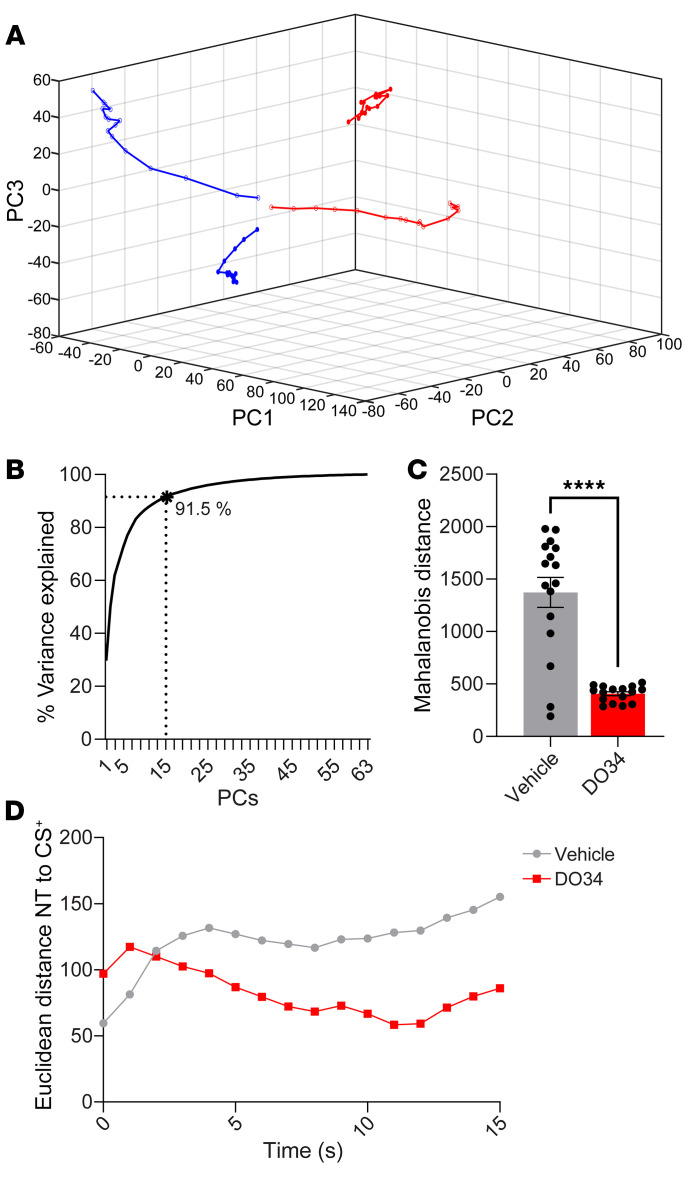
Maladaptive fear generalization is one of the hallmarks of trauma-related disorders. The endocannabinoid 2-arachidonoylglycerol (2-AG) is crucial for modulating anxiety, fear, and stress adaptation, but its role in balancing fear discrimination versus generalization is not known. To address this, we used a combination of plasma endocannabinoid measurement and neuroimaging in a childhood maltreatment-exposed and -nonexposed mixed population, combined with human and rodent fear-conditioning models. Here we show that 2-AG levels were inversely associated with fear generalization at the behavioral level in both mice and humans. In mice, 2-AG depletion increased the proportion of neurons that respond to, and the similarity of neuronal representations for, both threat-predictive and neutral stimuli within prelimbic prefrontal cortex neuronal ensembles. In humans, increased dorsolateral prefrontal cortical-amygdala resting-state connectivity was inversely correlated with fear generalization. These data provide convergent cross-species evidence that 2-AG is a key regulator of fear generalization and further support the notion that 2-AG deficiency could represent a trauma-related disorder-susceptibility endophenotype.
适应不良的恐惧泛化是创伤相关障碍的标志之一。内源性大麻素2-花生四烯酸甘油酯(2-AG)对于调节焦虑、恐惧和应激适应至关重要,但其在平衡恐惧辨别与泛化方面的作用尚不清楚。为了解决这个问题,我们在暴露于童年期虐待和未暴露于童年期虐待的混合人群中,结合血浆内源性大麻素测量和神经影像学,并结合人类和啮齿动物恐惧条件反射模型进行了研究。我们在此表明,在小鼠和人类中,2-AG水平在行为水平上与恐惧泛化呈负相关。在小鼠中,2-AG耗竭增加了前边缘前额叶皮质神经元集合中对威胁预测性刺激和中性刺激做出反应的神经元比例以及神经元表征的相似性。在人类中,背外侧前额叶皮质-杏仁核静息态连接性增加与恐惧泛化呈负相关。这些数据提供了跨物种的一致证据,表明2-AG是恐惧泛化的关键调节因子,并进一步支持了2-AG缺乏可能代表一种与创伤相关障碍易感性内表型的观点。