Li Jie, Dai Tiantian, Liu Yang, Li Yuanyi, Chen Tailin, Chen Xiaojun, Jin Li
Obstetrics and Gynecology Hospital, Institute of Reproduction and Development, Fudan University, Shanghai, China.
ChangNing Maternity & Infant Health Institute, Shanghai, China.
BMC Pregnancy Childbirth. 2025 Mar 28;25(1):365. doi: 10.1186/s12884-025-07455-w.
The risk of ectopic pregnancy (EP) is known to increase with assisted reproductive technology (ART), but the specific risk factors are unclear.
We screened 6872 cycles for clinical data that met our study's inclusion criteria and conducted univariate and multivariate analyses to identify factors associated with EP and develop a nomogram prediction model for its incidence.
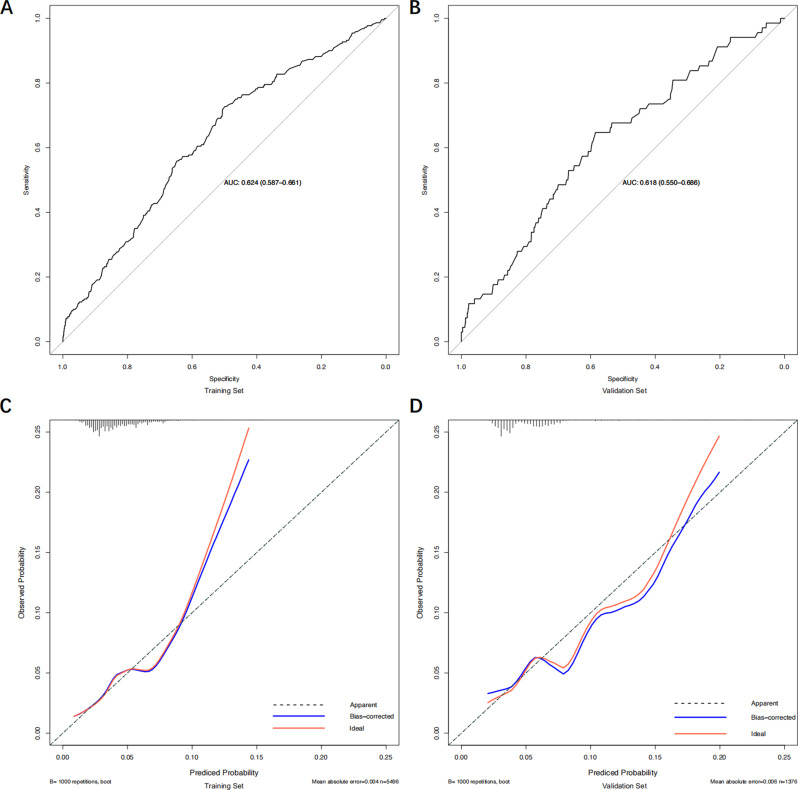
The multivariate analysis demonstrated that women with polycystic ovary syndrome (PCOS) have an over two-fold increased risk of EP (aOR = 2.07, 95% CI: 1.27-3.36, P = 0.004). Frozen embryo transfer can significantly reduce the risk of EP compared to fresh embryo transfer (aOR = 2.17, 95% CI: 1.62-2.91, P < 0.001). Male infertility factor was associated with a 1.4-fold increased risk of EP (aOR = 1.39, 95% CI: 1.05-1.85,P = 0.021). Each 1 mm increase in endometrial thickness (EMT) is associated with a 15% reduction in the odds of EP(aOR = 0.86, 95% CI: 0.77-0.93, P < 0.001). Women with EP history was associated with 1.4-fold increased risk of EP (aOR = 1.41, 95% CI: 1.01-1.97, P = 0.046). A nomographic prediction model was established based on the results above. The area under the curve (AUC) for the model predicting EP following ART is 0.624, whereas in the external validation set, it is 0.618.
Our findings indicate that PCOS increases the risk of EP after ART, and fresh embryo transfer is also linked to higher EP rates. We developed a nomogram to predict and mitigate the incidence of EP.
Retrospectively registered.
已知异位妊娠(EP)风险会随着辅助生殖技术(ART)的应用而增加,但具体风险因素尚不清楚。
我们筛选了6872个符合研究纳入标准的临床周期,并进行单因素和多因素分析以确定与EP相关的因素,并建立其发生率的列线图预测模型。
多因素分析表明,多囊卵巢综合征(PCOS)女性发生EP的风险增加两倍多(调整后比值比[aOR]=2.07,95%置信区间[CI]:1.27-3.36,P=0.004)。与新鲜胚胎移植相比,冷冻胚胎移植可显著降低EP风险(aOR=2.17,95%CI:1.62-2.91,P<0.001)。男性不育因素与EP风险增加1.4倍相关(aOR=1.39,95%CI:1.05-1.85,P=0.021)。子宫内膜厚度(EMT)每增加1毫米,EP发生几率降低15%(aOR=0.86,95%CI:0.77-0.93,P<0.001)。有EP病史的女性发生EP的风险增加1.4倍(aOR=1.41,95%CI:1.01-1.97,P=0.046)。基于上述结果建立了列线图预测模型。该模型预测ART后EP的曲线下面积(AUC)为0.624,而在外部验证集中为0.618。
我们的研究结果表明,PCOS会增加ART后EP的风险,新鲜胚胎移植也与较高的EP发生率相关。我们开发了一种列线图来预测和降低EP的发生率。
回顾性注册。