Gürler Merve, Gōkcan Mustafa Kürsat, Yüksel Seher, Karahan Zeynep Ceren
From the Department of Medical Microbiology, Ankara University Faculty of Medicine, Ankara, Turkey.
From the Department of Otorhinolaryngology, Head and Neck Surgery, Ankara University Faculty of Medicine, Ankara, Turkey.
Ann Saudi Med. 2025 Mar-Apr;45(2):104-111. doi: 10.5144/0256-4947.2025.104. Epub 2025 Apr 3.
Head and neck cancer (HNC) is the seventh most common malignant tumor. Herpesviruses are a significant risk factor in the multifactorial pathogenesis of HNC.
This study aimed to investigate the association between herpesviruses and the development of head and neck squamous cell carcinoma (HN-SCC).
Experimental study.
A university hospital in Turkey.
Pathological archive tissue samples of 500 patients were included in the study. These samples were categorized into two groups: those diagnosed with HN-SCC (n=300, malignant group [MG]) and those diagnosed with benign head and neck lesions (n=200, benign group [BG]). The presence of herpesvirus in samples was detected using polymerase chain reaction.
Association of herpesviruses in the development of head and neck cancer.
500 patients.
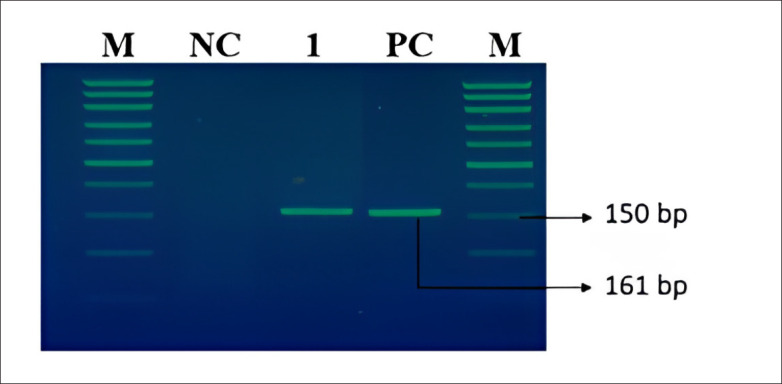
HHV-1, -2, -7, and -8 were not detected in any samples. In the malignant group (MG), EBV-DNA was detected in 1 patient (0.3%) and HHV-6 DNA in 2 patients (0.6%), while in the benign group (BG), VZV-DNA was detected in 1 patient (0.5%), EBV-DNA in 3 patients (1.5%), CMV-DNA in 5 patients (2.5%), and HHV-6 DNA in 3 patients (1.5%). While no significant difference was found between the groups for VZV, EBV, and HHV-6, a statistically significant difference was found in favor of the benign group for CMV.
Although herpesvirus seroprevalence is relatively high in the population, the lack of viral genome in tissue samples indicates that other factors might be prominent in developing HN-SCC.
The storage conditions of the sample used (paraffinized sample) may have negatively affected the detection frequency of HHVs.
头颈癌(HNC)是第七大常见恶性肿瘤。疱疹病毒是HNC多因素发病机制中的一个重要危险因素。
本研究旨在调查疱疹病毒与头颈部鳞状细胞癌(HN-SCC)发生之间的关联。
实验研究。
土耳其的一家大学医院。
本研究纳入了500例患者的病理存档组织样本。这些样本被分为两组:诊断为HN-SCC的患者(n = 300,恶性组[MG])和诊断为头颈部良性病变的患者(n = 200,良性组[BG])。使用聚合酶链反应检测样本中疱疹病毒的存在情况。
疱疹病毒在头颈癌发生中的关联。
500例患者。
在任何样本中均未检测到HHV-1、-2、-7和-8。在恶性组(MG)中,1例患者(0.3%)检测到EBV-DNA,2例患者(0.6%)检测到HHV-6 DNA;而在良性组(BG)中,1例患者(0.5%)检测到VZV-DNA,3例患者(1.5%)检测到EBV-DNA,5例患者(2.5%)检测到CMV-DNA,3例患者(1.5%)检测到HHV-6 DNA。虽然VZV、EBV和HHV-6在两组之间未发现显著差异,但CMV在良性组中存在统计学上的显著差异。
尽管人群中疱疹病毒血清阳性率相对较高,但组织样本中缺乏病毒基因组表明,在HN-SCC的发生中其他因素可能更为突出。
所用样本(石蜡包埋样本)的储存条件可能对HHV的检测频率产生了负面影响。