Wang Hao, Qi Yu, Liu Xu, Song Li-Jun, Yang Wen-Bo, Li Ming-An, Bai Xiao-Yan, Xu Mao-Sheng, Zhu Hao-Nan, Cai Si-Qing, Wang Yi, Yang Zheng-Han, Li Yuan-Zhe, Wang Zhen-Chang, Guo Yi-Fan
Department of Radiology, Beijing Friendship Hospital, Capital Medical University, No. 95 Yong An Road, Xicheng District, Beijing, 100050, China.
Department of Radiology, The Affiliated Drum Tower Hospital of Nanjing University Medical School, Nanjing, Jiangsu, China.
BMC Med Imaging. 2025 Apr 8;25(1):113. doi: 10.1186/s12880-025-01656-7.
Chronic kidney disease induces alterations in the heterogeneity of iron deposition within the basal ganglia. Quantitative analysis of the heterogeneity of iron deposition within the basal ganglia may be valuable for diagnosing chronic kidney disease-related cognitive impairment.
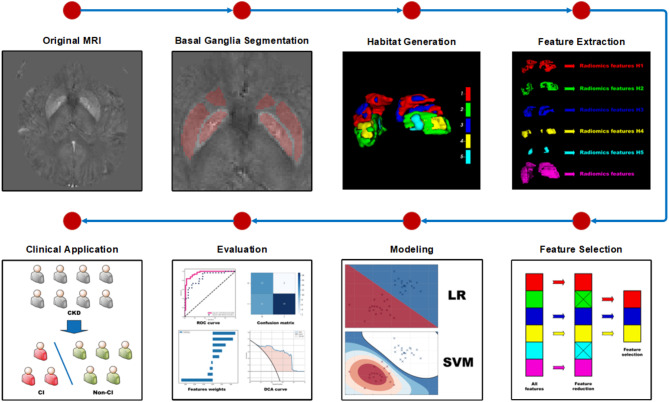
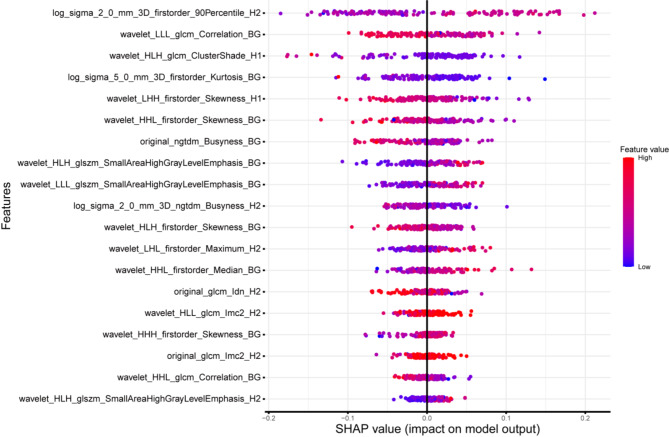
In this prospective observational cohort study, quantitative susceptibility mapping (QSM) was performed in chronic kidney disease patients. Susceptibility values of each nucleus within the basal ganglia were measured. Radiomic features were extracted from habitats of the basal ganglia on QSM images. Habitat-based models for diagnosing cognitive impairment were constructed using the random forest algorithm. Logistic regression was employed to build the clinical model and the combined model. The performance of each model was evaluated by the receiver operating characteristic (ROC) analysis.
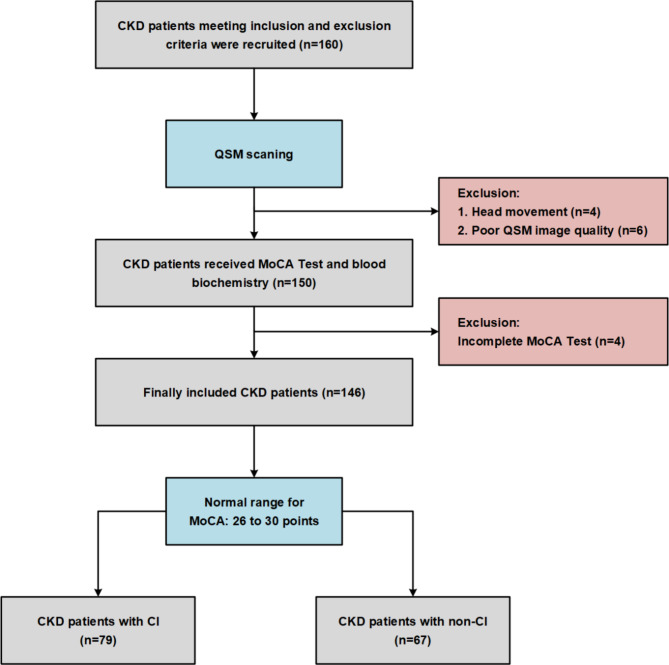
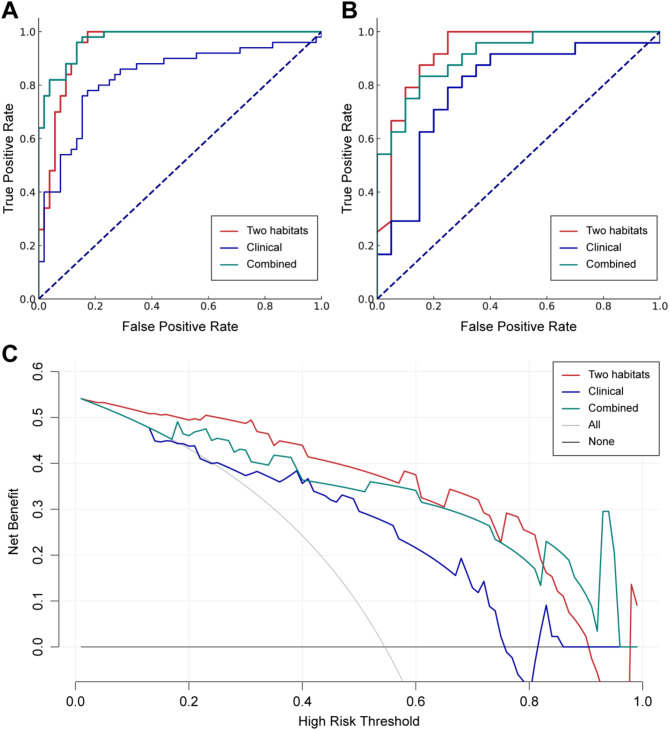
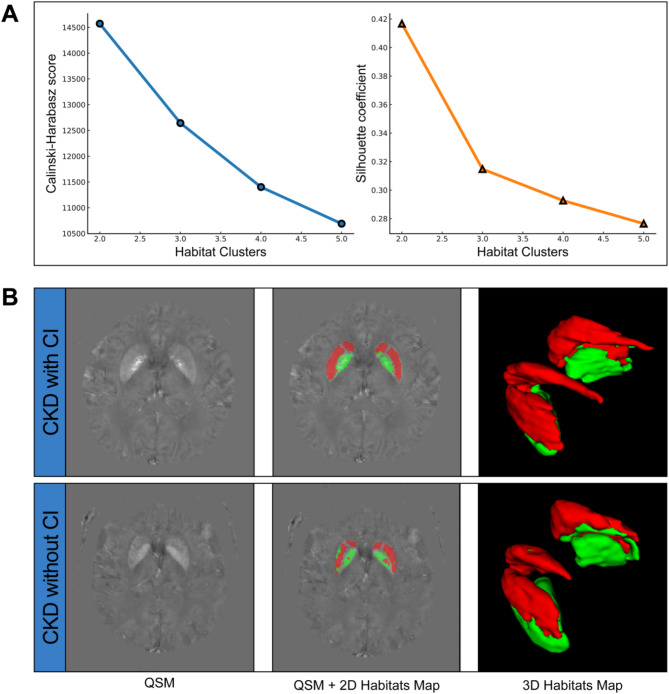
A total of 146 patients (mean age, 51 ± 13 years; 92 male) were included, of which 79 had cognitive impairment. The two habitats-based model achieved an area under the curve of 0.926 (95% CI 0.842-1.000) on the test set, the highest among all prediction models. The two-habitat maps indicated that chronic kidney disease had two distinct patterns of impact on iron deposition in the basal ganglia region. The capability of the two habitats-based model to identify chronic kidney disease-related cognitive impairment was significantly superior to that of the susceptibility values measured in various nuclei (all p < 0.05).
This study innovatively applied a habitat-based quantitative analysis technique to QSM, successfully constructing a model that accurately diagnoses chronic kidney disease-related cognitive impairment.
This study was approved by the Beijing Friendship Hospital Ethics Board (ClinicalTrials.gov Identifier: NCTO5137470) and conducted in accordance with the Declaration of Helsinki ethical standards.
慢性肾脏病会导致基底节内铁沉积异质性的改变。对基底节内铁沉积异质性进行定量分析可能有助于诊断慢性肾脏病相关的认知障碍。
在这项前瞻性观察性队列研究中,对慢性肾脏病患者进行了定量磁化率成像(QSM)检查。测量了基底节内每个核团的磁化率值。从QSM图像上的基底节栖息地提取了影像组学特征。使用随机森林算法构建基于栖息地的认知障碍诊断模型。采用逻辑回归构建临床模型和联合模型。通过受试者操作特征(ROC)分析评估每个模型的性能。
共纳入146例患者(平均年龄51±13岁;男性92例),其中79例有认知障碍。基于两个栖息地的模型在测试集上的曲线下面积为0.926(95%CI 0.842-1.000),在所有预测模型中最高。两个栖息地图谱显示,慢性肾脏病对基底节区域铁沉积有两种不同的影响模式。基于两个栖息地的模型识别慢性肾脏病相关认知障碍的能力明显优于在各个核团中测量的磁化率值(所有p<0.05)。
本研究创新性地将基于栖息地的定量分析技术应用于QSM,成功构建了一个能准确诊断慢性肾脏病相关认知障碍的模型。
本研究经北京友谊医院伦理委员会批准(ClinicalTrials.gov标识符:NCTO5137470),并按照赫尔辛基宣言伦理标准进行。