Alharbi Fawiziah Khalaf
Department of Biology, College of Science, Qassim University, Buraydah, Saudi Arabia.
Open Vet J. 2025 Feb;15(2):965-976. doi: 10.5455/OVJ.2025.v15.i2.45. Epub 2025 Feb 28.
Due to its remarkable effectiveness against a wide range of pests and insects at very low concentrations, the broad-spectrum fipronil pesticide is currently gaining popularity in the agricultural, public health, and international industries. However, the stressor effects of fipronil insecticides cause ecological disruption, growth retardation, immunosuppression, and higher fish mortality rates. Both animals and humans have demonstrated the effectiveness of prebiotics such as β-1,3-glucan in their diets. Aquaculture has recently increased in use because of its potential to control diseases, compete with environmental stresses, and promote fish growth.
The goal of this study was to determine how dietary β-1,3-glucan can protect Nile Tilapia ()fish from fipronil's harmful effects.
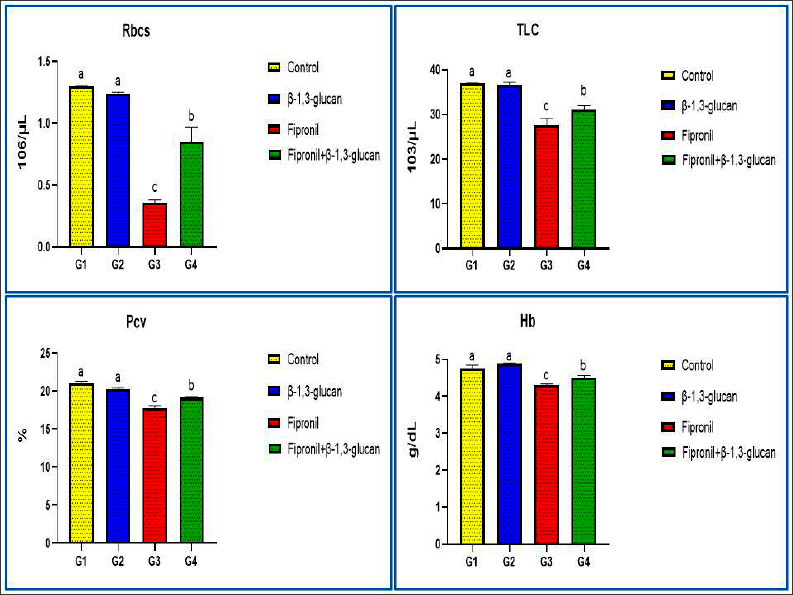
We randomly divided 240 fish into four equal groups. As a control, the first group (G1) was fed a standard diet. A 0.1% dose of -1, 3-glucan was added to G2. Fipronil was added to G3 at a concentration of 2.8 mg/l (1/10 96 h LC50). At the indicated concentrations, G4 was combined with β-1, 3-glucan, and fipronil. Alterations in vital signs, metabolic profiles, immunological responses, blood counts, and any histological abnormalities in the liver or spleen of the fish were investigated and recorded.
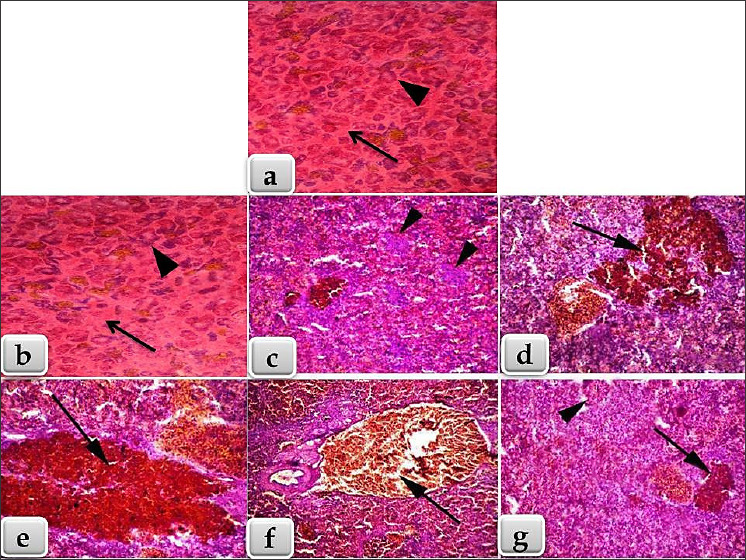
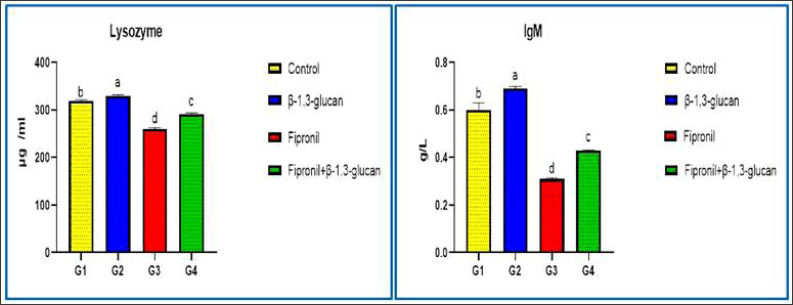
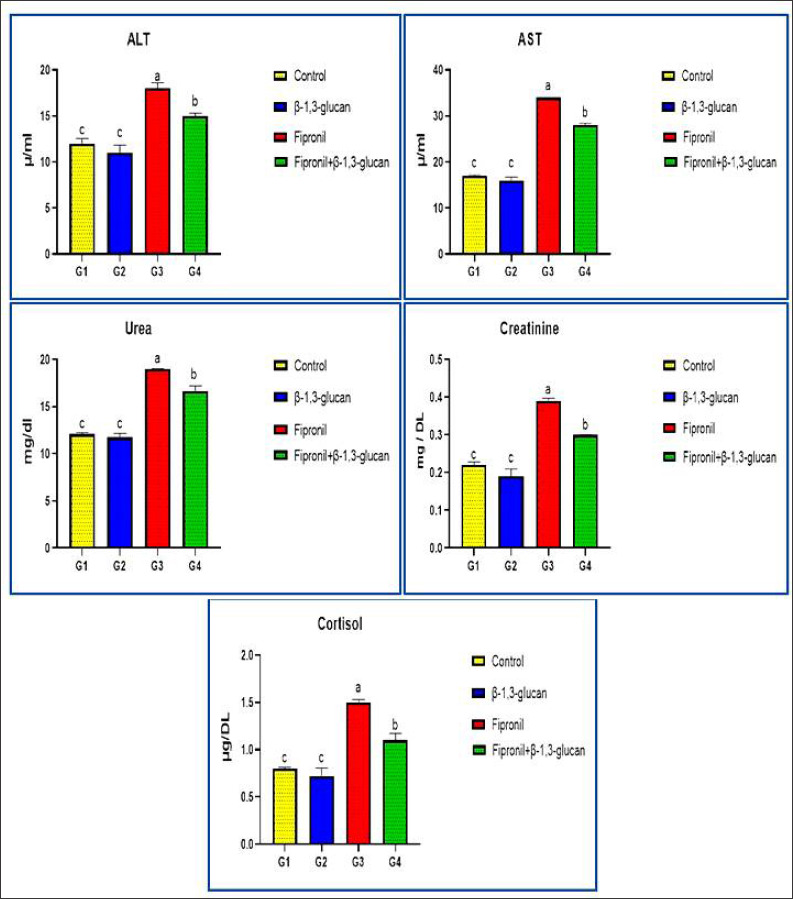
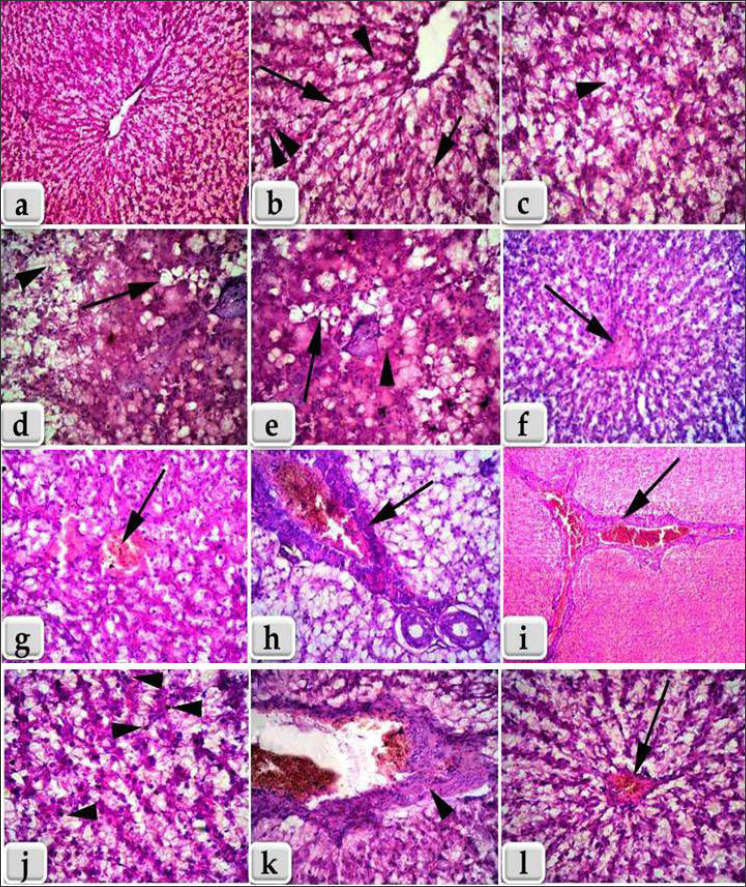
The fipronil-exposed group exhibited slow mobility, respiratory discomfort, and increased mucus secretion. Several blood markers, like immunoglobulin M and lysozyme, were found to be significantly lower. On the other hand, the levels of aspartate aminotransferase, alanine aminotransferase, urea, creatinine, and cortisol in the serum were significantly higher. Liver histopathology revealed hemorrhagic blood vessels, steatosis in hepatocytes, hydropic degeneration, and widespread necrosis. Furthermore, we noted serious splenic parenchymal necrosis, hemorrhagic red pulp, white pulp depletion, and hemosiderosis. Histological changes were slowed by G4, which had β-1,3-glucan and fipronil. Moreover, it increases blood markers and physical activity levels.
The results show that β-1,3-glucan is an effective dietary supplement for Nile tilapia, and it improves their health, increases their immunity, and neutralizes fipronil contaminants in fish farming.
广谱氟虫腈农药因其在极低浓度下对多种害虫和昆虫具有显著效果,目前在农业、公共卫生和国际行业中越来越受欢迎。然而,氟虫腈杀虫剂的应激效应会导致生态破坏、生长迟缓、免疫抑制以及更高的鱼类死亡率。动物和人类都已证明饮食中益生元(如β-1,3-葡聚糖)的有效性。由于其在控制疾病、应对环境压力和促进鱼类生长方面的潜力,水产养殖的应用最近有所增加。
本研究的目的是确定饮食中的β-1,3-葡聚糖如何保护尼罗罗非鱼免受氟虫腈的有害影响。
我们将240条鱼随机分成四个相等的组。作为对照,第一组(G1)喂食标准饲料。G2添加0.1%剂量的β-1,3-葡聚糖。G3添加浓度为2.8毫克/升(1/10 96小时半数致死浓度)的氟虫腈。G4在指定浓度下同时添加β-1,3-葡聚糖和氟虫腈。研究并记录了鱼的生命体征、代谢概况、免疫反应、血细胞计数以及肝脏或脾脏的任何组织学异常。
暴露于氟虫腈的组表现出行动迟缓、呼吸不适和黏液分泌增加。发现几种血液标志物,如免疫球蛋白M和溶菌酶,显著降低。另一方面,血清中的天冬氨酸转氨酶、丙氨酸转氨酶、尿素、肌酐和皮质醇水平显著升高。肝脏组织病理学显示血管出血、肝细胞脂肪变性、水样变性和广泛坏死。此外,我们注意到脾脏实质严重坏死、红髓出血、白髓耗竭和含铁血黄素沉着。G4组(同时含有β-1,3-葡聚糖和氟虫腈)减缓了组织学变化。此外,它还提高了血液标志物和身体活动水平。
结果表明,β-1,3-葡聚糖是尼罗罗非鱼有效的饮食补充剂,它改善了它们 的健康状况,增强了它们的免疫力,并中和了水产养殖中的氟虫腈污染物。