Pedersen Martine, Bast-Pettersen Rita, Matre Dagfinn, Skare Øivind, Nordby Karl-Christian, Lie Jenny-Anne S
From the Group of Occupational Medicine and Epidemiology, National Institute of Occupational Health, Oslo, Norway (M.P., R.B.-P., Ø.S., K.-C.N., J.-A.S.L.); Institute of Health and Society, University of Oslo, Norway (M.P.); and Group of Psychosocial and Physical Work Environment, National Institute of Occupational Health, Oslo, Norway (D.M.).
J Occup Environ Med. 2025 Aug 1;67(8):e568-e575. doi: 10.1097/JOM.0000000000003412. Epub 2025 Apr 10.
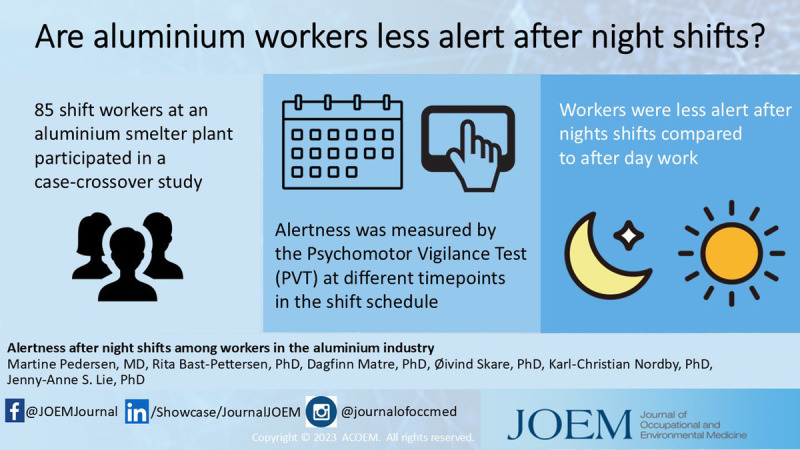
This case-crossover study aimed to evaluate changes in alertness following night shifts among workers in the aluminium industry, and the potential impact of the number of consecutive night shifts and shift length.
We estimated alertness on 87 aluminium workers by a 3-minute version of the Psychomotor Vigilance Test after both day and night shifts. Linear mixed models were used for statistical analysis.
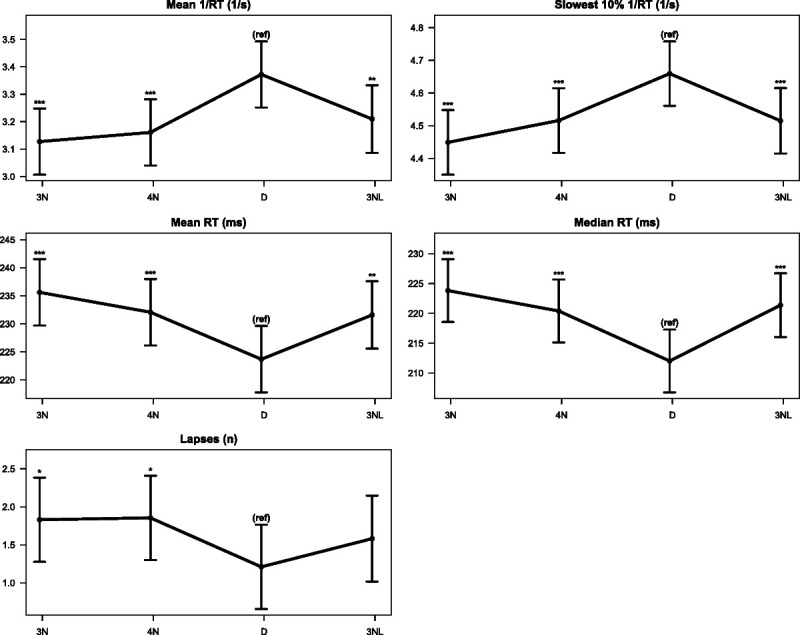
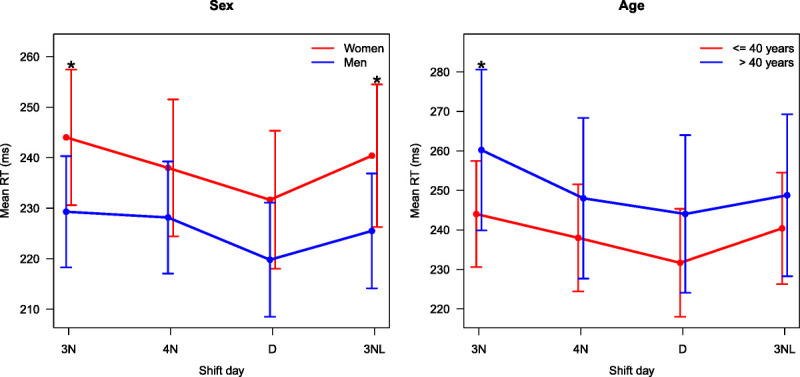
The level of alertness was significantly lower after three and four consecutive night shifts, compared with after a day shift. No significant differences in alertness were observed between three and four consecutive night shifts, nor between periods of three consecutive 8 + 8 + 8-hour versus 8 + 12 + 12-hour night shifts.
Our findings indicate reduced alertness after three and four consecutive night shifts, compared with after day work. No significant dose-response effect was observed.
本病例交叉研究旨在评估铝行业工人夜间轮班后警觉性的变化,以及连续夜班次数和轮班时长的潜在影响。
我们通过3分钟版的精神运动警觉性测试,对87名铝行业工人在白班和夜班后进行了警觉性评估。采用线性混合模型进行统计分析。
与白班后相比,连续三班和四班夜班后的警觉性水平显著降低。连续三班和四班夜班之间,以及连续三个8+8+8小时与8+12+12小时夜班时段之间,警觉性均未观察到显著差异。
我们的研究结果表明,与白天工作相比,连续三班和四班夜班后的警觉性降低。未观察到显著的剂量反应效应。