Ors Hatice, Alimogullari Ebru, Aslan Erdem Sinem, Elmazoglu Zubeyir, Ceylan Asli F
Faculty of Medicine, Department of Medical Pharmacology, Ankara Yildirim Beyazit University, Ankara, Turkey.
Faculty of Medicine, Department of Histology and Embryology, Ankara Yildirim Beyazit University, Ankara, Turkey.
Cell Biochem Funct. 2025 Apr;43(4):e70073. doi: 10.1002/cbf.70073.
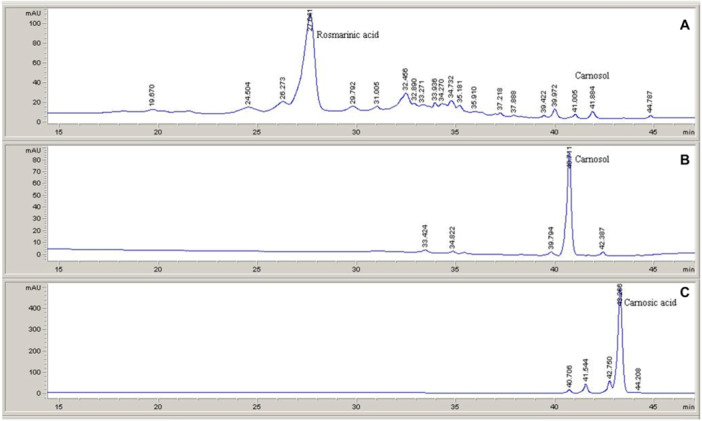
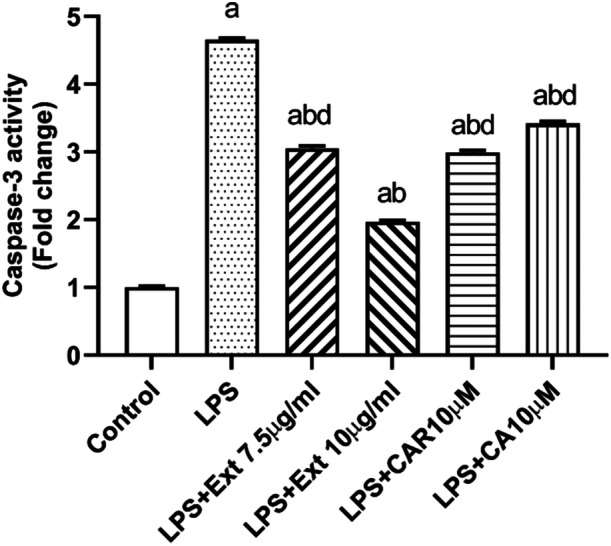
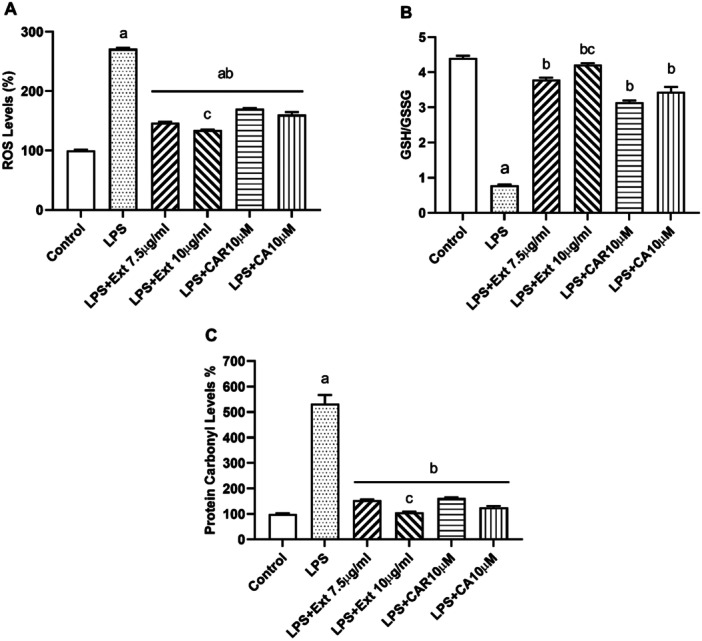
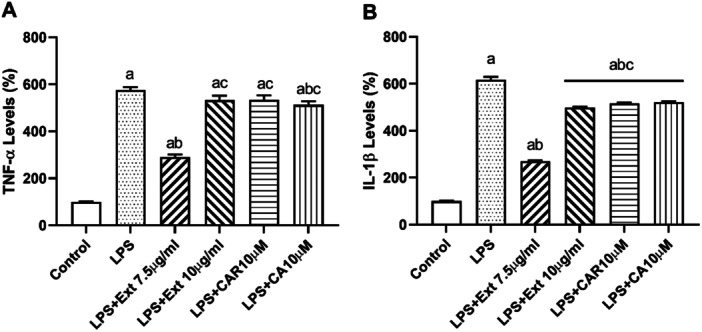
Neuroinflammation generally refers to an inflammatory response within the central nervous system caused by various pathological insults, including infection, trauma, ischemia, and toxins. As the brain's sentinel immune cell, microglia are tasked as the first responders to infection or tissue injury and initiating an inflammatory response. The perennial shrub plant Rosmarinus officinalis L. was reported to possess anti-inflammatory, anticancer, anti-nociceptive, antidiabetic, neuroprotective, and antioxidative properties. The present study aimed to investigate the effects of Rosmarinus officinalis ethanolic extracts on the lipopolysaccharide (LPS)-induced neuroinflammation model of BV-2 cells in comparison to carnosol and carnosic acid, phenolic diterpenes of the plant. Ultrasound-assisted extraction was used to have ethanolic extract of the plant. LPS was used to induce inflammation in BV-2 cells. Tumor necrosis alpha (TNF-α), interleukin 1 beta (IL-1β) secretion, reactive oxygen species (ROS) production, GSH/GSSG ratio, protein carbonyl level, and caspase-3 activity were evaluated. Inflammation induced by LPS was reduced by the ethanolic extract. Both carnosol and carnosic acid decreased the TNF-α and IL-1β levels as well. The ethanolic extract reduced ROS production and protein carbonylation, and increased GSH/GSSG ratio more effectively compared to the effects of carnosol and carnosic acid. Results depicted that caspase-3 activity was reduced by the ethanolic extract and this effect was more pronounced compared to carnosol and carnosic acid. The present study indicates the ethanolic extract of Rosmarinus officinalis rescues BV-2 cells from apoptosis via alleviating inflammation and oxidative stress.
神经炎症通常是指由各种病理损伤引起的中枢神经系统内的炎症反应,这些损伤包括感染、创伤、缺血和毒素。作为大脑的哨兵免疫细胞,小胶质细胞的任务是作为感染或组织损伤的第一反应者并启动炎症反应。据报道,多年生灌木植物迷迭香具有抗炎、抗癌、抗伤害感受、抗糖尿病、神经保护和抗氧化特性。本研究旨在比较迷迭香乙醇提取物与该植物的酚类二萜鼠尾草酸和鼠尾草酚对脂多糖(LPS)诱导的BV-2细胞神经炎症模型的影响。采用超声辅助提取法获得该植物的乙醇提取物。用LPS诱导BV-2细胞发生炎症。评估肿瘤坏死因子α(TNF-α)、白细胞介素1β(IL-1β)的分泌、活性氧(ROS)的产生、谷胱甘肽/氧化型谷胱甘肽(GSH/GSSG)比值、蛋白质羰基水平和半胱天冬酶-3活性。乙醇提取物减轻了LPS诱导的炎症。鼠尾草酸和鼠尾草酚也降低了TNF-α和IL-1β的水平。与鼠尾草酸和鼠尾草酚的作用相比,乙醇提取物更有效地减少了ROS的产生和蛋白质羰基化,并提高了GSH/GSSG比值。结果表明,乙醇提取物降低了半胱天冬酶-3活性,且这种作用比鼠尾草酸和鼠尾草酚更明显。本研究表明,迷迭香乙醇提取物通过减轻炎症和氧化应激,使BV-2细胞免于凋亡。