Feng Hanbo, Zhang Meng, Li Xueting, Shen Yang, Li Xiaohan
School of Nursing, China Medical University, Shenyang, China.
Dermatology Department, Nanjing University Medical School Affiliated Nanjing Drum Tower Hospital, Nanjing, China.
J Nurs Manag. 2024 Oct 15;2024:5317359. doi: 10.1155/2024/5317359. eCollection 2024.
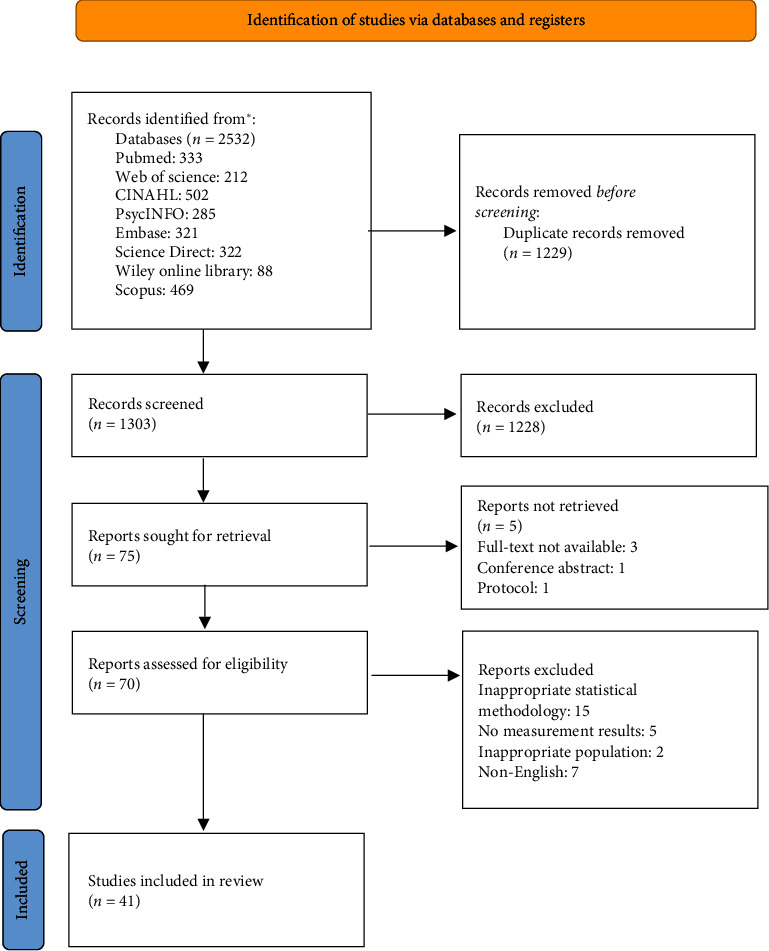
This scoping review aims to examine the level and outcomes of emotional labor in nurses. Nursing is a highly emotional profession that requires nurses to experience a wide range of emotions and control their emotional expressions in nursing practice. Chronic emotional labor and emotional burden not only impact nurses' individual well-being and professional performance but also their job satisfaction and turnover intention. This scoping review was guided by a five-stage scoping review framework and the PRISMA-ScR checklist. Eight databases were searched and 41 studies were reviewed. The Emotional Labor Scale and the Emotional Labor Scale for Nurses were the most commonly used instruments. Significant associations were found between emotional labor and 52 outcomes, which were categorized into two main themes: nurses' personal well-being and organizational well-being. There were 19 mediators and 12 moderators between nurses' emotional labor and 26 different outcomes. While the level of emotional labor among nurses remains uncertain, its consequences are plentiful and intricate. Studies have shown an important relationship between nurses' emotional labor and individual and organizational well-being, which is crucial for nurse managers. There is a need to explore the positive effects of nurses' emotional labor and its impact on patients. Additionally, validation studies of the instruments used to measure nurses' emotional labor are necessary. The insights gained from this scoping review provided a more comprehensive understanding of emotional labor for nurse managers. This knowledge can be utilized to design training programs on emotional management and to explore different interventions aimed at alleviating the adverse impacts of nurses' emotional labor.
本综述旨在探讨护士情绪劳动的程度及结果。护理是一个高度情绪化的职业,要求护士在护理实践中体验多种情绪并控制自己的情绪表达。长期的情绪劳动和情绪负担不仅会影响护士的个人幸福感和专业表现,还会影响他们的工作满意度和离职意愿。本综述遵循五阶段综述框架和PRISMA-ScR清单进行。检索了八个数据库,共审查了41项研究。情绪劳动量表和护士情绪劳动量表是最常用的工具。研究发现情绪劳动与52种结果之间存在显著关联,这些结果分为两个主要主题:护士的个人幸福感和组织幸福感。在护士的情绪劳动与26种不同结果之间存在19个中介因素和12个调节因素。虽然护士情绪劳动的程度仍不确定,但其后果丰富且复杂。研究表明护士的情绪劳动与个人及组织幸福感之间存在重要关系,这对护士长来说至关重要。有必要探索护士情绪劳动的积极影响及其对患者的影响。此外,对用于测量护士情绪劳动的工具进行验证研究也是必要的。本综述所获得的见解为护士长提供了对情绪劳动更全面的理解。这些知识可用于设计情绪管理培训项目,并探索旨在减轻护士情绪劳动不利影响的不同干预措施。