Huang Zhen, Mo Chongde, Li Lihui, Hou Qiyan, Pan Yinhua, Zhu Guiyue, Qiu Fangyu, Zou Quanqing, Yang Jianrong
Graduate School of Jinan University, Guangzhou, China.
Department of Breast Surgery, The People's Hospital of Guangxi Zhuang Autonomous Region and Institute of Minimally Invasive Technology and Applications, Guangxi Academy of Medical Sciences, Nanning, China.
Transl Cancer Res. 2025 Mar 30;14(3):1737-1752. doi: 10.21037/tcr-24-1826. Epub 2025 Mar 27.
Breast cancer (BC) ranks as one of the most prevalent malignancies among women globally. This study aimed to explore the involvement of neutrophil extracellular traps (NETs)-related genes (NETRGs) in BC pathogenesis, highlighting the critical role of NETs.
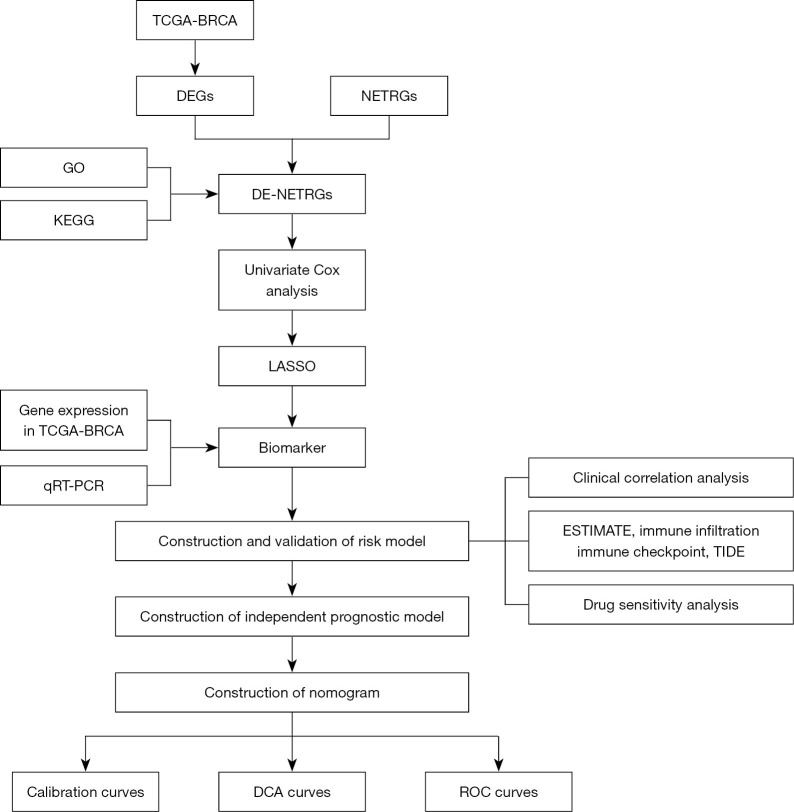
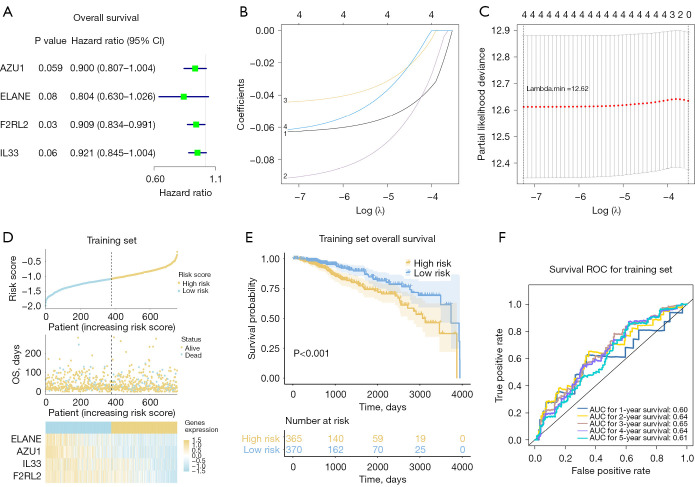
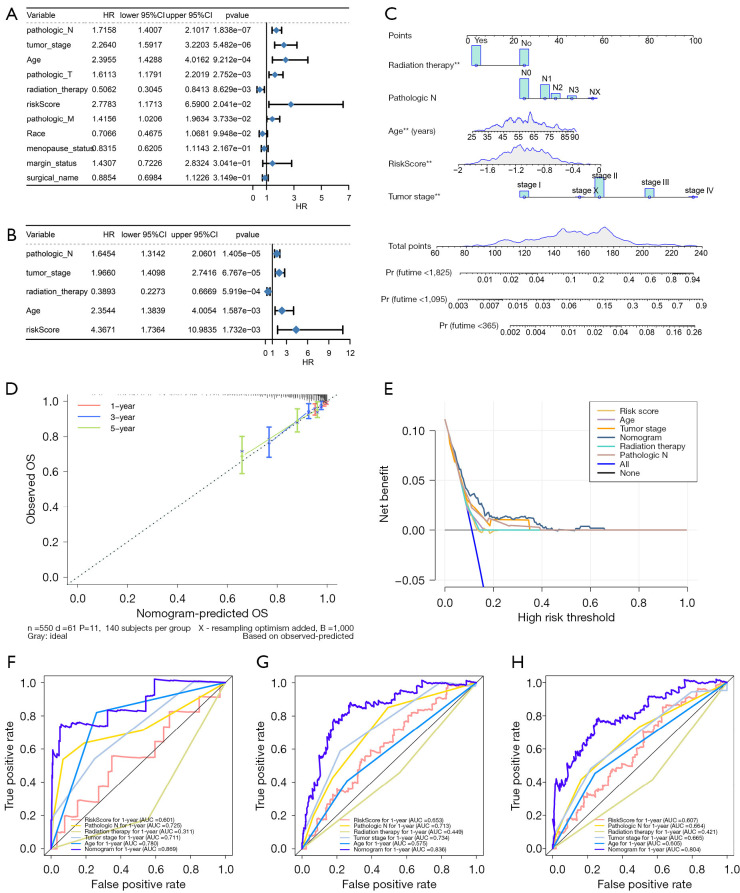
Differentially expressed NETRGs (DE-NETRGs) were identified by intersecting BC control differentially expressed genes (DEGs) with the NETRG gene set from The Cancer Genome Atlas breast cancer (TCGA-BRCA) and GSE42568 datasets. Functional analysis elucidated their biological roles. Prognostic biomarkers were selected using least absolute shrinkage and selection operator (LASSO) and Cox regression, generating a predictive model, of which its prognostic predictive ability was evaluated through the Kaplan-Meier (KM) survival curve and receiver operating characteristic (ROC) curve, and verified it in the test set and the validation set. Subsequently, the clinicopathological features were incorporated into the risk model for Cox independent prognostic analysis, and a nomogram was constructed to verify the predictive performance of the model. Finally, the mechanism of action of the biomarkers in BC was explored through immune infiltration, immunotherapy, and drug sensitivity. The biomarker expression validated by quantitative reverse transcription polymerase chain reaction (qRT-PCR).
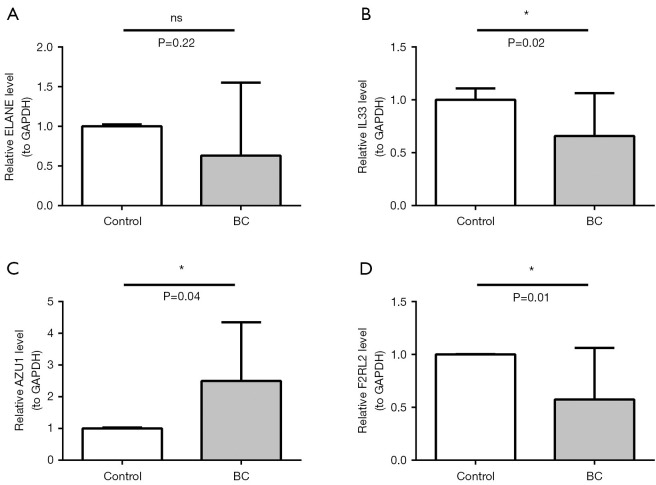
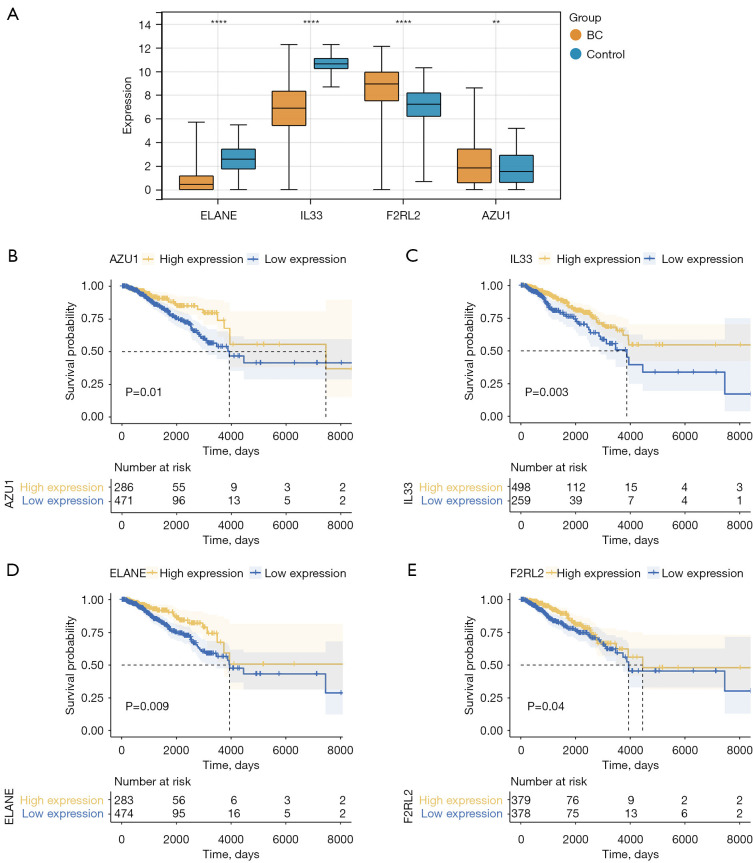
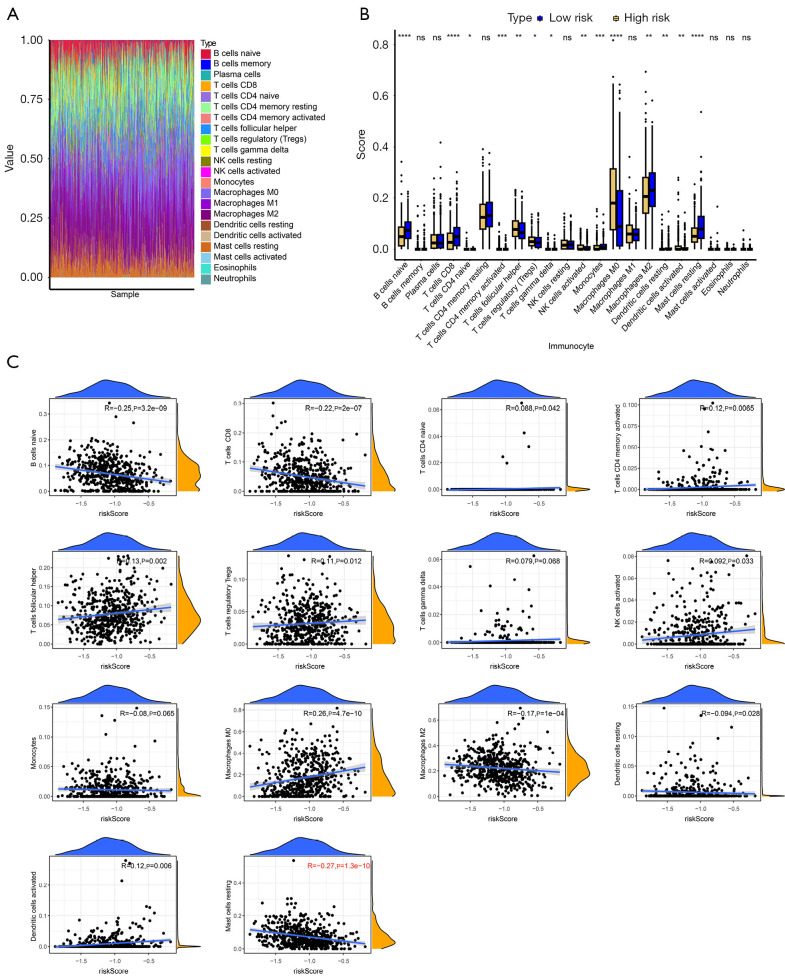
Functional analysis revealed 37 DE-NETRGs associated with leukocyte migration and the Interleukin (IL)-17 signaling pathway. Four biomarkers [, , , neutrophil elastase ()] were used to construct the prognostic model and it was validated by the test set and the validation set. The KM curve showed significant differences in prognosis between the high- and low-risk group, while the ROC curve showed that the model had good predictive performance. Radiation, age, tumor stage, pathologic N, and risk scores were identified as independent prognostic factors. Subgroups based on risk scores exhibited distinct immune cell infiltration patterns, with the risk score positively correlated with M0 macrophages and resting mast cells. The high-risk group demonstrated lower Tumor Immune Dysfunction and Exclusion (TIDE) scores. Drug sensitivity varied between risk subgroups, and qRT-PCR confirmed the expression of and .
This study has reported four biomarkers related to BC prognosis, namely , , , and . Our study has offered new potential biomarkers for prognosis and has identified therapeutic targets for the treatment and prognosis prediction in BC patients.
乳腺癌(BC)是全球女性中最常见的恶性肿瘤之一。本研究旨在探讨中性粒细胞胞外陷阱(NETs)相关基因(NETRGs)在BC发病机制中的作用,强调NETs的关键作用。
通过将BC与对照差异表达基因(DEGs)与来自癌症基因组图谱乳腺癌(TCGA-BRCA)和GSE42568数据集的NETRG基因集进行交叉,鉴定差异表达的NETRGs(DE-NETRGs)。功能分析阐明了它们的生物学作用。使用最小绝对收缩和选择算子(LASSO)和Cox回归选择预后生物标志物,生成预测模型,并通过Kaplan-Meier(KM)生存曲线和受试者工作特征(ROC)曲线评估其预后预测能力,并在测试集和验证集中进行验证。随后,将临床病理特征纳入风险模型进行Cox独立预后分析,并构建列线图以验证模型的预测性能。最后,通过免疫浸润、免疫治疗和药物敏感性探索生物标志物在BC中的作用机制。通过定量逆转录聚合酶链反应(qRT-PCR)验证生物标志物的表达。
功能分析揭示了37个与白细胞迁移和白细胞介素(IL)-17信号通路相关的DE-NETRGs。使用四个生物标志物[, ,,中性粒细胞弹性蛋白酶()]构建预后模型,并在测试集和验证集中进行验证。KM曲线显示高风险组和低风险组之间的预后存在显著差异,而ROC曲线显示该模型具有良好的预测性能。放疗、年龄、肿瘤分期、病理N和风险评分被确定为独立的预后因素。基于风险评分的亚组表现出不同的免疫细胞浸润模式,风险评分与M0巨噬细胞和静息肥大细胞呈正相关。高风险组的肿瘤免疫功能障碍和排除(TIDE)评分较低。风险亚组之间的药物敏感性不同,qRT-PCR证实了 和 的表达。
本研究报告了四个与BC预后相关的生物标志物,即 ,, 和 。我们的研究为预后提供了新的潜在生物标志物,并确定了BC患者治疗和预后预测的治疗靶点。