Kim Dong Woo, Kim Min Seok
Department of Ophthalmology, Seoul National University Bundang Hospital, Seoul National University College of Medicine, Seongnam, Korea.
J Korean Med Sci. 2025 Apr 14;40(14):e39. doi: 10.3346/jkms.2025.40.e39.
Fluorescein angiography (FA) is a diagnostic procedure that is crucial for conditions such as age-related macular degeneration and diabetic retinopathy, and due to its importance, the use of conventional and wide-angle FA (wide FA) is on the rise. This study aimed to analyze the annual trends of conventional and wide FA and the trends of healthcare institutions performing these examinations in Korea.
This retrospective study examined data from the Health Insurance Review and Assessment Service's Health and Medical Big Data Open Portal. We investigated the number of patients who underwent conventional and wide FA procedures performed in Korea from 2014 to 2023, categorized by age group and type of healthcare facility. Additionally, trends in healthcare expenditures were analyzed.
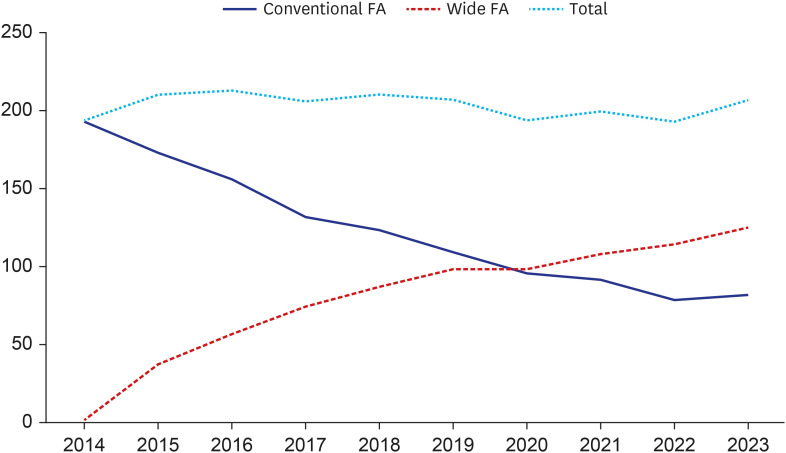
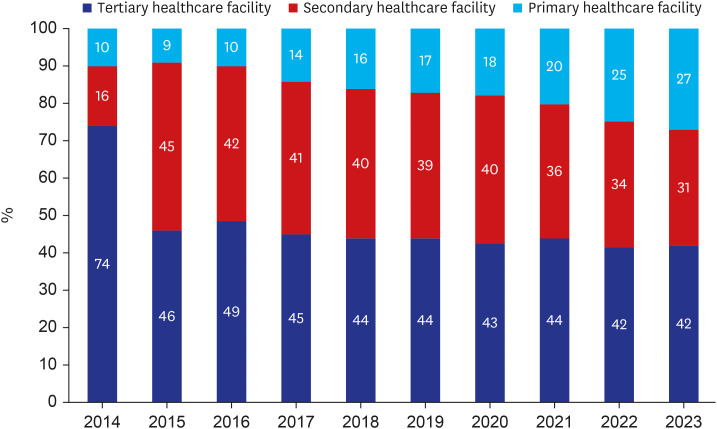
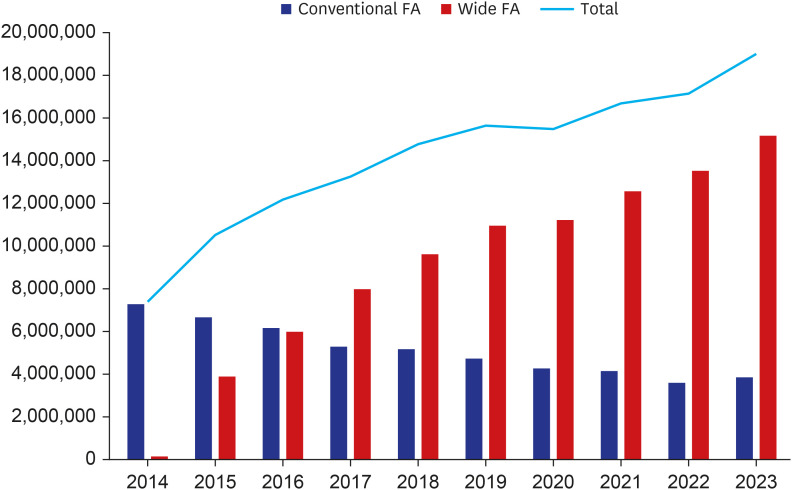
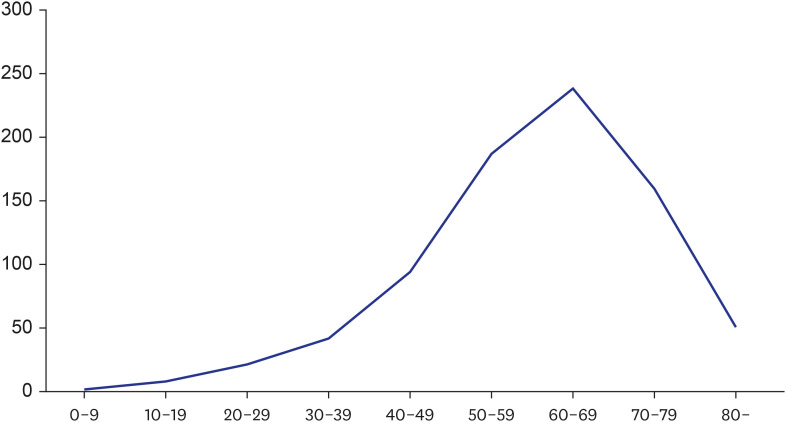
The number of patients undergoing conventional FA consistently declined, while those receiving wide FA increased steadily, keeping the overall patient count relatively stable. Healthcare costs related to conventional FA gradually decreased, whereas expenses for wide FA rose steadily, contributing to an increase in total medical expenses. Analysis of ten-year age intervals revealed that patients in their 60s were the most frequent recipients of wide FA in every year, except for 2014. The prevalence of wide FA at primary healthcare facilities has been steadily increasing.
The use of wide FA has been steadily increasing, gradually replacing conventional FA, particularly in primary healthcare settings. Overall, medical expenses continue to rise. The findings of this study provide valuable evidence for the efficient allocation of medical resources in the future.
荧光素血管造影(FA)是一种诊断程序,对于年龄相关性黄斑变性和糖尿病视网膜病变等病症至关重要,鉴于其重要性,传统和广角FA(广角FA)的使用正在增加。本研究旨在分析韩国传统和广角FA的年度趋势以及进行这些检查的医疗机构的趋势。
这项回顾性研究检查了健康保险审查和评估服务中心的健康与医疗大数据开放门户中的数据。我们调查了2014年至2023年在韩国接受传统和广角FA检查的患者数量,按年龄组和医疗机构类型进行分类。此外,还分析了医疗保健支出的趋势。
接受传统FA检查的患者数量持续下降,而接受广角FA检查的患者数量稳步增加,使总体患者数量相对稳定。与传统FA相关的医疗费用逐渐减少,而广角FA的费用稳步上升,导致医疗总费用增加。对十年年龄区间的分析显示,除2014年外,60多岁的患者每年都是广角FA的最常见接受者。初级医疗保健机构中广角FA的普及率一直在稳步上升。
广角FA的使用一直在稳步增加,逐渐取代传统FA,特别是在初级医疗保健环境中。总体而言,医疗费用持续上升。本研究的结果为未来医疗资源的有效分配提供了有价值的证据。