Suffoletto Brian, Mayer Waverly, Toth Caitlin, Ashenburg Nick, Lin Michelle, Losak Michael, Kim David
Department of Emergency Medicine, Stanford University, Stanford, USA.
Aging Clin Exp Res. 2025 Apr 21;37(1):131. doi: 10.1007/s40520-025-03030-7.
Older adults face increased risk of functional impairments after Emergency Department (ED) discharge, yet no evidence-based interventions exist for this population.
To evaluate the feasibility, safety, and effectiveness of Safe Steps, a text message + pedometer intervention designed to motivate individuals to meet step count goals.
We recruited ED patients aged ≥ 60 with low physical activity. Participants received a pedometer in the ED, daily text messages to report steps, and weekly prompts to set step goals over 4 weeks. We assessed step count reporting rates, falls, and change in steps over time.
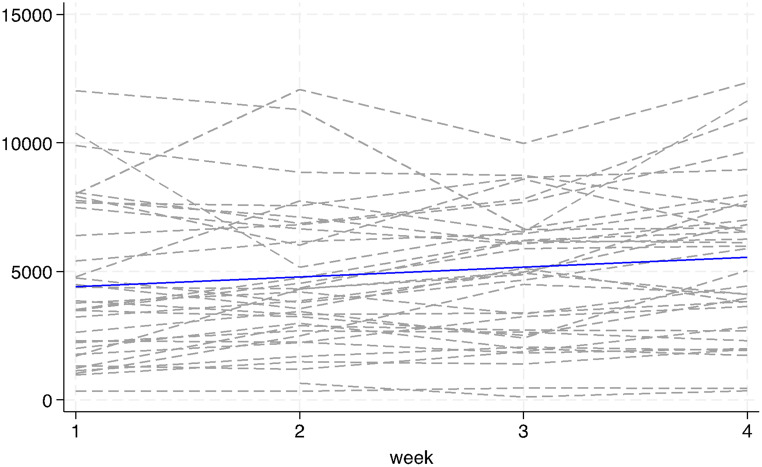
Among analyzed participants (n = 40), daily step reporting was high (95% of weeks with 2 + readings). No participants had falls due to the intervention. Step count increased by a mean of 359 steps per week (95% confidence interval 182-536).
Safe Steps appears feasible, safe, and may be effective for promoting activity after ED discharge.
急诊科(ED)出院后的老年人面临功能障碍风险增加的问题,但针对该人群尚无循证干预措施。
评估“安全步数”的可行性、安全性和有效性,这是一种旨在激励个体实现步数目标的短信 + 计步器干预措施。
我们招募了身体活动水平低的60岁及以上的急诊科患者。参与者在急诊科领取了计步器,每天收到报告步数的短信,并在4周内每周收到设定步数目标的提示。我们评估了步数报告率、跌倒情况以及随时间变化的步数。
在分析的参与者(n = 40)中,每日步数报告率很高(95%的周有2次及以上读数)。没有参与者因干预而跌倒。步数平均每周增加359步(95%置信区间182 - 536)。
“安全步数”似乎可行、安全,可能对促进急诊科出院后的活动有效。