Cao Chao, Li Mengli, Wang Chunyu, Xu Lei, Zou Quan, Wang Yansu, Han Wu
Institute of Fundamental and Frontier Sciences, University of Electronic Science and Technology of China, Chengdu, Sichuan, 611731, China.
Yangtze Delta Region Institute (Quzhou), University of Electronic Science and Technology of China, Quzhou, Zhejiang, 324003, China.
BMC Biol. 2025 Apr 23;23(1):104. doi: 10.1186/s12915-025-02197-9.
Numerous studies have shown that circRNA can act as a miRNA sponge, competitively binding to miRNAs, thereby regulating gene expression and disease progression. Due to the high cost and time-consuming nature of traditional wet lab experiments, analyzing circRNA-miRNA associations is often inefficient and labor-intensive. Although some computational models have been developed to identify these associations, they fail to capture the deep collaborative features between circRNA and miRNA interactions and do not guide the training of feature extraction networks based on these high-order relationships, leading to poor prediction performance.
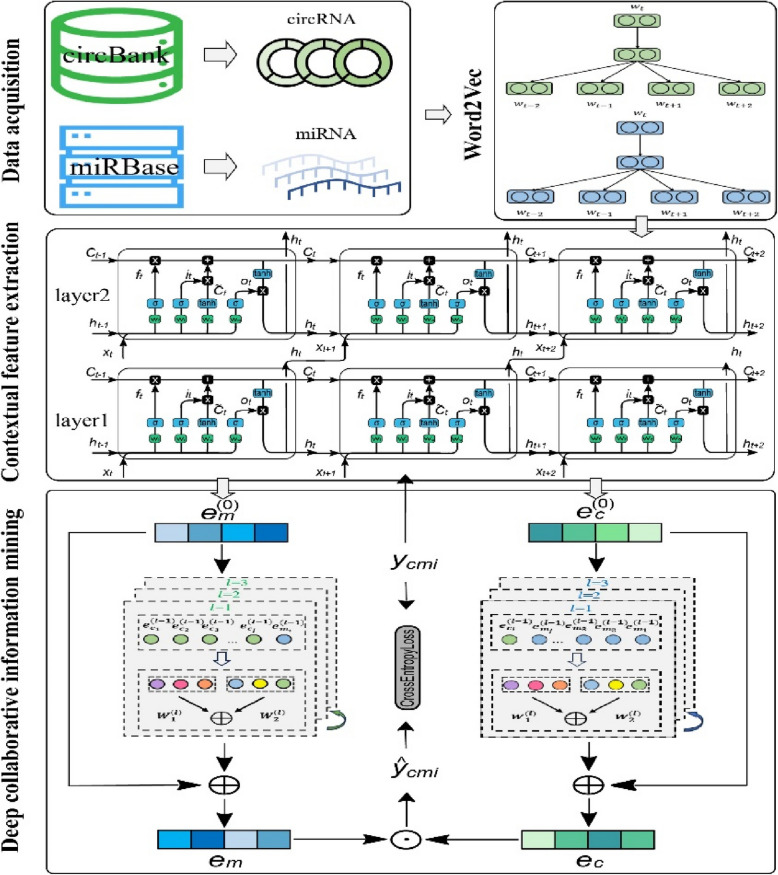
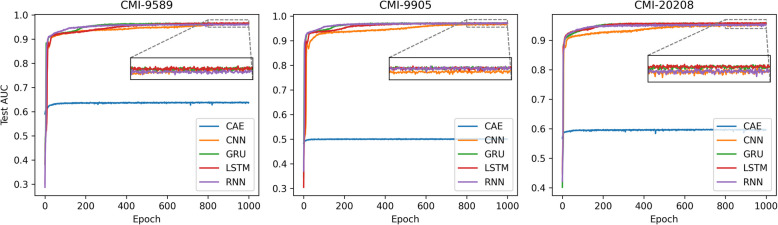
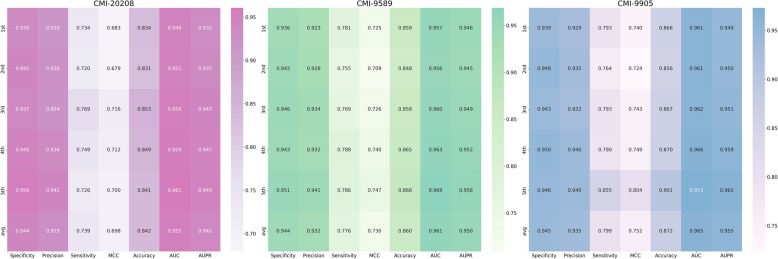
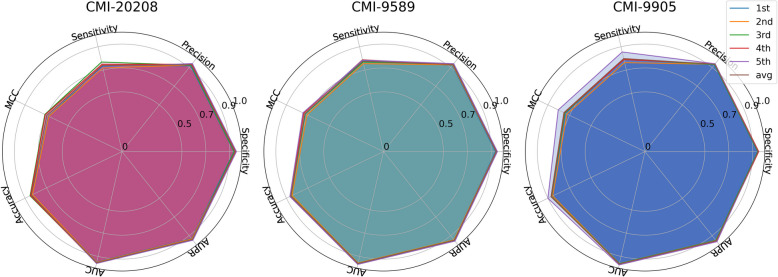
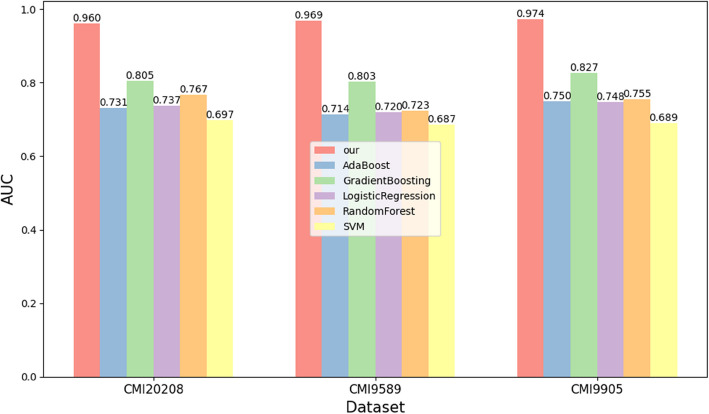
To address these issues, we innovatively propose a novel deep graph collaboration learning method for circRNA-miRNA interaction, called DGCLCMI. First, it uses word2vec to encode sequences into word embeddings. Next, we present a joint model that combines an improved neural graph collaborative filtering method with a feature extraction network for optimization. Deep interaction information is embedded as informative features within the sequence representations for prediction. Comprehensive experiments on three well-established datasets across seven metrics demonstrate that our algorithm significantly outperforms previous models, achieving an average AUC of 0.960. In addition, a case study reveals that 18 out of 20 predicted unknown CMI data points are accurate.
The DGCLCMI improves circRNA and miRNA feature representation by capturing deep collaborative information, achieving superior performance compared to prior methods. It facilitates the discovery of unknown associations and sheds light on their roles in physiological processes.
大量研究表明,环状RNA(circRNA)可作为微小RNA(miRNA)的海绵,竞争性结合miRNA,从而调节基因表达和疾病进展。由于传统湿实验室实验成本高且耗时,分析circRNA与miRNA的关联通常效率低下且 labor-intensive。尽管已经开发了一些计算模型来识别这些关联,但它们未能捕捉circRNA与miRNA相互作用之间的深度协作特征,也未基于这些高阶关系指导特征提取网络的训练,导致预测性能较差。
为了解决这些问题,我们创新性地提出了一种用于circRNA与miRNA相互作用的新型深度图协作学习方法,称为DGCLCMI。首先,它使用word2vec将序列编码为词嵌入。接下来,我们提出了一个联合模型,该模型将改进的神经图协作过滤方法与特征提取网络相结合进行优化。深度交互信息被嵌入到序列表示中作为信息特征用于预测。在三个成熟数据集上进行的涵盖七个指标的综合实验表明,我们的算法显著优于先前的模型,平均AUC达到0.960。此外,一个案例研究表明,20个预测的未知CMI数据点中有18个是准确的。
DGCLCMI通过捕捉深度协作信息改进了circRNA和miRNA的特征表示,与先前方法相比性能更优。它有助于发现未知关联,并揭示它们在生理过程中的作用。