Perez-Diaz Oscar, Hernández Sergio Elías, Brown Lucy L, Xiao Yaqiong, González-Mora José Luis, Rubia Katya, Barros-Loscertales Alfonso
Departamento de Psicología Básica, Clínica y Psicobiología, Universitat Jaume I, Castellón, Spain.
Instituto Universitario de Neurociencia, Universidad de La Laguna, Tenerife, Spain.
Sci Rep. 2025 Apr 25;15(1):14513. doi: 10.1038/s41598-025-98256-w.
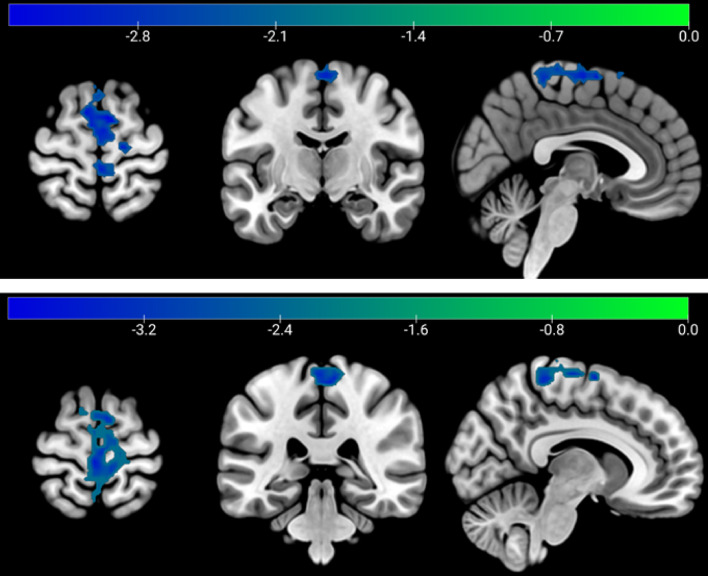
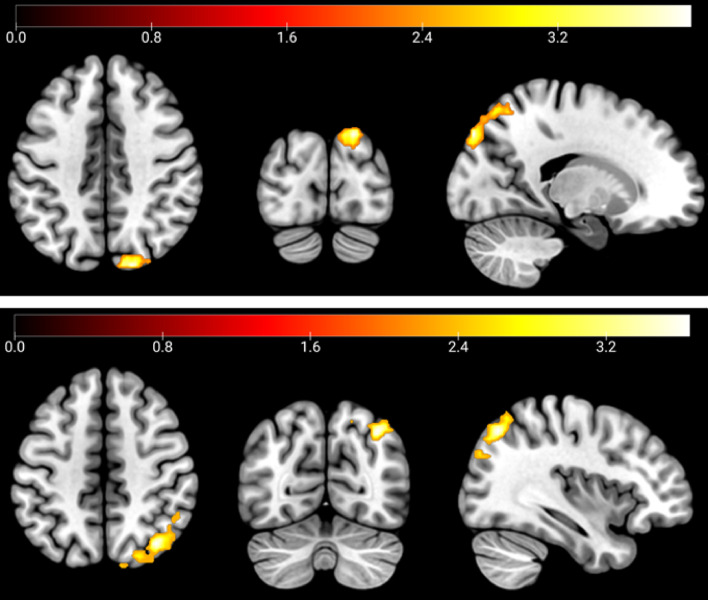
Neuroscience research has associated meditation practice with effects on cognitive, motivational and emotional processes. These processes are mediated by several brain circuits, including the striatum and its associated cortical connections. The aim of this study was to focus on the striatum and test how its functional connectivity is affected in long-term practitioners of Sahaja Yoga Meditation. We studied differences between resting and meditation states in a group of 23 Sahaja Yoga Meditation experts. We also compared the resting state between meditation experts and a control group of 23 non-meditating participants. Functional connectivity contrasts between conditions and groups were performed using seeds in the dorsal and ventral striatum (caudate, putamen and nucleus accumbens). During meditation, compared to the resting state, meditators showed altered connectivity between the striatum and parietal, sensorimotor and cerebellar regions. Resting state in meditators relative to that of controls showed reduced functional connectivity between the left accumbens and the mid cingulate, which was correlated with reduced Simon Task interference reaction time effect in meditators. In conclusion, the striatum may play a pivotal role in the practice of Sahaja Yoga Meditation by altering attention and self-referencing, and by modulating bodily sensations. Furthermore, meditation practice could produce long-term changes in striatal connectivity.
神经科学研究已将冥想练习与对认知、动机和情感过程的影响联系起来。这些过程由包括纹状体及其相关皮质连接在内的多个脑回路介导。本研究的目的是聚焦于纹状体,并测试其功能连接在长期练习霎哈嘉瑜伽冥想者中是如何受到影响的。我们研究了一组23名霎哈嘉瑜伽冥想专家在静息状态和冥想状态之间的差异。我们还比较了冥想专家与23名非冥想参与者的对照组之间的静息状态。使用背侧和腹侧纹状体(尾状核、壳核和伏隔核)中的种子点进行了不同状态和组之间的功能连接对比。在冥想过程中,与静息状态相比,冥想者的纹状体与顶叶、感觉运动和小脑区域之间的连接发生了改变。与对照组相比,冥想者的静息状态显示左侧伏隔核与中扣带回之间的功能连接减少,这与冥想者中西蒙任务干扰反应时间效应的降低相关。总之,纹状体可能通过改变注意力和自我参照以及调节身体感觉,在霎哈嘉瑜伽冥想练习中发挥关键作用。此外,冥想练习可能会使纹状体连接产生长期变化。