
使用功能近红外光谱技术评估青少年特发性脊柱侧弯患者前额叶皮层激活及静态平衡机制
Evaluation of Prefrontal Cortex Activation and Static Balance Mechanisms in Adolescent Idiopathic Scoliosis Using fNIRS.
作者信息
Suzen Esra, Tombak Kadriye, Simsek Buket, Colak Omer Halil, Ozen Sukru
机构信息
NeuroscienceLab, Faculty of Engineering, Department of Electrical and Electronics Engineering, Akdeniz University, Antalya 07058, Turkey.
Department of Physical Therapy, Vocational School of Health Services, Akdeniz University, Antalya 07058, Turkey.
出版信息
Medicina (Kaunas). 2025 Apr 4;61(4):667. doi: 10.3390/medicina61040667.
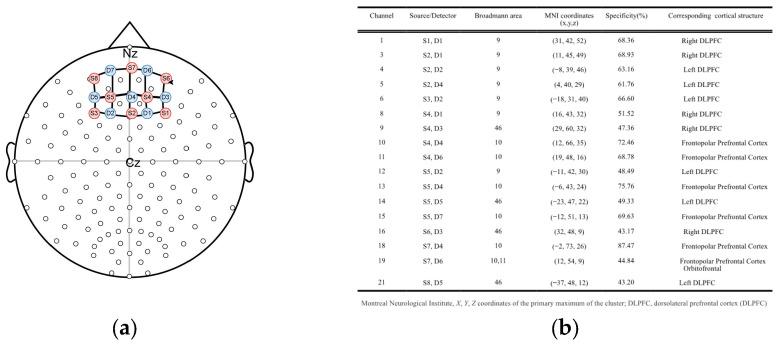
In this study, the role of oxyhemoglobin (HbO) in subregions of the prefrontal cortex during a static balance task under eyes-open and eyes-closed conditions was investigated in adolescent idiopathic scoliosis (AIS) using functional near-infrared spectroscopy (fNIRS), a powerful neuroimaging tool that enables more natural and flexible measurement in the analysis of balance mechanisms and motor tasks. Hemodynamic changes in the right and left dorsolateral cortex (DLPFC), frontopolar prefrontal cortex, and orbitofrontal cortex were analyzed in 16 healthy controls and 15 individuals with AIS. The statistical results were supported by HbO contrast maps. Significant differences were found in the cortical activity patterns between the AIS and control groups. The AIS group had lower HbO concentrations than the control group in the eyes-closed condition and completely differed from the control group by showing more active HbO concentrations in the DLPFC regions than in the frontopolar regions. In the eyes-open condition, it was found that the maximum HbO value was reached in the frontopolar regions, and this value was weakened and observed throughout the left frontopolar region. Discriminative differences were also found in the orbitofrontal region in the eyes-closed static balance condition. The results obtained were evaluated and discussed in terms of postural balance compensation, differences in neural pathways, and the conscious balance mechanism. It was determined that the AIS group tended to utilize a conscious balance mechanism in the eyes-closed static balance condition and developed its own balance compensation mechanism in the eyes-open static balance condition. This study concludes that fNIRS is a powerful tool in the evaluation of balance and control mechanisms and can be used effectively in the evaluation of rehabilitation-oriented development in AIS.
在本研究中,利用功能近红外光谱技术(fNIRS)这一强大的神经成像工具,对青少年特发性脊柱侧凸(AIS)患者在睁眼和闭眼状态下进行静态平衡任务时前额叶皮质各亚区域中氧合血红蛋白(HbO)的作用进行了研究。fNIRS能够在平衡机制和运动任务分析中实现更自然、灵活的测量。对16名健康对照者和15名AIS患者的左右背外侧皮质(DLPFC)、额极前额叶皮质和眶额皮质的血流动力学变化进行了分析。统计结果得到了HbO对比图的支持。AIS组和对照组之间的皮质活动模式存在显著差异。在闭眼状态下,AIS组的HbO浓度低于对照组,并且与对照组完全不同,其DLPFC区域的HbO浓度比额极区域更活跃。在睁眼状态下,发现额极区域达到了最大HbO值,并且在整个左额极区域该值减弱。在闭眼静态平衡状态下,眶额区域也发现了判别差异。从姿势平衡补偿、神经通路差异和意识平衡机制等方面对所得结果进行了评估和讨论。确定AIS组在闭眼静态平衡状态下倾向于利用意识平衡机制,并在睁眼静态平衡状态下发展出自己的平衡补偿机制。本研究得出结论,fNIRS是评估平衡和控制机制的有力工具,可有效用于评估AIS患者以康复为导向的发展情况。
 Zotero 插件