
饮酒与肺癌风险:一项系统评价与荟萃分析
Wine Consumption and Lung Cancer Risk: A Systematic Review and Meta-Analysis.
作者信息
Bertola Carlotta, Gobbetti Camilla, Baccarini Gaia, Fabiani Roberto
机构信息
Section of Hygiene and Public Health, Department of Medicine and Surgery, University of Perugia, 06132 Perugia, Italy.
Department of Chemistry, Biology and Biotechnology, University of Perugia, 06123 Perugia, Italy.
出版信息
Nutrients. 2025 Apr 10;17(8):1322. doi: 10.3390/nu17081322.
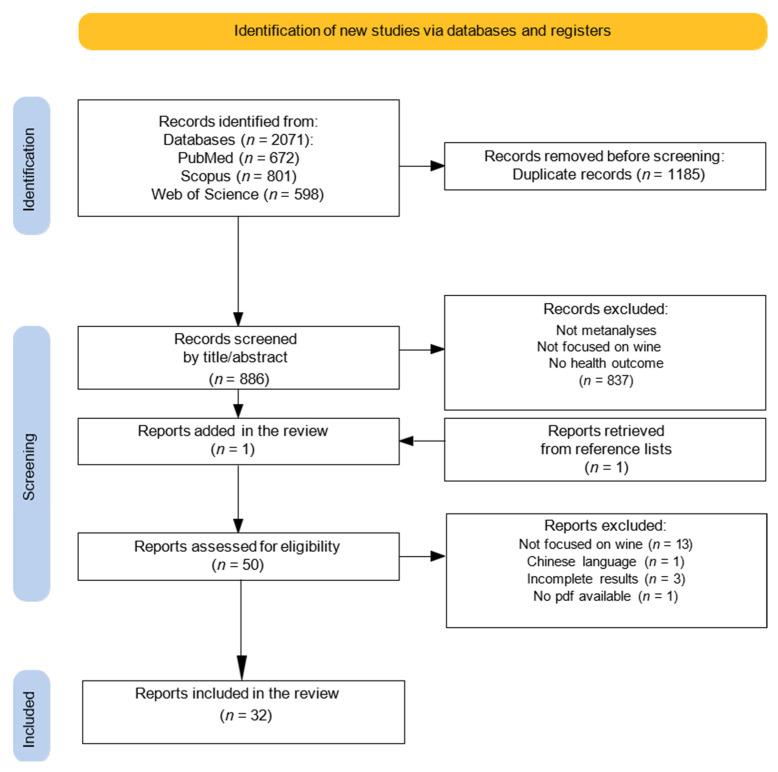
Lung cancer is one of the leading causes of cancer-related mortality, with tobacco smoking being the primary risk factor. However, a significant percentage of lung cancer patients are non-smokers, suggesting the involvement of other risk factors, including alcohol consumption. The IARC classifies ethanol as a Group 1 carcinogen, but unlike other alcoholic beverages, wine contains polyphenols with potential health benefits. Some meta-analyses even suggest a protective effect, which led us to conduct our own meta-analysis to further investigate this possible correlation. We conducted a systematic review and stratified the risk across population subgroups based on smoking status and gender. We then performed a categorical "highest vs. lowest" meta-analysis, comparing heavy consumers with very occasional drinkers, using a random-effects model. Only studies examining the risk of developing lung cancer in wine drinkers were included, excluding those with different outcomes, non-primary, ineligible populations, or involving pregnant women. The literature search was conducted in three databases: PubMed, Scopus, and Web of Science. The risk of bias was assessed with the Newcastle-Ottawa quality rating scale for both case-control and cohort studies (NOS), while statistical analyses were performed using the ProMeta 3.0 software. The overall analysis showed a non-statistically significant 11% reduction in lung cancer risk (OR = 0.89; 95% CI: 0.77-1.03). The analysis among smokers revealed a significant 22% reduction in lung cancer risk associated with wine consumption (OR = 0.78; 95% CI: 0.62-0.97). However, this effect was lost when the analysis was conducted separately based on the study design. No correlation emerged between wine consumption and lung cancer incidence, either in a protective sense or in terms of increased risk. However, further studies are needed to investigate this correlation more accurately, particularly among non-smokers.
肺癌是癌症相关死亡的主要原因之一,吸烟是主要风险因素。然而,相当一部分肺癌患者不吸烟,这表明还存在其他风险因素,包括饮酒。国际癌症研究机构(IARC)将乙醇列为1类致癌物,但与其他酒精饮料不同,葡萄酒含有具有潜在健康益处的多酚。一些荟萃分析甚至表明葡萄酒有保护作用,这促使我们进行自己的荟萃分析,以进一步研究这种可能的相关性。我们进行了一项系统综述,并根据吸烟状况和性别对不同人群亚组的风险进行分层。然后,我们使用随机效应模型进行了分类“最高与最低”荟萃分析,比较大量饮酒者与极少饮酒者。仅纳入了研究葡萄酒饮用者患肺癌风险的研究,排除了那些结果不同、非原发性、不符合条件的人群或涉及孕妇的研究。文献检索在三个数据库中进行:PubMed、Scopus和Web of Science。使用纽卡斯尔-渥太华病例对照和队列研究质量评定量表(NOS)评估偏倚风险,同时使用ProMeta 3.0软件进行统计分析。总体分析显示,肺癌风险非统计学显著降低11%(OR = 0.89;95%CI:0.77 - 1.03)。吸烟者中的分析显示,与饮用葡萄酒相关的肺癌风险显著降低22%(OR = 0.78;95%CI:0.62 - 0.97)。然而,当根据研究设计分别进行分析时,这种效应消失了。无论是从保护意义还是从增加风险的角度来看,饮用葡萄酒与肺癌发病率之间均未出现相关性。然而,需要进一步研究以更准确地调查这种相关性,特别是在非吸烟者中。



 Zotero 插件